

Key Takeaways
- Definition: A Central Bank Digital Currency is a digital form of a country’s sovereign money issued and backed by the central bank.
- Core features: Government‑issued, centralized ledger, real‑time settlement, and programmable money.
- Real‑world use: Pilot projects like the Digital Yuan, the Sand Dollar, and the upcoming digital dollar are already in test phases.
- Traditional vs. digital: Unlike cash, a CBDC lives on a digital ledger, but it still carries the same legal tender status as paper money.
- Risk warning: Centralization raises privacy concerns and creates new cybersecurity attack vectors.
What Is CBDC (Central Bank Digital Currency)?
CBDC is a digital version of a fiat currency that is issued directly by a nation’s central bank.
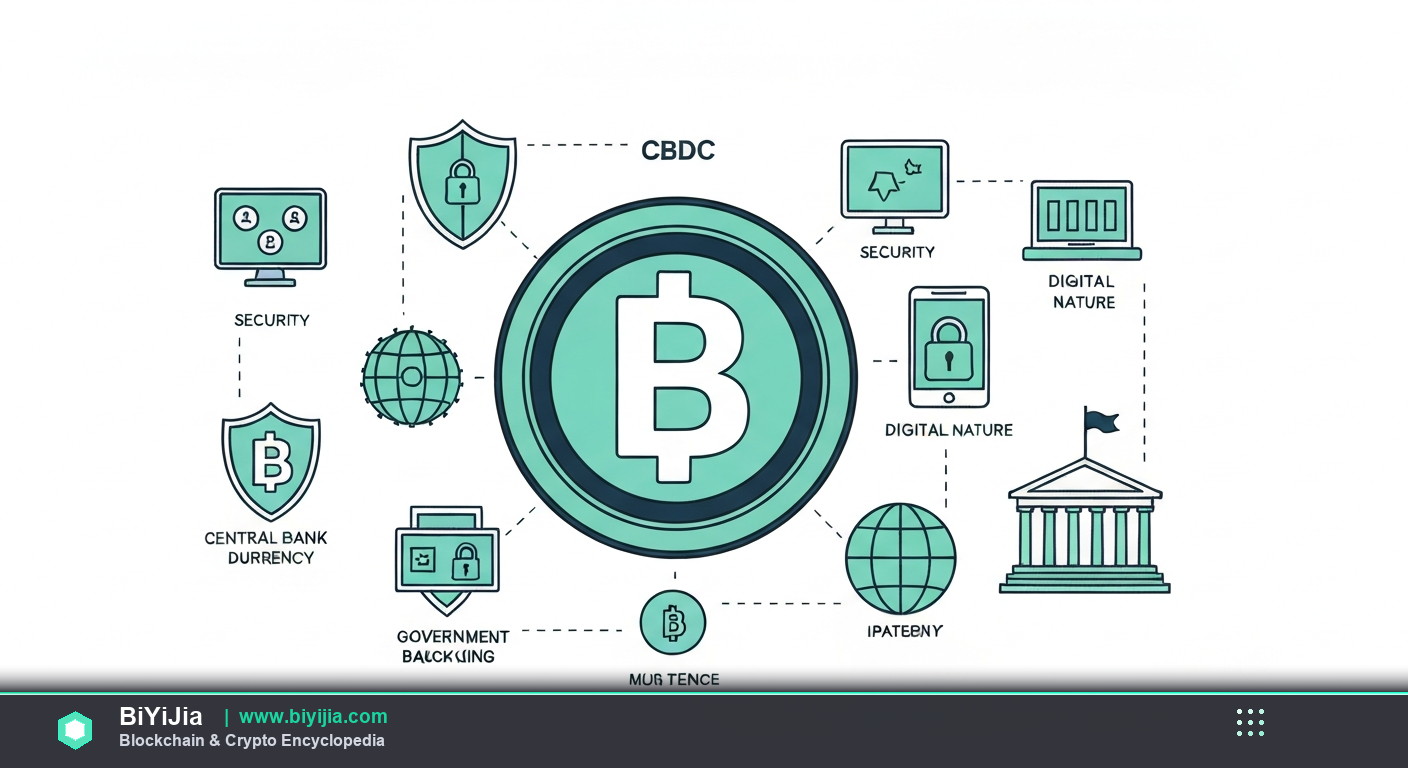
In technical terms, a Central Bank Digital Currency runs on a permissioned distributed ledger or a highly secure centralized database, allowing the central bank to record every unit of currency, enforce monetary policy, and settle transactions instantly. Think of it as cash that lives on your phone, but with the full backing of the sovereign monetary authority.
Imagine you’re at a coffee shop and instead of handing over a paper bill, you tap your phone and a token representing that exact amount disappears from a government‑run ledger, then reappears in the shop’s account. That’s the everyday analogy for how a CBDC functions.
How It Works
- Issuance: The central bank creates digital units on a secure ledger, each pegged 1:1 to the corresponding fiat currency.
- Distribution: Commercial banks, payment service providers, or government portals allocate the digital tokens to end users through verified digital wallets.
- Transaction: When a user pays a merchant, the ledger updates in real time, moving the digital token from the payer’s wallet to the recipient’s wallet.
- Settlement & Auditing: The central bank continuously reconciles the total supply, ensuring that the digital ledger matches the physical monetary base.
- Governance: Policy tools such as interest‑bearing balances or programmable restrictions can be applied directly to the digital tokens.
Core Features
- Government‑Issued: The central bank is the sole issuer, guaranteeing that each digital token is legal tender.
- Centralized Control: Unlike cryptocurrencies, a CBDC operates under a single authority that can enforce monetary policy instantly.
- Regulation‑Ready: The system is built to comply with anti‑money‑laundering (AML) and know‑your‑customer (KYC) rules from day one.
- Programmable Money: Smart‑contract‑like capabilities enable conditional payments, tax withholding, or targeted stimulus.
- Instant Settlement: Transactions settle in seconds, removing the lag inherent in traditional banking pipelines.
- Privacy Controls: While the ledger is traceable by the authority, many designs embed privacy layers to protect everyday users.
Real‑World Applications
- Digital Yuan (e‑CNY): China’s Digital Yuan has reached over 1.5 billion wallet registrations, with more than 30 % of retail transactions in pilot cities using it (People’s Bank of China, 2024).
- Sand Dollar: The Bahamas launched the Sand Dollar in 2020; by 2025, 70 % of the adult population holds a digital wallet, boosting financial inclusion.
- Digital Euro Pilot: The European Central Bank is testing a digital euro with 12 million trial users, focusing on cross‑border payments.
- Digital Dollar Research: The Federal Reserve’s 2025 report estimates a 12 % adoption rate among US adults within two years of a full‑scale launch.
- e‑Krona (Sweden): Sweden’s Riksbank is piloting the e‑Krona to address the country’s declining cash usage, with 15 % of transactions already digital in test zones.
Comparison with Related Concepts
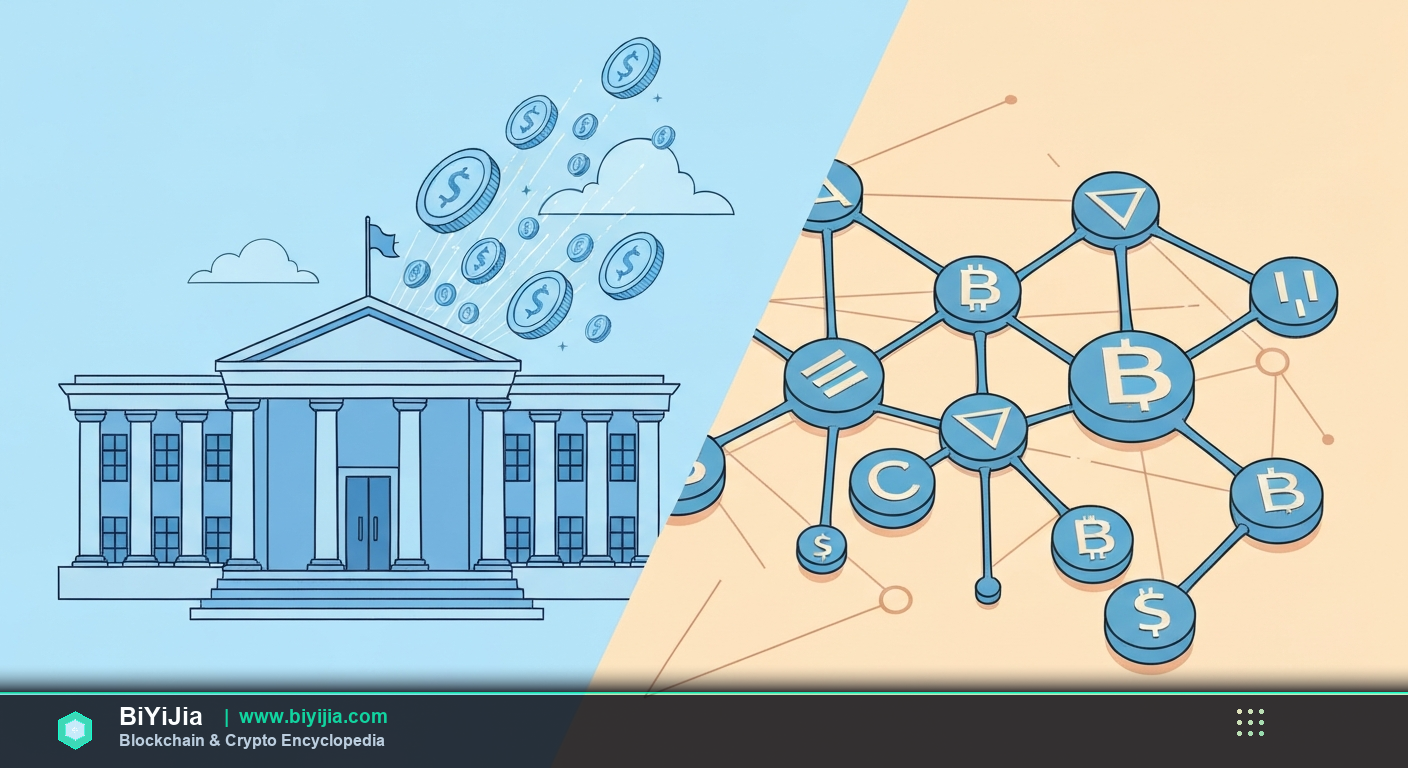
CBDC vs. Cryptocurrency: A CBDC is centralized, government‑backed, and regulated, whereas a cryptocurrency is typically decentralized, operates without a sovereign guarantor, and often lacks formal regulation.
CBDC vs. Stablecoin: Both aim to keep a stable value, but a stablecoin is issued by a private entity and usually collateralized by assets, while a CBDC is a direct liability of the central bank.
CBDC vs. Digital Wallet: A digital wallet is merely a software interface to hold assets; a CBDC is the underlying asset itself, issued by the central bank.
Risks & Considerations
- Privacy Risk: Centralized ledgers can enable pervasive transaction monitoring, raising civil liberty concerns.
- Cybersecurity Threat: A single breach could compromise millions of accounts or disrupt the entire monetary system.
- Financial Disintermediation: Direct access to CBDC may reduce deposits in commercial banks, affecting credit supply.
- Implementation Cost: Building a resilient, scalable infrastructure demands massive public‑sector investment.
- Policy Missteps: Programmable features could be misused for over‑reach, such as restricting lawful transactions.
Embedded Key Data
According to the International Monetary Fund’s 2025 Financial Inclusion Report, more than 40 % of the world’s population lives in countries that have either launched or are actively piloting a CBDC.
The World Bank estimates that a fully operational digital dollar could reduce cross‑border payment costs by up to 80 % compared with the current SWIFT‑based system (World Bank, 2025).
Frequently Asked Questions
What is the difference between a CBDC and a digital wallet?
A digital wallet is simply an app or device that stores a user’s money, whether it’s cash, a CBDC, or a cryptocurrency. The CBDC itself is the actual digital representation of a sovereign currency, created and guaranteed by the central bank.
Will a digital dollar replace physical cash?
Not immediately. Most central banks, including the Federal Reserve, view a digital dollar as a complement to cash, offering a faster, more traceable payment method while preserving cash for those who prefer it.
How does a CBDC maintain the same legal tender status as paper money?
Because the central bank issues the digital token directly and declares it legal tender, merchants are obligated to accept it just as they would accept a banknote or coin.
Can a CBDC be used for cross‑border payments?
Yes. Many pilots, such as the Digital Yuan and the digital euro, are testing interoperability protocols that could enable near‑instant, low‑cost cross‑border settlements.
Is a CBDC subject to the same privacy protections as cash?
Cash offers inherent anonymity, while a CBDC’s ledger is visible to the issuing authority. Some designs incorporate privacy‑enhancing technologies, but absolute anonymity is not typical.
Will adopting a digital dollar affect my bank account?
Potentially. If the digital dollar becomes widely used, banks might see a shift in deposit balances, prompting them to adapt their services and possibly introduce new fee structures.
Summary
CBDC (Central Bank Digital Currency) is a government‑issued, centralized digital token that mirrors the value of a nation’s fiat money and is regulated by the central bank. As pilots mature and the digital dollar gains momentum, understanding its mechanics, benefits, and risks is essential for anyone navigating the future of money.
Explore related concepts such as Government‑Issued, Centralized, Regulation, and Digital Yuan to see how the broader ecosystem is evolving.