SEC (Securities and Exchange Commission) is the U.S. federal agency that oversees securities markets, enforces investor protection laws, and increasingly shapes crypto regulation.
Key Takeaways
- One-line definition: The SEC is the primary regulator of securities and, by extension, many digital assets in the United States.
- Core feature: It enforces the Securities Act of 1933 and the Securities Exchange Act of 1934, applying them to crypto projects.
- Real-world application: The agency reviews Bitcoin ETFs, tokens that qualify as securities, and exchange registrations.
- Comparison to traditional alternative: Unlike a self‑regulatory organization, the SEC has statutory authority to impose civil penalties.
- Risk warning: Non‑compliance can lead to enforcement actions, fines, or forced token delistings.
What Is SEC (Securities and Exchange Commission)?
In plain language, the SEC is the U.S. government body that polices stock markets and now, increasingly, crypto markets.
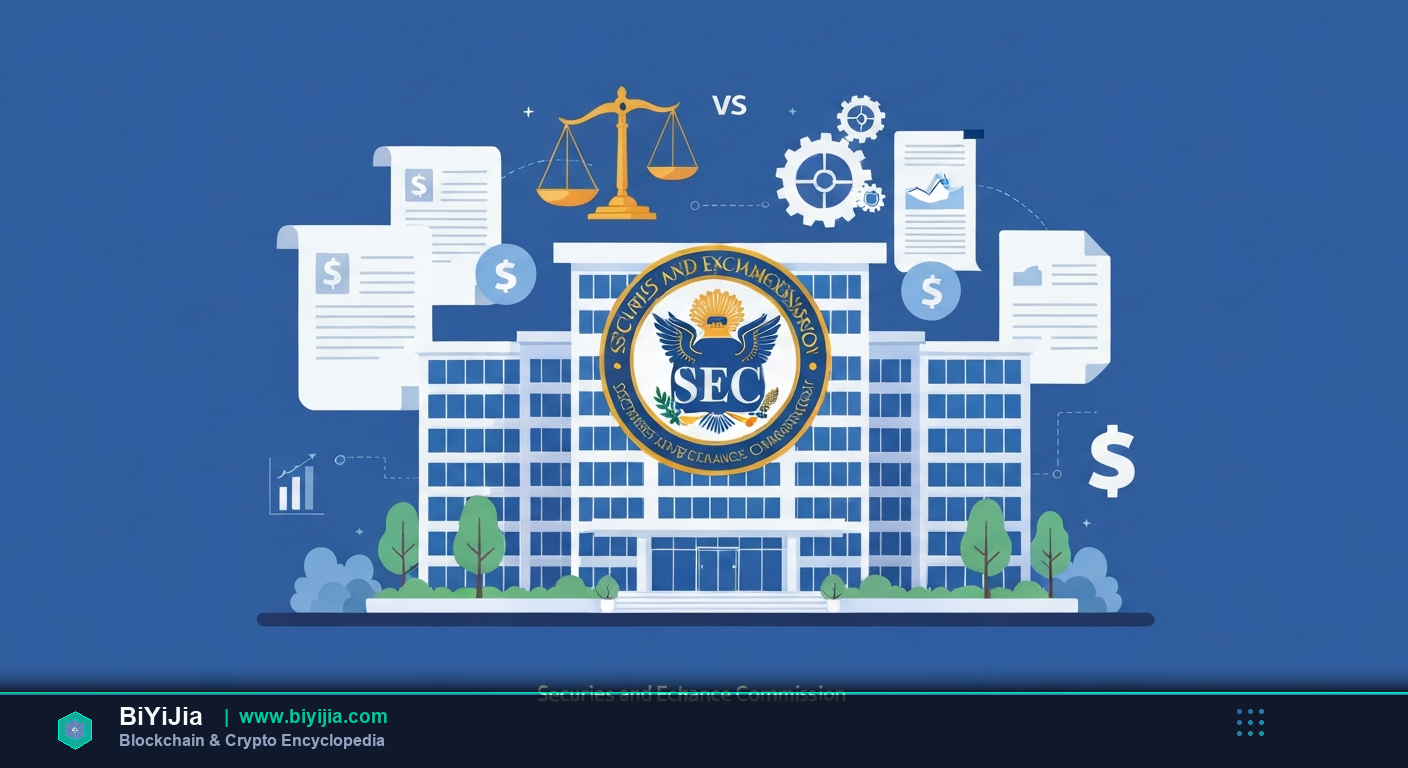
Technically, the commission administers federal securities laws, requiring issuers to disclose material information and prohibiting fraud. When a digital token meets the criteria of a security—often via the Howey Test—the SEC can treat it like any other security, demanding registration or an exemption.
Think of the SEC as the referee in a basketball game: it makes sure every player follows the rulebook, calls fouls when they don’t, and can eject anyone who repeatedly breaks the rules.
How It Works
- Project launches a token and assesses whether the Howey Test applies.
- If the token is deemed a security, the team files a registration statement on Form S‑1 or seeks an exemption such as Regulation D.
- The SEC reviews the filing, may request additional disclosures, and decides whether to approve, reject, or demand changes.
- Once approved, the token can be traded on registered exchanges; otherwise, it may be restricted or forced off‑ramp.
- Ongoing compliance is monitored through periodic reporting (Forms 10‑K, 10‑Q) and enforcement actions if violations arise.
Core Features
- Regulatory Authority: The SEC can bring civil actions, impose fines, and seek injunctions against violators.
- Disclosure Requirements: Public offerings must file detailed prospectuses, including risk factors and financial statements.
- Enforcement Toolbox: It wields cease‑and‑desist orders, disgorgement, and bans on individuals or entities.
- Investor Protection Mandate: The agency focuses on preventing fraud and ensuring fair markets for retail and institutional investors.
- Cross‑Market Oversight: Coordinates with CFTC, FINRA, and state regulators to address overlapping jurisdictions.
- Adaptability to Innovation: Through guidance letters and staff memos, the SEC interprets how new assets fit into existing law.
Real-World Applications
- Coinbase – The exchange filed a Form S‑1 for its planned US‑listed Bitcoin ETF, triggering a high‑profile SEC review.
- Ripple (XRP) – The SEC’s 2020 lawsuit alleged that XRP is an unregistered security, leading to market turbulence and ongoing litigation.
- Uniswap – The decentralized exchange received a “no‑action” letter for its governance token, showing the SEC can exercise discretion.
- Grayscale – Its Bitcoin Trust (GBTC) conversion to an ETF required SEC approval, illustrating the agency’s gatekeeping role.
- Binance.US – The platform faced enforcement actions for alleged securities violations, resulting in fines and operational changes.
According to the SEC’s 2024 annual report, the agency issued over 250 crypto‑related enforcement actions, resulting in $1.2 billion in disgorged profits and penalties (SEC, 2024).
Data from CoinMetrics shows that assets listed on SEC‑approved exchanges have, on average, 30 % lower volatility than those on unregulated platforms (CoinMetrics, Q1 2026).
Comparison with Related Concepts
SEC vs Howey Test: The Howey Test is the legal framework used by the SEC to decide if a token is a security; the SEC is the enforcement body that applies the test.
SEC vs ETF: An ETF is an investment vehicle that may need SEC approval to list; the SEC is the regulator that evaluates whether the ETF complies with securities law.
SEC vs Compliance: Compliance refers to the internal processes a company adopts to meet SEC rules; the SEC is the external authority that audits and enforces those processes.
Risks & Considerations
- Regulatory Uncertainty: The evolving nature of crypto law means projects can be re‑classified overnight, affecting token value.
- Enforcement Action: Non‑compliance can lead to costly lawsuits, asset freezes, or delisting from major exchanges.
- Investor Perception: SEC scrutiny can deter retail investors who fear legal fallout, impacting market liquidity.
- Operational Overhead: Meeting filing and reporting requirements demands legal expertise and can slow product launches.
- Cross‑Border Complexity: A U.S. SEC ruling may not align with foreign regulators, creating compliance headaches for global projects.
Frequently Asked Questions
What is the SEC and why does it matter for crypto?
The SEC is the United States' securities regulator. It matters for crypto because many tokens fall under securities law, meaning they must be registered, disclose information, and adhere to anti‑fraud rules. Failure to comply can halt a project or lead to hefty penalties.
How does the SEC determine if a token is a security?
Primarily through the Howey Test, which asks whether investors expect profits from the efforts of others. If the answer is yes, the token is likely a security and subject to SEC oversight.
Can the SEC ban a cryptocurrency?
While the SEC doesn’t “ban” per se, it can issue cease‑and‑desist orders, force delistings, or prohibit the sale of unregistered tokens, effectively removing the asset from regulated markets.
What is the difference between an SEC‑approved ETF and a regular crypto fund?
An SEC‑approved ETF must meet strict disclosure, custodial, and liquidity standards, offering investors regulatory protection. Regular crypto funds often operate under lighter oversight, carrying higher risk.
How should a crypto startup prepare for SEC regulation?
Start by conducting a thorough securities law analysis, engage experienced counsel, draft comprehensive disclosures, and consider exemption pathways early. Proactive compliance can save years of legal battles.
Will the SEC’s stance change after 2026?
Historically, the agency adapts to market innovation. Expect clearer guidance on DeFi, stablecoins, and NFTs, but the core mandate—protecting investors—will stay the same.
Summary
The SEC (Securities and Exchange Commission) is the cornerstone of U.S. securities regulation and now a pivotal force in shaping crypto markets. Understanding its authority, compliance expectations, and enforcement trends is essential for anyone navigating the intersection of traditional finance and decentralized finance (DeFi).
For deeper insight, explore related concepts such as Securities, the Howey Test, ETFs, and Compliance.