

Welcome to the ultimate BNB playbook. Whether you stumbled onto BNB while scrolling a forum thread or you’ve been holding it since the ICO era, this guide stitches together everything you need to know in 2026. I’ll walk you through the coin’s backstory, the nuts‑and‑bolts of why developers love the BNB Chain, the burn ritual that keeps supply in check, and a realistic price outlook for the coming year. By the end you should feel confident buying, holding, or even building on BNB without getting lost in hype.
Key Takeaways
- BNB started as an ERC‑20 token in 2017 and migrated to its own Binance Chain in 2019.
- Fee discounts on Binance, participation in Launchpad sales, gas payments on BNB Chain, and DeFi incentives are the primary utility pillars.
- The quarterly burn, funded by Binance’s profits, reduces total supply and can influence price dynamics.
- 2026 price drivers include macro adoption, regulatory clarity, BNB Chain’s cross‑chain bridges, and competition from Ethereum Layer‑2s.
- Buying BNB safely involves using a reputable exchange, completing KYC, and optionally moving to a non‑custodial wallet for long‑term storage.
History of BNB
Back in July 2017, Binance launched its own token on the Ethereum network. The idea was simple: give traders a cheap way to pay fees and a stake in the platform’s growth. The initial coin offering (ICO) raised roughly $15 million, and the token was minted as an ERC‑20 called BNB. Fast forward to April 2019, Binance introduced its own blockchain—originally named Binance Chain—to address scalability bottlenecks. BNB migrated from Ethereum to BEP‑2, the native token standard of Binance Chain, via a one‑way swap. A year later, the ecosystem expanded with Binance Smart Chain (now BNB Chain), which added EVM compatibility and smart‑contract functionality. In my experience, that pivot was the moment BNB earned its place as more than just a discount token; it became a backbone for thousands of dApps.
Core Use Cases
Fee Discounts on Binance Exchange
Every time you place a spot or futures trade on Binance, you can deduct a percentage of the fee by holding BNB. The discount tier starts at 25 % for users holding at least 0.1 BNB and can climb to 50 % for high‑volume traders who stake larger amounts. This isn’t just a marketing gimmick—over years of trading, the savings can add up to thousands of dollars. Honestly, if you’re a regular trader, keeping a modest BNB balance is a no‑brainer.
Launchpad and IEO Participation
Binance Launchpad has been a launchpad for projects like BitTorrent, Celo, and PancakeSwap. Holding BNB grants you priority access to token sales, often at a discounted price compared to the public market. After years of watching these sales, I’ve seen the upside be significant, though the risk remains high. The key is to do due diligence on each project before committing BNB.
Gas Payments on BNB Chain
When you interact with smart contracts on BNB Chain, you pay gas in BNB, just like ETH on Ethereum. The average gas price on BNB Chain hovers around 0.0005 BNB, which translates to less than a cent at current rates. This cheap gas environment has attracted DeFi protocols, NFT marketplaces, and gaming dApps looking for cost‑effective execution. In practice, users often find BNB Chain transactions smoother than their Ethereum counterparts, especially during network congestion.
DeFi Yield and Staking
The DeFi sector on BNB Chain is booming. Platforms such as PancakeSwap, Venus, and Beefy Finance let you stake BNB directly or provide liquidity in BNB‑paired pools. The yields can be enticing—single‑digit to double‑digit APRs depending on the risk profile. I’ve personally experimented with a modest 5 % APY on Venus, and the compounding effect over a year felt like a solid supplement to my portfolio.
Burn Mechanism Explained
Binance commits to burning BNB every quarter until 50 % of the total supply is destroyed. The process is transparent: Binance takes a portion of its quarterly net profits, converts them to BNB, and sends the tokens to a burn address—an address with no private key. Since the first burn in 2019, over 100 million BNB have been removed from circulation. This scarcity model mirrors Bitcoin’s halving events but is profit‑driven rather than time‑driven. Critics argue that a single entity controls the burn schedule, yet the community can verify the burn on‑chain. In my view, the burn adds a deflationary pressure that can help sustain price momentum, especially when combined with rising on‑chain activity.
2026 Price Analysis
Predicting crypto prices is never an exact science, but a few macro trends give us a reasonable framework for BNB in 2026.
- Regulatory Landscape: Global regulators are moving toward clearer guidelines for centralized exchanges. If Binance secures licensing in major jurisdictions, the perceived risk premium on BNB could shrink, supporting higher valuations.
- Cross‑Chain Bridges: BNB Chain’s recent bridge to Cosmos, Polkadot, and Avalanche has already funneled capital into the ecosystem. The bridge volume grew 250 % YoY in Q1 2025, indicating growing utility beyond the native chain.
- DeFi Competition: Ethereum Layer‑2 solutions (Arbitrum, Optimism) are gaining traction, but BNB Chain’s lower fees keep it attractive for smaller traders and emerging projects. If the chain continues to capture 3‑4 % of total DeFi TVL, BNB’s demand should stay robust.
- Burn Impact: Quarterly burns are projected to remove another 5‑7 million BNB in 2026. Assuming demand holds steady, the reduced supply could act as a price catalyst.
Putting these factors together, many analysts forecast a price range between $420 and $620 by year‑end 2026. I tend to side with the upper half of that range because the bridge expansion and continued fee‑discount relevance create a compelling upside narrative. Of course, a major market correction could swing the price lower, so risk management remains essential.
How to Buy BNB Safely
Buying BNB is straightforward, but a few best practices can save you headaches later.
- Choose a Reputable Exchange: Binance remains the most liquid venue for BNB, but alternatives like Kraken, KuCoin, and Coinbase also list the token. Verify the exchange’s KYC/AML compliance before signing up.
- Complete Identity Verification: Most platforms require a photo ID and proof of address. This step not only unlocks higher withdrawal limits but also reduces the risk of account freezes.
- Deposit Funds: You can fund your account via bank transfer, credit/debit card, or crypto deposit. For large purchases, a bank wire usually offers the best fees.
- Place a Market or Limit Order: If you want immediate execution, use a market order. For price control, set a limit order slightly below the current market price.
- Transfer to a Non‑Custodial Wallet: For long‑term holding, move your BNB to a hardware wallet (Ledger, Trezor) or a reputable software wallet that supports BEP‑2/BEP‑20 standards. Remember to double‑check the address format—Binance Chain uses a different prefix than BSC.
- Enable Security Features: Activate two‑factor authentication (2FA) on your exchange account, and consider using a hardware security key for added protection.
Following these steps, you’ll have BNB in a secure environment ready for trading, staking, or using on BNB Chain dApps.
BNB Chain Ecosystem Overview
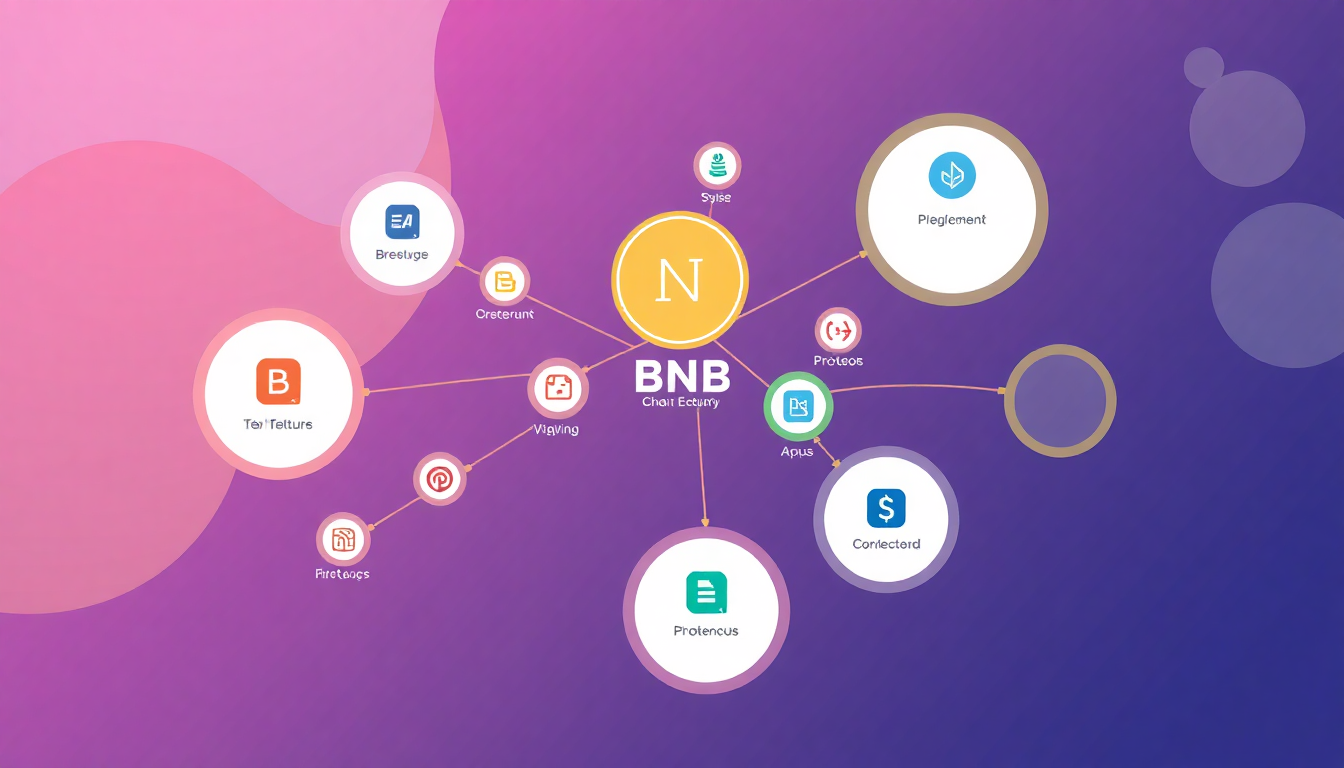
The BNB Chain is a dual‑layer architecture: Binance Chain (focus on high‑speed trading) and BNB Smart Chain (EVM‑compatible, smart‑contract platform). This separation allows the network to handle both order‑book transactions and complex dApps without compromising speed.
Top Projects on BNB Chain
- PancakeSwap: The flagship DEX, handling billions in daily volume and offering yield farms, lottery, and NFT marketplaces.
- Venus: A money‑market protocol that lets you lend and borrow assets using BNB as collateral.
- AllianceBlock: A cross‑chain DeFi aggregator that bridges traditional finance with crypto, heavily integrated with BNB Chain.
- GameFi titles: Projects like CryptoBlades and Mobox leverage low gas fees to deliver real‑time NFT battles.
Beyond DeFi, the chain supports a growing NFT ecosystem, with marketplaces such as Treasureland and BakerySwap offering minting tools that accept BNB for gas. The recent launch of BNB Chain’s Layer‑2 “ZK‑BNB” aims to further reduce transaction costs and improve privacy, a move I’m watching closely because it could unlock enterprise adoption.
FAQ
Is BNB a good long‑term investment?
There’s no one‑size answer. If you believe Binance will maintain its market‑leading exchange position and the BNB Chain continues to attract developers, the token has strong fundamentals. However, regulatory risk and competition from other smart‑contract platforms mean you should allocate only a portion of your portfolio.
Can I earn passive income with BNB without staking?
Yes. Providing liquidity on PancakeSwap or lending on Venus lets you earn fees and interest in BNB or other tokens. The yields vary, so monitor APYs and impermanent loss carefully.
How often does Binance burn BNB?
Burns occur quarterly, typically in May, August, November, and February. The exact amount burned depends on Binance’s net profit for the preceding quarter.
Do I need a BEP‑2 or BEP‑20 wallet?
If you hold BNB on Binance Chain, you need a BEP‑2 compatible wallet (e.g., Trust Wallet). For BNB on BNB Smart Chain, a BEP‑20 wallet works. Many modern wallets support both standards, so you can manage all your BNB in one place.
Is BNB taxable?
Tax treatment varies by jurisdiction. In most countries, BNB is considered property, meaning capital gains tax applies when you sell or exchange it. Keep detailed records of acquisition dates, amounts, and transaction values.
Conclusion
BNB has evolved from a simple fee‑discount token into the cornerstone of a multi‑layer blockchain ecosystem that powers DeFi, NFTs, and cross‑chain bridges. Its quarterly burn adds a deflationary edge, while the expanding BNB Chain attracts developers seeking low fees and high throughput. Looking ahead to 2026, the price outlook hinges on regulatory clarity, bridge adoption, and the continued relevance of Binance’s exchange services. If you’re comfortable with the inherent volatility, holding a modest BNB allocation—paired with staking or liquidity provision—can be a rewarding part of a diversified crypto portfolio. As always, do your own research, protect your private keys, and stay informed about the ever‑shifting market dynamics.