

CEX (Centralized Exchange) refers to a crypto exchange operated by a single company that controls user funds, order books, and trading services.
Key Takeaways
- Definition: A platform where a central entity matches trades and holds custody of assets.
- Core features: Order books, KYC/AML compliance, high liquidity, and fast settlement.
- Real‑world use: Most retail traders use CEXs like [internal link: Binance] for everyday swaps.
- Traditional comparison: Functions like a stockbroker’s exchange but for digital assets.
- Risk warning: Custodial control means users trust the operator with their funds.
What Is CEX (Centralized Exchange)?
In plain language, a CEX is a crypto exchange run by a single company that holds users’ assets and processes trades on their behalf.
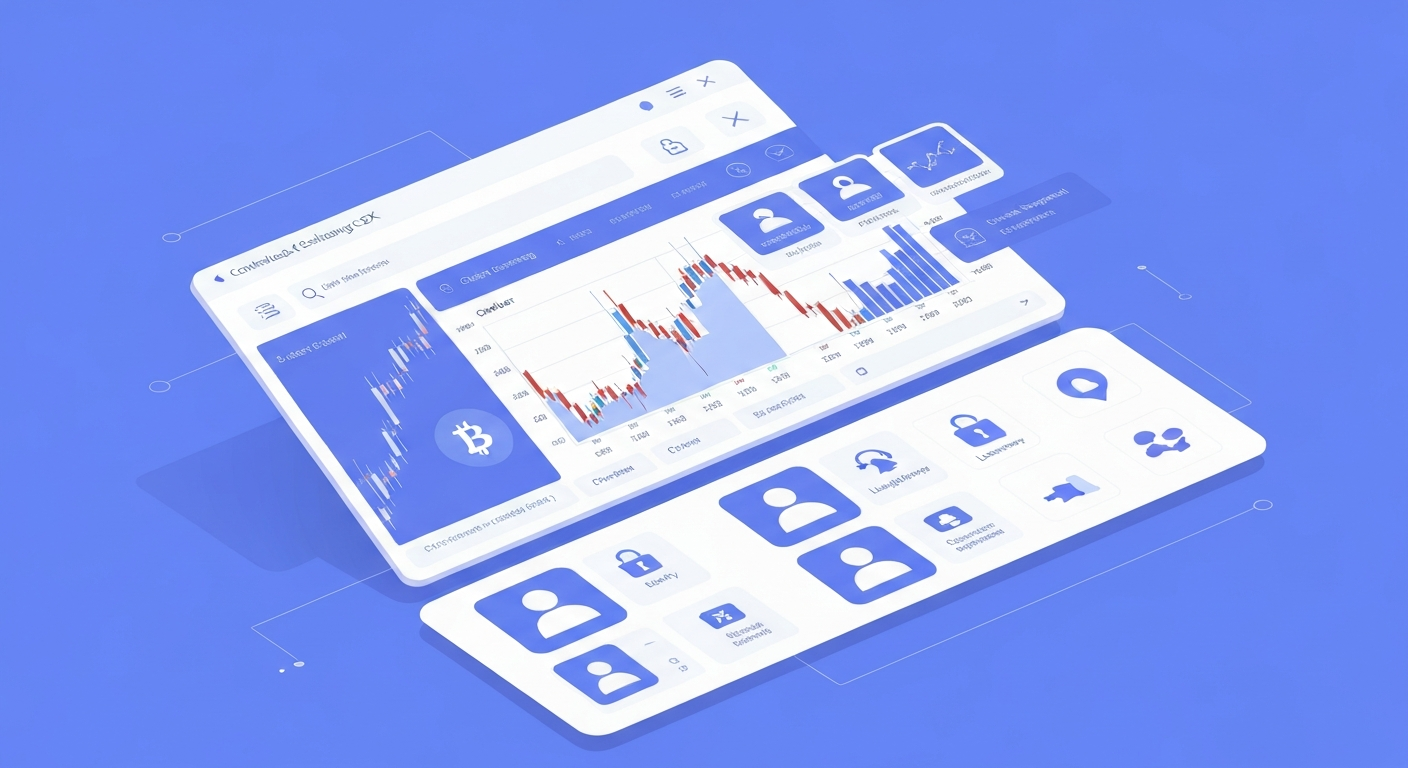
Technically, the platform maintains a centralized order book, enforces KYC/AML policies, and settles transactions off‑chain before broadcasting net results to the blockchain. This architecture lets the operator manage liquidity pools, set trading fees, and provide customer support—all from a single point of control.
Think of a CEX like the ticket counter at a concert venue: you give your money to the counter, they hand you a ticket (the asset), and they keep a record of who owns which seat. You don’t have to manage the venue yourself, but you trust the staff to honor your purchase.
How It Works
- User onboarding: New users create an account, submit identification for KYC, and deposit crypto or fiat.
- Order placement: Traders submit buy or sell orders which are stored in the platform’s centralized order book.
- Matching engine: An internal algorithm matches compatible orders, often in milliseconds, providing instant execution.
- Settlement: The exchange updates internal balances, then periodically writes net changes to the blockchain or settles fiat through banking partners.
- Withdrawal: Users request withdrawals; the exchange releases the assets from its custodial wallets to the user’s external address.
Core Features
- Custodial wallets: The exchange holds private keys, so users don’t manage them directly.
- Order Book: A live ledger of all open buy and sell orders, enabling price discovery and market depth.
- KYC/AML compliance: Mandatory identity verification to meet regulatory standards.
- High liquidity: Large pools of assets ensure trades execute with minimal slippage.
- Advanced trading tools: Features like margin, futures, and stop‑loss orders attract professional traders.
- Customer support: Dedicated teams handle disputes, account recovery, and technical issues.
Real-World Applications
- Binance – The world’s largest crypto exchange by volume, handling over $1.5 trillion in daily trades in Q1 2026 (CoinGecko).
- OKX – Offers spot, derivatives, and DeFi services, with a daily active user base exceeding 12 million as of February 2026.
- Coinbase – A U.S.-based platform known for regulatory compliance, processing $250 billion in transaction volume in 2025.
- Kraken – Provides fiat on‑ramps and advanced futures markets, serving institutional clients with $30 billion in locked‑in value.
Comparison with Related Concepts
CEX vs DEX: Centralized exchanges hold custody and run a matching engine, while decentralized exchanges let users trade peer‑to‑peer on‑chain without an intermediary.
CEX vs Traditional Brokerage: Both act as middlemen, but CEXs deal primarily in digital assets and often support 24/7 trading.
Risks & Considerations
- Custodial risk: If the exchange is hacked or insolvent, users may lose their funds.
- Regulatory risk: Shifts in law can lead to account freezes or forced shutdowns.
- Liquidity risk: During market crashes, order books can thin, causing extreme slippage.
- Privacy risk: Mandatory KYC means personal data is stored and could be exposed.
- Operational risk: System outages can prevent trading or withdrawals for hours.
Embedded Key Data
According to a 2025 survey by the Blockchain Research Institute, 68% of retail traders prefer centralized exchanges for their superior liquidity and ease of use.
Data from CoinMetrics shows that the combined daily trading volume of the top five CEXs surpassed $7 trillion in March 2026, reflecting the dominance of custodial platforms in the market.
Frequently Asked Questions
What is a CEX and how does it differ from a DEX?
A CEX (Centralized Exchange) is run by a single company that holds users’ assets and matches orders internally. A DEX (Decentralized Exchange) operates on smart contracts, allowing users to trade directly from their wallets without trusting a third party.
Do I need to complete KYC to use a CEX?
Most reputable CEXs require KYC for fiat deposits and higher withdrawal limits. Some platforms offer limited “no‑KYC” tiers, but those usually have strict caps on trade size and withdrawal amounts.
Can I keep my crypto on a CEX long term?
While you can store assets on a CEX, it’s generally safer to move large balances to a personal wallet where you control the private keys. Treat exchanges as high‑traffic banks rather than vaults.
How are fees structured on centralized exchanges?
Fees typically consist of a maker fee (for adding liquidity) and a taker fee (for removing liquidity). Volume discounts are common; high‑frequency traders can see fees below 0.05% per trade.
What happens if a CEX is hacked?
If a CEX suffers a breach, users may lose funds that were stored in the compromised wallets. Some platforms maintain insurance funds or offer partial restitution, but recovery is never guaranteed.
Summary
CEX (Centralized Exchange) refers to a crypto exchange where a single entity controls custody, order matching, and compliance. Understanding its mechanics, benefits, and risks is essential for anyone navigating the 2026 crypto landscape. For deeper insight, explore related terms like [internal link: KYC] and [internal link: Order Book].