
Key Takeaways
- Funding Rate is a regular payment that balances long and short positions on a perpetual contract.
- It is calculated from the interest differential and premium between contract and spot price.
- Traders use the rate for arbitrage, hedging, and short‑term yield strategies.
- Unlike traditional margin interest, the rate can be positive or negative each funding interval.
- High volatility can cause rapid swings, exposing participants to liquidation risk.
What Is Funding Rate?
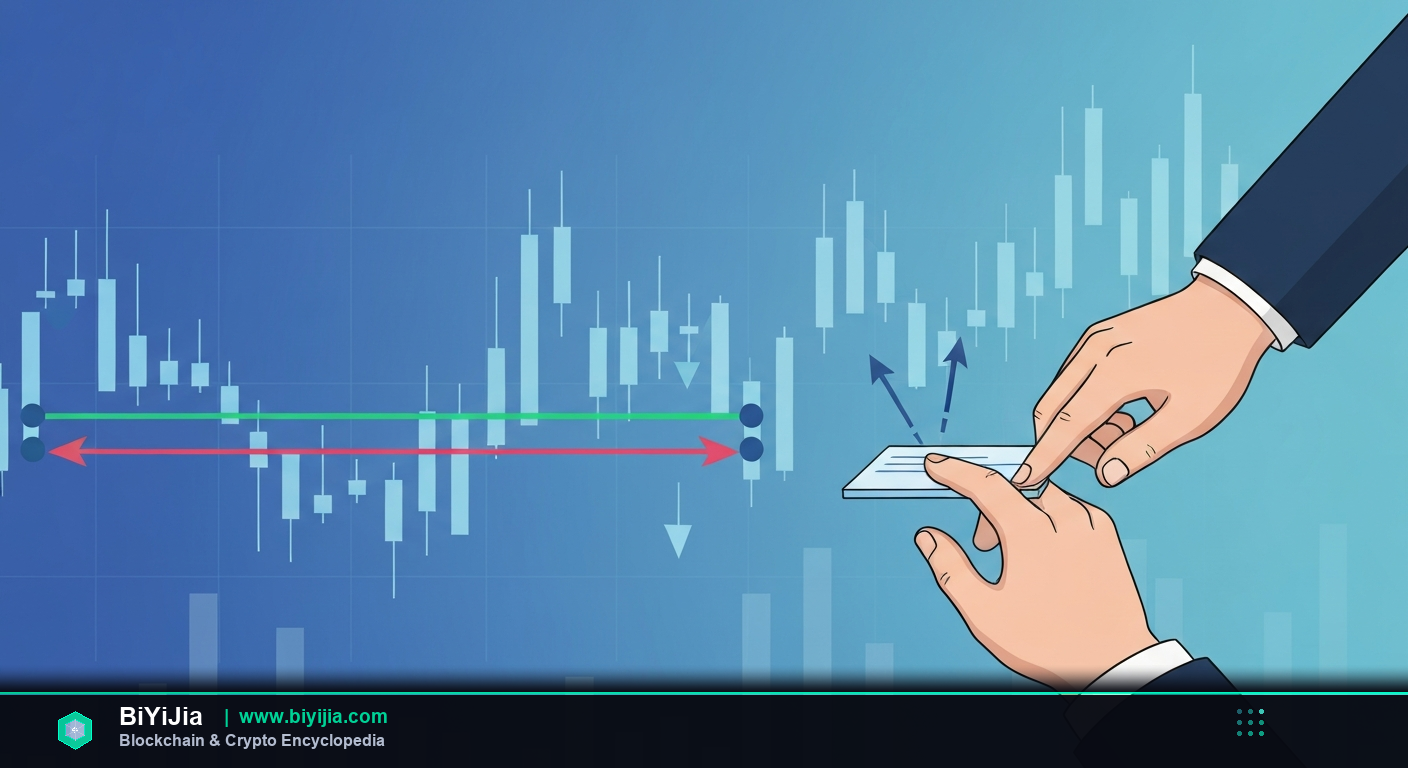
Funding Rate is the periodic payment that long or short traders make to each other on a perpetual contract.
In decentralized finance (DeFi), the rate is derived from two components: the interest cost of holding the underlying asset and the premium or discount of the perpetual price relative to the spot market. Every eight hours (or another fixed interval), the exchange calculates the rate and credits or debits each position accordingly. The mechanism ensures that the perpetual contract never drifts far from the underlying asset's price without creating arbitrage pressure.
Think of it like a rental fee for a car you’re borrowing: if demand to drive the car is high, you pay a premium; if nobody wants it, you actually get paid to keep it. The same idea applies to longs and shorts swapping payments based on market sentiment.
How It Works
- Exchange gathers the current spot price from reliable oracles and the perpetual contract price.
- It computes the premium = (perpetual price – spot price) / spot price.
- Interest rates for the base and quote assets are fetched from lending markets.
- Funding Rate = Premium + (InterestBase – InterestQuote) multiplied by the time factor.
- The resulting rate is applied to every open position; longs pay shorts if the rate is positive, and vice‑versa.
Core Features
- Periodic Settlement: Payments occur at fixed intervals (usually every 8 hours), keeping the system predictable.
- Bidirectional Flow: Either side can receive money depending on market bias, unlike one‑way interest.
- Spot Alignment: The rate constantly nudges the perpetual price toward the underlying spot price.
- Dynamic Calculation: Premium and interest components update in real time, reflecting market conditions.
- Transparent Formula: Most platforms publish the exact formula, allowing traders to model expected costs.
- Risk Mitigation Tool: By adjusting the rate, exchanges can dampen extreme Long/Short imbalances.
Real-World Applications
- Binance Futures – Offers Bitcoin and Ethereum perpetuals; average BTC funding rate in Q1 2026 was 0.018% per 8‑hour interval (Binance data).
- dYdX – A DeFi perpetual exchange where the funding rate on its ETH perpetual hovered around -0.012% in March 2026, rewarding longs during bearish periods.
- Bybit – Provides a “Funding Rate Index” that traders monitor for arbitrage; its BTC perpetual saw a peak of 0.045% during the May 2026 rally.
- OKX – Uses a tiered funding schedule; the average funding on its USDT‑margined contracts was 0.009% in the first half of 2026.
Comparison with Related Concepts
Funding Rate vs Interest Fees: Interest fees are a one‑way charge for borrowing capital, whereas funding rates are a two‑way settlement that can be positive or negative each period.
Funding Rate vs Premium/Discount: The premium/discount reflects price divergence at a snapshot, while the funding rate translates that divergence into a recurring cash flow.
Risks & Considerations
- Rate Volatility: Sudden spikes can turn a small funding cost into a sizable loss, especially for leveraged positions.
- Liquidation Exposure: Negative funding can erode margin quickly, forcing liquidation if the trader cannot cover the payment.
- Arbitrage Timing Risk: Capturing funding arbitrage requires precise timing; delays can nullify expected profit.
- Oracle Manipulation: If the spot price feed is compromised, the calculated premium—and thus the funding rate—can be distorted.
- Regulatory Uncertainty: Some jurisdictions may treat funding payments as taxable events, adding compliance complexity.
According to a 2025 Skew report, the average funding rate on Bitcoin perpetual contracts across major exchanges was 0.015% per 8‑hour interval, equating to roughly 0.135% daily if the rate stayed constant.
Data from The Block’s 2026 market analysis shows that traders who captured positive funding on Ethereum perpetuals earned an additional 2.4% annualized yield on average, compared to simply holding ETH.
Frequently Asked Questions
What is funding rate and why does it exist?
The funding rate is a periodic payment exchanged between longs and shorts on a perpetual contract to keep the contract price anchored to the underlying spot price. It exists because perpetual contracts have no expiration, so the rate creates a self‑balancing mechanism that discourages large price deviations.
How often is the funding rate settled?
Most platforms settle every eight hours, though some offer four‑hour or twelve‑hour intervals. The settlement schedule is publicly disclosed and repeats on a fixed schedule (e.g., 00:00, 08:00, and 16:00 UTC).
Can I earn money from a positive funding rate?
Yes. If the rate is positive, short positions receive payments from longs. Traders with short bias can lock in that income, but they also bear the market risk of price moves opposite to their position.
Does the funding rate affect my margin?
Absolutely. The payment is added to or deducted from your margin balance at each settlement. A sudden swing to a high positive or negative rate can erode margin and trigger liquidation if you’re highly leveraged.
How does funding rate differ on centralized vs decentralized exchanges?
Centralized exchanges often calculate rates using internal order‑book data, while DeFi platforms rely on on‑chain oracles for spot prices and on‑chain lending rates. The underlying principle is the same, but data sources and transparency can differ.
Is funding rate the same as a swap fee?
No. Swap fees are one‑time transaction costs paid to the protocol, whereas funding rates are recurring settlements that reflect market dynamics, not just platform usage.
Summary
Funding Rate is the recurring payment that aligns perpetual contract prices with their underlying assets, rewarding the side of the market that is under‑represented. Understanding how it works, its risks, and where it’s applied is essential for anyone trading perpetuals, whether on centralized platforms or DeFi.
Explore related concepts like Perpetual Contract, Long/Short Balance, Arbitrage, and Fees to deepen your grasp of the broader derivatives ecosystem.