Key Takeaways
- Cosmos (ATOM) is a network of independent blockchains that can communicate via IBC.
- Core features include Tendermint BFT, modular app chains, and native staking.
- Projects like Osmosis and Kava leverage Cosmos to offer decentralized finance services.
- Compared to monolithic chains, Cosmos provides flexibility and reduces bottlenecks.
- Risks involve validator centralization, token volatility, and evolving interoperability standards.
What Is Cosmos (ATOM)?
Cosmos (ATOM) is a decentralized network that lets many separate blockchains exchange data and value securely.
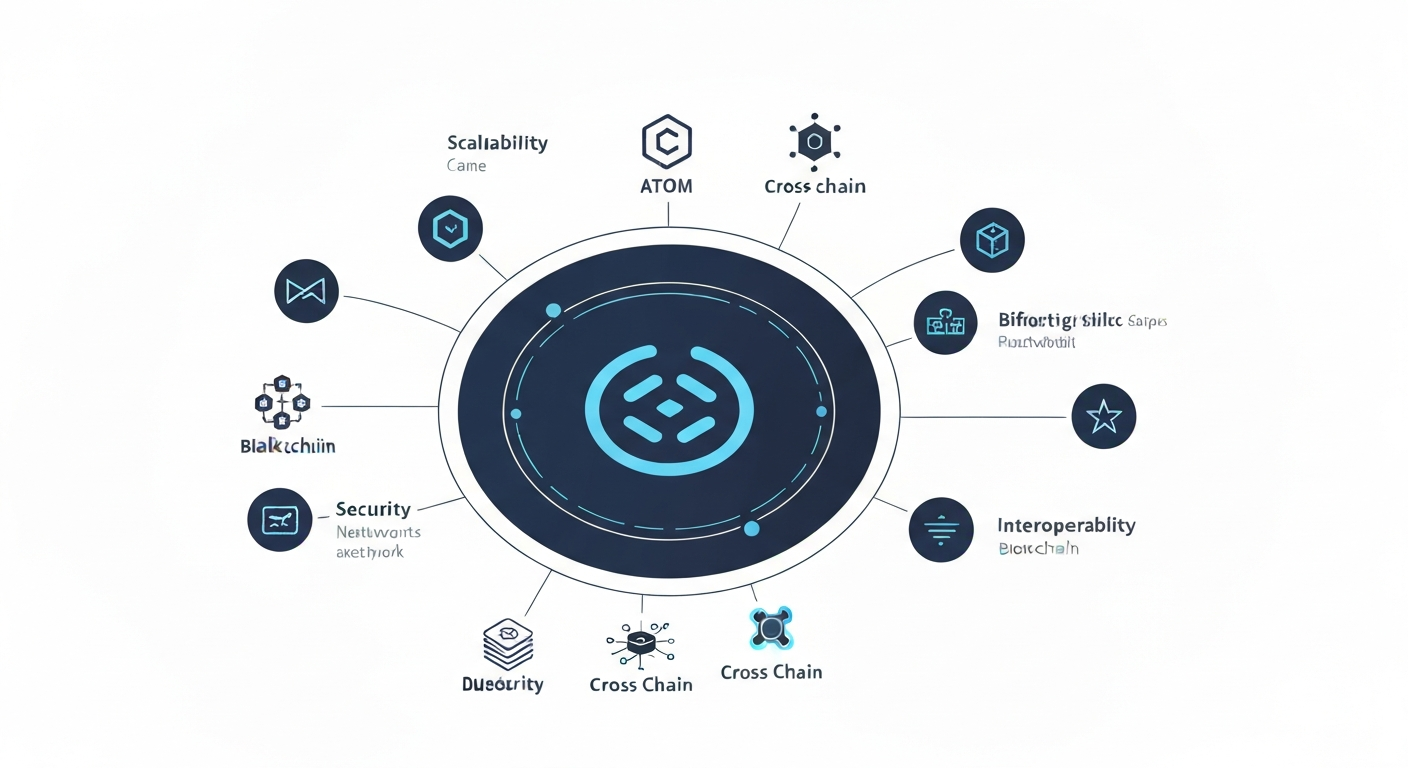
Under the hood, Cosmos uses the Tendermint consensus engine to achieve fast finality, while the Inter-Blockchain Communication protocol ([internal link: IBC]) stitches together independent app chains. Each app chain can pick its own execution environment, but all share the same security model if they opt into the hub‑and‑spoke architecture.
Think of Cosmos as a railway system: each blockchain is a train line, and IBC is the set of tracks that let trains switch tracks without stopping the whole network.
How It Works
- Developers launch an app chain using the Cosmos SDK, customizing modules for specific use cases.
- The app chain connects to the Cosmos Hub, which runs the ATOM token and coordinates cross‑chain messaging via IBC.
- Validators stake ATOM to secure the hub and, optionally, delegate stakes to app chains that adopt shared security.
- When a transaction needs to move assets between chains, IBC packets travel through light clients that verify state proofs without trusting the source.
- Once verified, the destination chain executes the transaction, completing the cross‑chain transfer.
Core Features
Tendermint BFT: A Byzantine Fault Tolerant engine that finalizes blocks in seconds, giving ATOM holders near‑instant confirmation.
Modular SDK: The Cosmos SDK lets developers assemble custom blockchains from reusable modules, speeding up deployment.
Inter-Blockchain Communication (IBC): Enables secure, trustless token and data transfers across any IBC‑enabled chain.
Hub‑and‑Spoke Architecture: The Cosmos Hub acts as the central settlement layer, while peripheral app chains remain sovereign.
Staking & Governance: ATOM holders secure the network, earn rewards, and vote on protocol upgrades.
Scalability: By offloading execution to app chains, Cosmos avoids the throughput limits that plague monolithic blockchains.
Real-World Applications
- Osmosis: A decentralized exchange built on Cosmos that reported $1.2 billion in monthly trade volume (Q1 2026, Osmosis Reports).
- Kava: A lending platform that uses IBC to accept collateral from multiple chains, managing $850 million in total assets (Kava Annual Review 2025).
- Secret Network: Provides privacy‑preserving smart contracts, leveraging Cosmos SDK for fast finality while keeping data encrypted.
- Persistence: Focuses on institutional‑grade asset tokenization, with $300 million locked in its staking pool (Persistence Dashboard 2026).
- Agoric: Uses Cosmos to deliver secure DeFi smart contracts written in JavaScript, enabling rapid onboarding of developers.
Comparison with Related Concepts
Cosmos vs Ethereum: Cosmos prioritizes modularity and cross‑chain communication, while Ethereum offers a single, highly active smart‑contract platform with higher gas costs.
IBC vs Polkadot's XCMP: Both enable cross‑chain messaging, but IBC operates on proof‑based verification without a central relay, whereas XCMP relies on a shared relay chain.
App Chain vs Sidechain: An app chain is a sovereign blockchain built with the Cosmos SDK, whereas a sidechain typically depends on the security of a parent chain.
Tendermint vs Proof‑of‑Work: Tendermint achieves consensus through voting among validators, offering instant finality, while PoW relies on mining and probabilistic finality.
Risks & Considerations
Validator Centralization: If a few validators control a large share of ATOM, network security could be compromised.
Token Volatility: ATOM price swings can affect staking rewards and the economic incentives for developers.
Interoperability Maturity: IBC is still evolving; bugs or protocol upgrades may temporarily disrupt cross‑chain transfers.
Regulatory Uncertainty: As Cosmos powers many DeFi projects, changes in regulation could impact its ecosystem.
Complexity of Governance: Decision‑making can be slow if proposals attract divergent community opinions.
Embedded Key Data
As of February 2026, the Cosmos Hub secured over 30 million ATOM in total staked value, representing roughly 65 % of the circulating supply (Cosmos Explorer). The IBC protocol facilitated more than $12 billion in cross‑chain transfers in the past year, demonstrating its growing adoption (IBC Analytics 2026).
Frequently Asked Questions
What is Cosmos and how does it differ from a traditional blockchain?
Cosmos is a network of independent blockchains that can communicate through IBC, unlike a traditional monolithic blockchain that processes all transactions on a single chain. This design offers flexibility, scalability, and the ability to specialize each app chain for a particular use case.
How can I earn rewards with ATOM?
By delegating your ATOM to a trusted validator, you earn staking rewards proportional to the amount you stake and the validator’s performance. Rewards are typically distributed every few days and can be compounded automatically through most wallets.
Is Cosmos suitable for building NFTs?
Yes. The Cosmos SDK includes modules for token standards, and several app chains like Secret Network have launched NFT marketplaces that benefit from fast finality and low fees.
Can I move assets from Cosmos to Bitcoin?
Direct IBC transfers to Bitcoin aren’t possible because Bitcoin doesn’t support smart contracts. However, wrapped Bitcoin (e.g., wBTC) on an IBC‑enabled chain can be moved, then redeemed on Bitcoin via a custodial bridge.
What are the main security concerns with IBC?
IBC relies on light client verification; if a light client implementation contains bugs, it could allow fraudulent packets. Ongoing audits and community reviews aim to mitigate this risk.
How does Cosmos contribute to Decentralized Finance (DeFi) growth?
Cosmos provides the infrastructure for DeFi platforms to interoperate, allowing assets to flow freely between DEXs, lending protocols, and stablecoin issuers across chains, which accelerates liquidity aggregation and user adoption.
Summary
Cosmos (ATOM) is a pioneering ecosystem that connects independent blockchains through IBC, delivering scalability and true interoperability. Its modular design, fast consensus, and active developer community make it a cornerstone of the modern blockchain landscape. Explore related concepts like [internal link: IBC] and [internal link: Interoperability] to deepen your understanding.