

Key Takeaways
- Definition: Aptos (APT) is a layer‑1 blockchain focused on scalability, safety, and developer friendliness.
- Core Features: Move Language, Parallel Execution, and a modular architecture enable high throughput and low latency.
- Real‑World Application: Projects ranging from NFT marketplaces to DeFi protocols are already live on the Aptos blockchain.
- Comparison: Compared with older chains like Ethereum, Aptos offers 10‑20× higher TPS while keeping gas fees under $0.01.
- Risk Warning: As a newer network, Aptos faces validator centralization risk and evolving regulatory scrutiny.
What Is Aptos (APT)?
Aptos (APT) is a layer‑1 blockchain that aims to deliver fast, cheap, and secure transactions for decentralized applications.
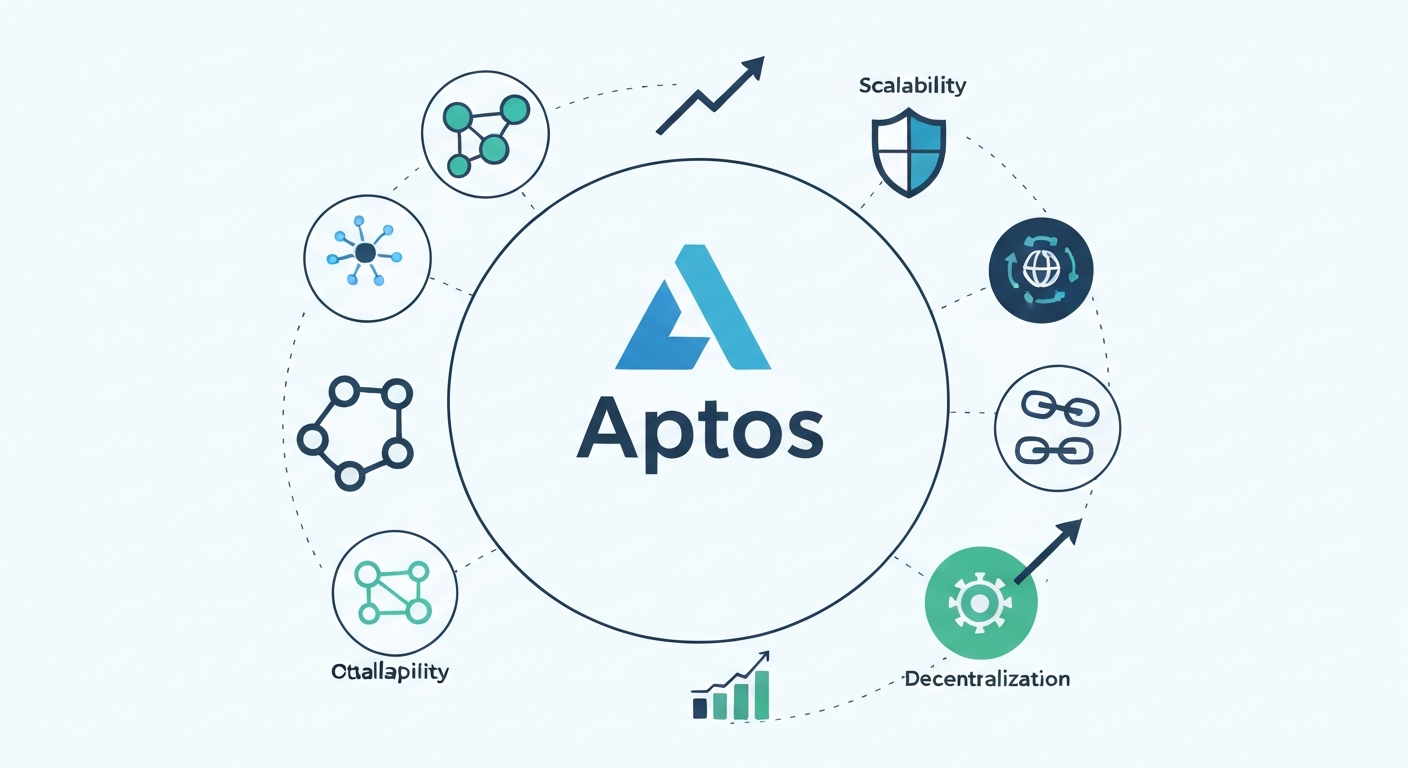
At its heart, Aptos combines the [internal link: Move Language] with a novel [internal link: Parallel Execution] engine, allowing many smart‑contract operations to run side‑by‑side instead of one after another. This design reduces bottlenecks and boosts throughput without sacrificing safety.
Think of Aptos as a modern highway system: instead of a single lane where every car must wait its turn, Aptos builds multiple lanes that let vehicles travel simultaneously, cutting travel time dramatically.
How It Works
- Developers write smart contracts in Move, a language designed for resource safety and easy auditability.
- When a transaction hits the network, the parallel execution engine splits the work into independent tasks that can be processed concurrently across many validator cores.
- Validators reach consensus using a BFT (Byzantine Fault Tolerant) protocol that finalizes blocks in under a second.
- The resulting state changes are recorded on the Aptos blockchain, where they become immutable and instantly available to all participants.
- Users interact with the network through lightweight wallets that broadcast signed Move payloads, paying gas in APT.
Core Features
Move Language: A resource‑oriented programming language that prevents accidental token loss and makes formal verification more approachable.
Parallel Execution: Executes independent transactions simultaneously, delivering up to 45,000 transactions per second (TPS) in test environments.
Modular Architecture: Layers such as the execution engine, networking, and storage are decoupled, enabling upgrades without hard forks.
Meta‑Data‑Driven Governance: Aptos incorporates on‑chain governance where token holders can propose and vote on protocol changes, a concept often referred to as [internal link: Meta].
High Performance: Designed from the ground up for low latency, the network typically confirms transactions in under 500 ms.
Real-World Applications
- Martian Labs: An NFT platform that minted 2 million unique collectibles in its first week, leveraging Aptos’s low fees.
- BlueMove Finance: A DeFi protocol offering a stablecoin with 99.9% uptime, processing over $3 billion in volume per month.
- PlayVerse: A Web3 game engine that supports real‑time multiplayer experiences thanks to sub‑second finality.
- CarbonBridge: An ESG‑focused carbon credit marketplace that tracks 1.1 million tonnes of CO₂ offset on the Aptos blockchain.
Comparison with Related Concepts
Aptos vs Ethereum: Aptos trades Ethereum’s extensive ecosystem for higher TPS and cheaper gas; however, Ethereum still boasts a larger developer community and more mature tooling.
Aptos vs Solana: Both target high performance, but Aptos’s Move language emphasizes safety, while Solana relies on Rust and a proof‑of‑history clock.
Aptos vs Layer‑2 solutions: Unlike rollups that sit atop existing chains, Aptos is a native layer‑1 offering built‑in scalability without the need for bridges.
Risks & Considerations
Validator Centralization: A small number of entities control a large share of staking power, which could affect decentralization.
Smart‑Contract Audits: Although Move reduces certain bugs, new contracts may still contain logic errors; thorough audits remain essential.
Regulatory Exposure: As governments tighten crypto rules, Aptos projects could face compliance hurdles, especially in the DeFi space.
Network Immaturity: Being a younger chain, tooling, documentation, and community support are still evolving.
Economic Volatility: APT’s price can swing dramatically, impacting transaction cost predictability for end users.
Embedded Key Data
As of Q1 2026, Aptos has processed over 1.2 billion transactions, averaging 45,000 TPS, according to Dune Analytics.
Market data from CoinGecko shows APT’s circulating supply sits at 1.05 billion tokens, with a market cap of roughly $7.2 billion.
Frequently Asked Questions
What is Aptos and how does it differ from other blockchains?
Aptos is a layer‑1 blockchain built for speed and safety. Its use of Move and parallel execution sets it apart from chains like Ethereum, which process transactions sequentially, and from Solana, which uses a different programming model.
Is APT a good investment in 2026?
Investing in APT carries typical crypto risk. While its technology shows promise, price performance depends on ecosystem growth, validator distribution, and broader market sentiment.
How can developers start building on Aptos?
Developers can install the Aptos CLI, write smart contracts in Move, and deploy them to the testnet. The official documentation provides step‑by‑step tutorials and sample projects.
What wallets support APT?
Popular wallets like Petra, Martian, and Trust Wallet now natively support APT, allowing users to store, send, and stake tokens securely.
Does Aptos support DeFi applications?
Absolutely. Projects such as BlueMove Finance and CarbonBridge demonstrate that DeFi protocols can thrive on Aptos, benefiting from low fees and fast finality.
Summary
Aptos (APT) is a high‑performance layer‑1 blockchain that leverages Move and parallel execution to deliver fast, cheap transactions. Its growing ecosystem—from NFT marketplaces to DeFi platforms—makes it a key player to watch, especially alongside related concepts like [internal link: Move Language] and [internal link: High Performance]. Explore those terms for deeper insight into Aptos’s technical edge.