

Key Takeaways
- Definition: Gas Limit is the ceiling on gas a transaction or block can use.
- Core feature: It protects the network from runaway computations.
- Real‑world use: Miners enforce the block gas limit when packing transactions.
- Comparison: Unlike traditional transaction fees, gas limits cap execution, not just cost.
- Risk warning: Setting a limit too low triggers an Out of Gas error and wastes time.
What Is Gas Limit?
Gas Limit is the maximum amount of gas you allow a transaction to consume on Ethereum.
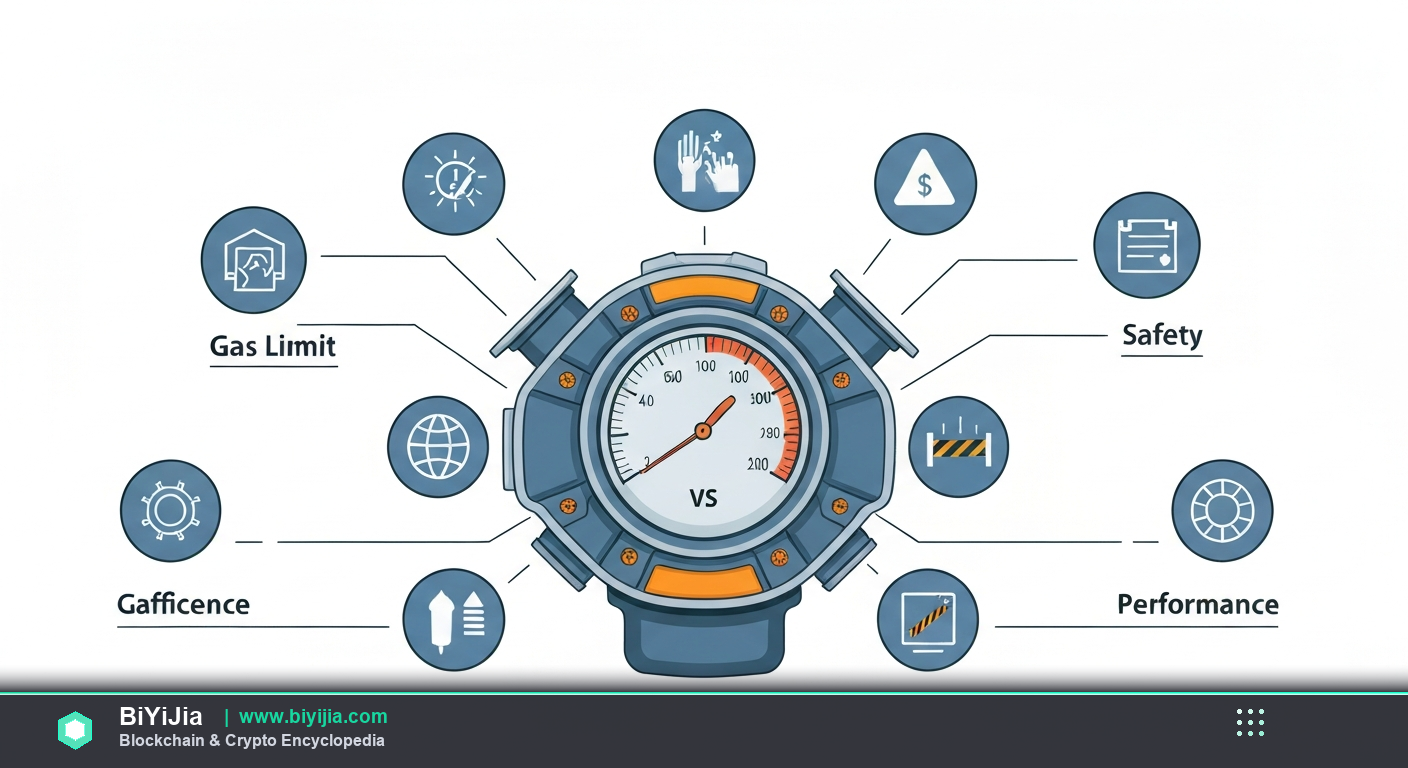
In technical terms, every operation in the Ethereum Virtual Machine (EVM) costs a tiny amount of gas; the gas limit tells the network the upper bound of those costs for a single transaction or for an entire block. If the execution tries to exceed that bound, the EVM aborts and any state changes are rolled back.
Think of it like a prepaid credit card for computation: you load a certain amount of credit (gas) and once you hit the limit, the card stops working until you top up.
How It Works
- When you craft a transaction, your wallet suggests a gas limit based on the transaction’s complexity.
- The transaction is broadcast to the mempool, where miners (or validators) compare its gas limit to the current block gas limit.
- If the transaction’s limit fits, the miner includes it in the next block; otherwise it stays pending.
- During execution, the EVM deducts gas for each opcode. If the total reaches the transaction’s gas limit, the EVM throws an Out of Gas exception.
- Any unused gas is refunded to the sender, while the consumed portion becomes part of the miner’s reward.
Core Features
- Upper bound control: Guarantees a transaction cannot consume more gas than you specify.
- Network safety: Prevents single transactions from monopolizing block space.
- Refund mechanism: Unused gas is returned, encouraging efficient code.
- Dynamic sizing: Users can raise the limit for complex contracts or lower it for simple transfers.
- Integration with Gas Fee: The limit multiplied by the gas price determines the maximum fee you might pay.
Real-World Applications
- Uniswap v4 – Automated market maker that adjusts gas limits per swap to handle varying transaction complexity.
- OpenSea – NFT marketplace that sets higher gas limits for batch minting operations, often exceeding 1,000,000 gas.
- Aave V3 – Lending protocol where flash loan transactions use a custom gas limit to ensure atomicity.
- Arbitrum Nitro – Layer‑2 rollup that inherits Ethereum’s block gas limit but aggregates multiple user‑provided limits into a single batch.
Comparison with Related Concepts
Gas Limit vs Gas Fee: Gas Limit caps the amount of computation, while Gas Fee (gas price × gas used) determines the monetary cost. You can set a high limit with a low price, or a low limit with a high price, but they serve different purposes.
Gas Limit vs Transaction Complexity: Complex contracts naturally need higher limits because they execute more opcodes. Simpler token transfers often require as little as 21,000 gas.
Gas Limit vs Block Gas Limit: The Block Gas Limit is a network‑wide ceiling for the total gas that all transactions in a block may consume. Individual transaction limits must fit within this aggregate budget.
Gas Limit vs Out of Gas: An Out of Gas error occurs when a transaction’s execution exceeds its own gas limit, not the block limit. It’s a self‑imposed failure, not a network‑wide one.
Risks & Considerations
- Under‑estimation: Setting the limit too low aborts the transaction, wasting the gas already spent.
- Over‑allocation: Over‑generous limits tie up capital in the form of locked ETH until the transaction finalizes.
- Network congestion: During high demand, miners may prioritize transactions with higher gas prices, rendering a low‑limit transaction uneconomical.
- Block gas limit changes: If the network raises the block gas limit, previously safe limits might become insufficient for new contract upgrades.
- Smart‑contract bugs: Faulty code can unintentionally consume massive gas, leading to unexpected Out of Gas failures.
Embedded Key Data
As of Q1 2026, the average Ethereum block gas limit sits at roughly 30 million gas, up from 15 million in 2021 (Ethereum Foundation). The median gas price during the same period was 12 gwei, reflecting a modest increase compared to the 2023 peak of 45 gwei.
DeFi (Decentralized Finance) platforms collectively accounted for over 65% of total gas consumption in 2025, illustrating the heavy reliance on correctly sized gas limits for complex financial primitives.
Frequently Asked Questions
What is gas limit and why does it matter?
The gas limit defines the maximum computational effort a transaction can use. It matters because it protects the network from runaway scripts and ensures you don’t pay for unintended work.
How does Ethereum gas limit differ from block gas limit?
Ethereum gas limit applies to an individual transaction, while block gas limit caps the total gas of all transactions in a single block. The block limit is a network parameter adjusted by consensus.
Can I change the gas limit after submitting a transaction?
No. Once a transaction is broadcast, its gas limit is immutable. If you need a higher limit, you must cancel the pending transaction (if possible) and resend a new one.
What causes an Out of Gas error?
An Out of Gas error occurs when the EVM runs out of the gas allocated by the transaction’s limit before completing execution. It typically means the limit was set too low for the contract’s logic.
Do Layer‑2 solutions have their own gas limits?
Yes. While they inherit Ethereum’s concepts, rollups like Arbitrum and Optimism define their own per‑batch gas limits that map back to Ethereum’s block gas limit when posted on‑chain.
How can I estimate the right gas limit for a new smart‑contract interaction?
Use wallet estimators or tools like ethers.js that simulate the call locally. Add a safety margin (10‑20%) to cover state‑dependent variations.
Summary
Gas Limit is the ceiling on computational resources a transaction can consume, playing a crucial role in network stability and cost predictability. Understanding its interaction with Gas Fee, Block Gas Limit, and Out of Gas helps you craft efficient, secure transactions in the evolving Ethereum ecosystem.