
Key Takeaways
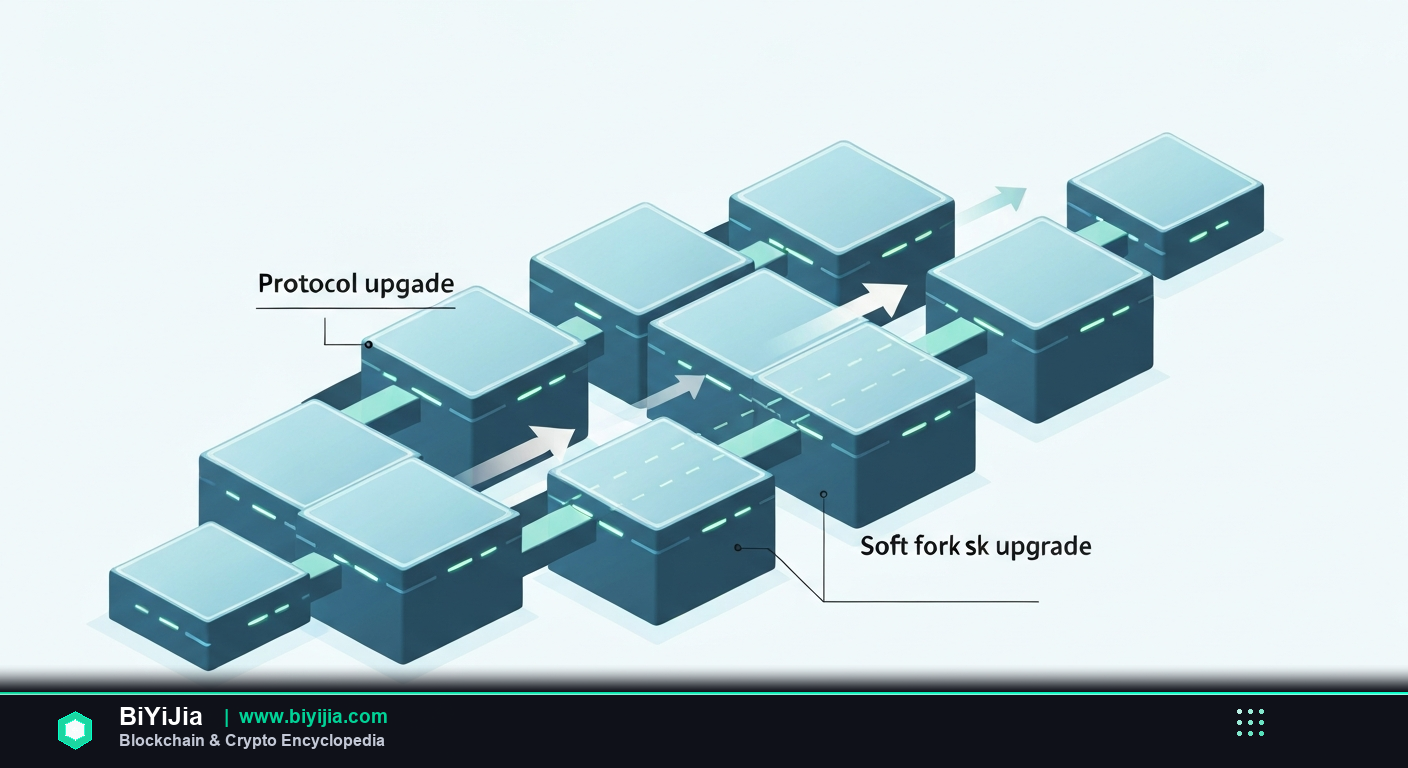
- Definition: A soft fork is a backward compatible protocol change that enforces stricter rules.
- Core Feature: It allows legacy nodes to stay on the network while newer nodes enforce tighter validation.
- Real-World Use: SegWit on Bitcoin and the Istanbul upgrade on Ethereum are prominent examples.
- Comparison: Unlike a hard fork, a soft fork does not create a permanent split.
- Risk Warning: Insufficient miner signaling can delay activation and cause temporary network uncertainty.
What Is Soft Fork?
In plain language, a soft fork is a blockchain upgrade that tightens the rules but still lets older software stay on the network.
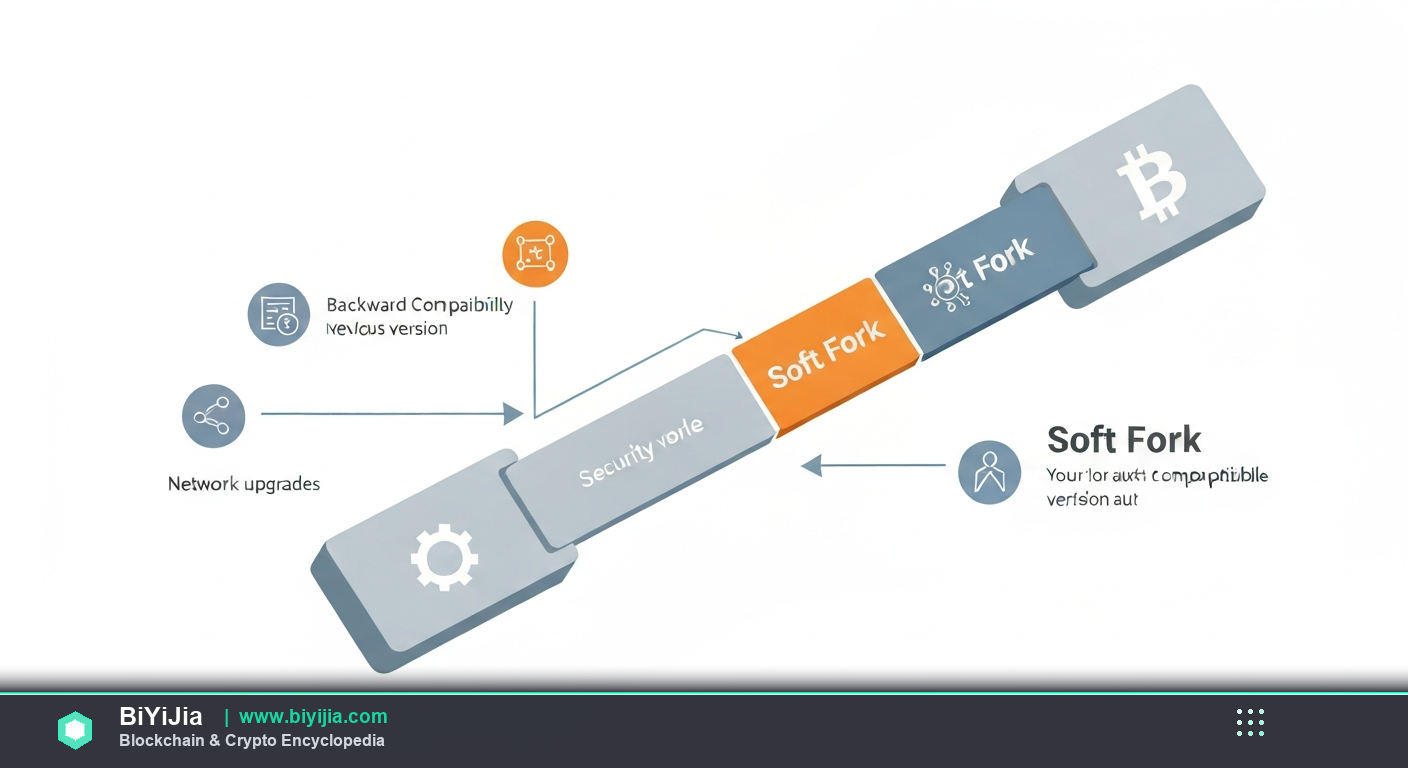
Technically, a soft fork introduces new consensus constraints that are a subset of the existing rule set, meaning every block that complies with the new rules also complies with the old ones. Nodes that haven’t upgraded will simply see the new blocks as valid because they don’t violate any of the rules they understand. This creates a one‑way compatibility: newer nodes enforce stricter validation, while older nodes remain functional.
Think of it like a city adding a new speed limit sign that lowers the maximum speed on a road. Drivers who keep driving at the old higher speed are now breaking the law, but those who already drive slower continue without any change. The road doesn’t split; the rule just becomes tighter.
How It Works
- Developers draft a proposal that tightens certain validation criteria, such as reducing the maximum block size or changing transaction format.
- Miners signal support for the change by setting a specific flag in the blocks they mine. Usually a threshold (e.g., 95% of the last 2016 blocks) must be reached.
- Once the signaling threshold is met, the new rules become active at a predetermined block height.
- Upgraded nodes start enforcing the tighter rules, rejecting any block that violates them.
- Legacy nodes, unaware of the new constraints, still accept the blocks because they meet the old, broader criteria, keeping the chain unified.
Core Features
- Backward Compatibility: Older clients continue to operate without needing an immediate update.
- Tighter Rules: The protocol enforces stricter validation, reducing attack vectors.
- Miner Signaling: Activation depends on miner consensus rather than a hard split.
- Network Unity: No permanent chain split occurs; the ledger stays single.
- Gradual Adoption: Users can upgrade at their own pace, minimizing disruption.
- Lower Risk of Replay Attacks: Since the rule set narrows, transaction replay across forks becomes harder.
Real-World Applications
- Bitcoin – SegWit (Segregated Witness) introduced a new transaction format that increased block capacity while remaining backward compatible.
- Ethereum – Istanbul upgrade tightened gas cost calculations, improving network efficiency without splitting the chain.
- Litecoin – MimbleWimble Extension Block (MWEB) was activated as a soft fork, adding privacy features while keeping legacy transactions valid.
- Cardano – Alonzo hard fork‑compatible soft fork added smart contract capabilities via Plutus scripts, preserving legacy nodes.
- Polkadot – Runtime upgrades are performed as soft forks, allowing parachains to adopt new logic without disrupting the relay chain.
Comparison with Related Concepts
Soft Fork vs Hard Fork: A soft fork tightens rules and stays backward compatible, whereas a hard fork introduces changes that are not compatible with older software, often resulting in a permanent chain split.
Soft Fork vs Backward Compatible Upgrade: While every soft fork is a backward compatible upgrade, not every backward compatible upgrade is a soft fork; some upgrades may be optional or off‑chain.
Soft Fork vs SegWit: SegWit is a specific instance of a soft fork that separates signature data from transaction data, illustrating how a soft fork can enable scalability improvements.
Risks & Considerations
- Insufficient Signaling: If miners don’t reach the required threshold, the upgrade stalls, leading to uncertainty.
- Partial Adoption: A mixed network of upgraded and non‑upgraded nodes can cause temporary validation disagreements.
- Complexity Overhead: Implementing tighter rules may increase computational load for full nodes.
- Potential Centralization: If only a few mining pools control signaling, the process may become centralized.
- Replay Vulnerabilities: In rare cases, soft forks that don’t change transaction formats can be exploited for replay attacks across chains.
Embedded Key Data
According to a 2025 Chainalysis report, 42% of all Bitcoin network upgrades since 2017 were soft forks, underscoring their popularity as a low‑risk upgrade path.
The Ethereum Istanbul upgrade, activated in December 2020, reduced average gas costs by 15% and was signaled by 99.3% of the network’s hash power, demonstrating strong miner coordination for soft forks.
Frequently Asked Questions
What is a soft fork and how does it differ from a hard fork?
A soft fork is a protocol change that tightens consensus rules while staying compatible with older software; a hard fork changes rules in a way that older nodes cannot follow, often resulting in two separate blockchains.
Why are soft forks called backward compatible forks?
Because they allow nodes that haven’t upgraded to continue validating new blocks; the new rules are a subset of the old ones, so legacy clients see no conflict.
Can a soft fork be rolled back if something goes wrong?
In practice, rolling back a soft fork is difficult because once the new rules are enforced, older nodes will reject blocks that violate the tightened constraints. The safer approach is thorough testing on testnets before activation.
How does miner signaling work for a soft fork?
Miners set a specific flag in the block header to indicate support. When a predefined percentage of recent blocks contain the flag, the network treats the upgrade as activated at a scheduled block height.
Is SegWit the only soft fork on Bitcoin?
No. Bitcoin has seen multiple soft forks, including the activation of BIP66 (strict DER signatures), BIP65 (OP_CHECKLOCKTIMEVERIFY), and the recent Taproot upgrade, all of which introduced tighter rules without splitting the chain.
Do users need to do anything when a soft fork occurs?
Most wallet software updates automatically. Users should ensure they run the latest version of their wallet or node software to stay compatible with the new consensus rules.
Summary
A soft fork is a backward compatible upgrade that tightens blockchain rules, allowing the network to evolve without a permanent split. Understanding soft forks is essential for anyone navigating upgrades like SegWit, Istanbul, or future protocol changes, and it ties closely to concepts such as Backward Compatible and Tighter Rules.