
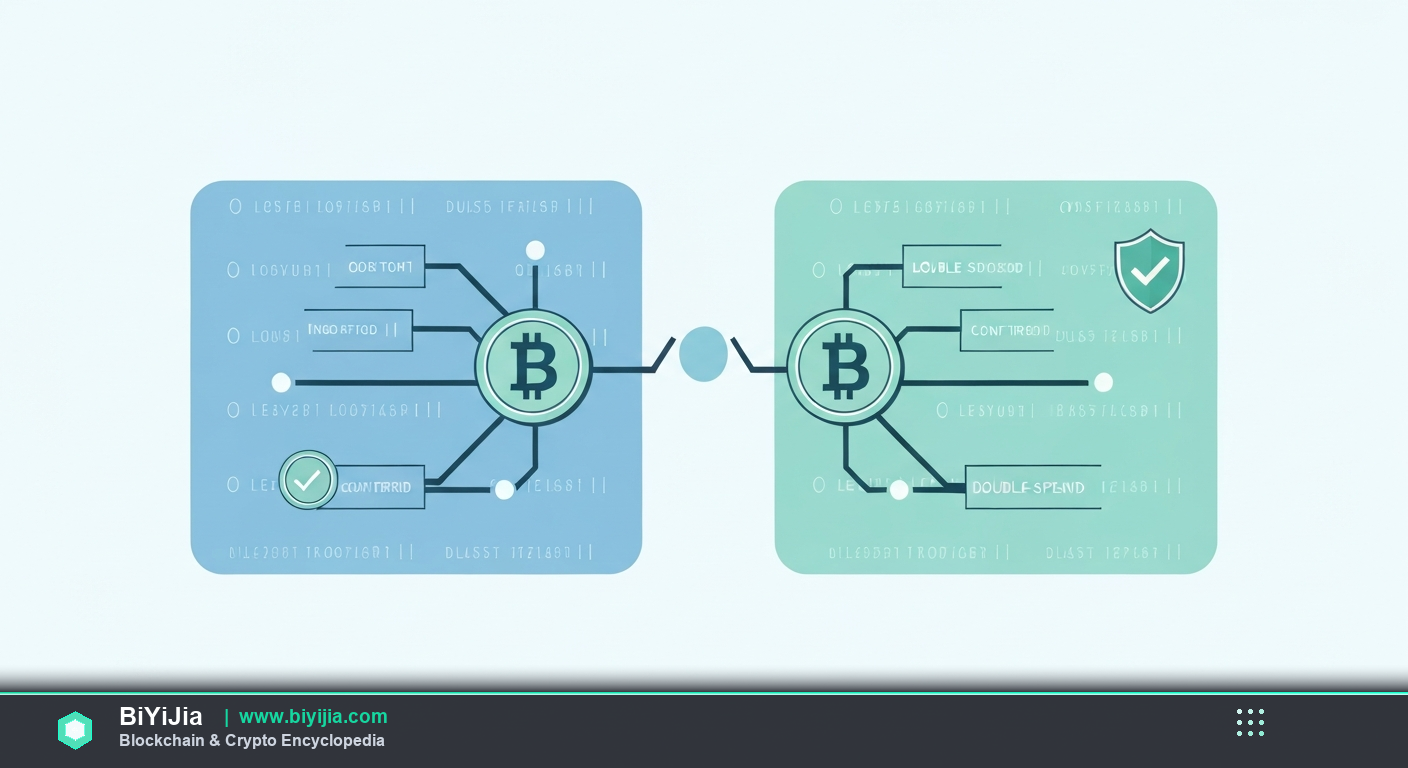
Double Spending refers to the act of spending the same digital token more than once, a core security challenge that blockchain consensus mechanisms are designed to eliminate.
Key Takeaways
- Definition: Attempt to reuse a single cryptocurrency unit in multiple transactions.
- Core feature: Relies on consensus and confirmations to prevent reuse.
- Real‑world relevance: Mitigated in Bitcoin, Ethereum, and most public ledgers.
- Traditional contrast: Unlike paper cash, digital tokens can be copied without physical constraints.
- Risk warning: A successful double spend attack can undermine trust in a network.
What Is Double Spending?
In plain language, double spending is the digital equivalent of trying to cash the same check twice.
Technically, it exploits the fact that digital data can be duplicated; without a shared, immutable record, a malicious actor could broadcast two conflicting transactions that both claim ownership of the same coins. Consensus protocols—whether Proof‑of‑Work, Proof‑of‑Stake, or newer variants—order these transactions and reject the second one once the first is confirmed.
Think of a restaurant tab that you try to pay with the same credit card twice; the server’s receipt book (the ledger) records the first payment, making the second attempt invalid because the balance is already zero.
How It Works
- The attacker creates two transactions that each spend the same unspent output.
- One transaction is sent to a merchant who requires only a few confirmations.
- The second transaction is broadcast to the broader network, often with a higher transaction fee to incentivize miners.
- Miners include the higher‑fee transaction in a block, causing the first transaction to become orphaned.
- When the merchant’s confirmation threshold is reached, the attacker now controls the same coins again.
Core Features
Network Consensus: The collective agreement of nodes on the order of transactions prevents conflicting spends.
Confirmations: Each additional block that builds on a transaction reduces the chance of reversal.
Immutable Ledger: Once a transaction is recorded, altering it would require rewriting history, which is computationally prohibitive.
Fee Dynamics: Higher fees can prioritize a double spend transaction in a competitive mempool.
Attack Surface: Low‑value or low‑confirmation environments are most vulnerable.
Real‑World Applications
- Bitcoin – The original blockchain, where a 6‑confirmation rule (≈1 hour) is commonly used for high‑value transfers.
- Ethereum – Uses a 12‑confirmation standard (≈3 minutes) for most token transfers, with smart contracts adding extra safeguards.
- Lightning Network – A layer‑2 solution that locks funds in multi‑signature channels, eliminating the double spending problem for instant payments.
- Decentralized Finance (DeFi) – Protocols like Uniswap and Aave rely on atomic swaps and smart‑contract checks to ensure a token cannot be spent twice within a single transaction.
- Ripple – Implements a consensus ledger with a 3‑second finality, making double spend attacks practically impossible under normal conditions.
Comparison with Related Concepts
Double Spending vs 51% Attack: A double spend can succeed with a small amount of hash power if the victim accepts few confirmations, while a 51% attack requires majority control of the network’s consensus power to rewrite entire blocks.
Double Spending vs Confirmation: Confirmations are the defensive metric; more confirmations mean a lower probability of a double spend succeeding.
Double Spending vs Consensus: Consensus is the broader process that determines which transactions are valid, whereas double spending is a specific attempt to break that validity.
Risks & Considerations
Low Confirmation Acceptance: Merchants that accept zero or one confirmation are especially exposed.
Fee‑Based Race: Attackers can out‑bid honest users by attaching higher fees, forcing miners to prioritize the malicious transaction.
Network Latency: Slow propagation of blocks can give an attacker a window to broadcast conflicting spends.
Reputation Damage: Repeated successful double spend attempts can erode confidence in a cryptocurrency.
Regulatory Scrutiny: Persistent double spend incidents may attract tighter regulation of crypto payment processors.
Embedded Key Data
According to a 2025 blockchain security report, the probability of a double spend succeeding after six Bitcoin confirmations is less than 0.0001% (Chainalysis, 2025).
Ethereum’s average block time of 12 seconds translates to roughly 3 minutes for 12 confirmations, a window that has historically seen fewer than five documented double spend attempts per year (Ethereum Foundation, 2024).
Frequently Asked Questions
What is double spending and why does it matter?
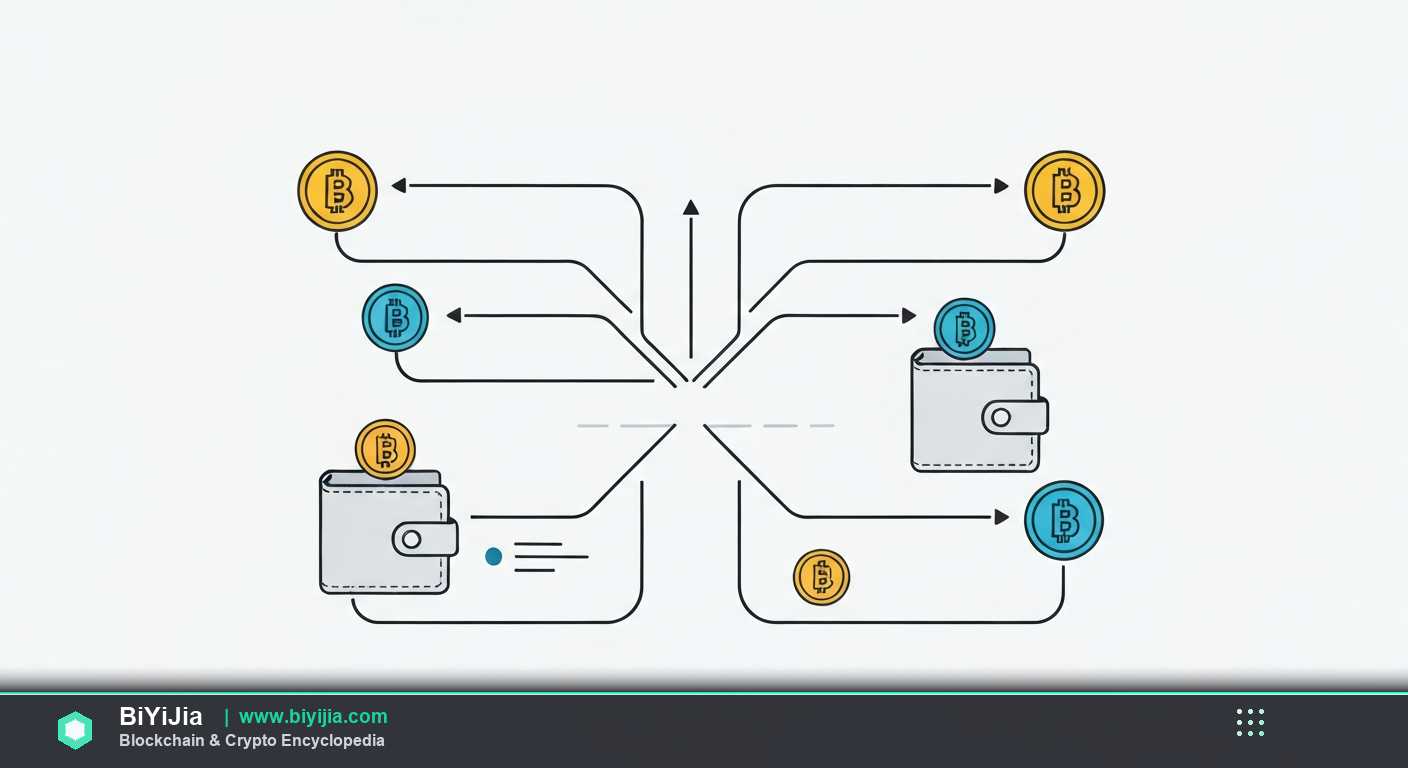
Double spending is the attempt to use the same digital token in two separate transactions. It matters because if unchecked, it would destroy trust in any cryptocurrency, making it impossible to rely on digital money for commerce.
How does a double spend attack differ from a 51% attack?
A double spend attack targets a single transaction by racing to get a conflicting spend confirmed, often needing only a small fraction of network power. A 51% attack, on the other hand, requires majority control of the consensus mechanism to rewrite large portions of the blockchain.
Can I protect my business from double spending?
Yes. Require multiple confirmations before delivering goods, use payment processors that monitor mempool activity, and consider layer‑2 solutions like the Lightning Network for instant, low‑risk settlements.
Do all cryptocurrencies suffer from the double spending problem?
Every digital currency faces the theoretical double spending problem, but most modern blockchains implement consensus rules and confirmation thresholds that make successful attacks practically infeasible.
What role do smart contracts play in preventing double spending?
Smart contracts can atomically lock funds, enforce multi‑signature requirements, and automatically revert transactions that attempt to spend already‑locked assets, thereby adding an extra layer of protection.
Is double spending possible on private or permissioned ledgers?
In permissioned environments, validators are known and vetted, so the risk of a double spend attack is dramatically lower. However, insider threats or misconfigured consensus parameters can still open a window for abuse.
Summary
Double Spending refers to the attempt to spend the same cryptocurrency token more than once, a problem solved by robust consensus, confirmations, and immutable ledgers. Understanding how it works, where it can happen, and how to mitigate it is essential for anyone dealing with digital assets, and it ties directly into concepts like 51% Attack, Confirmations, and Consensus.