
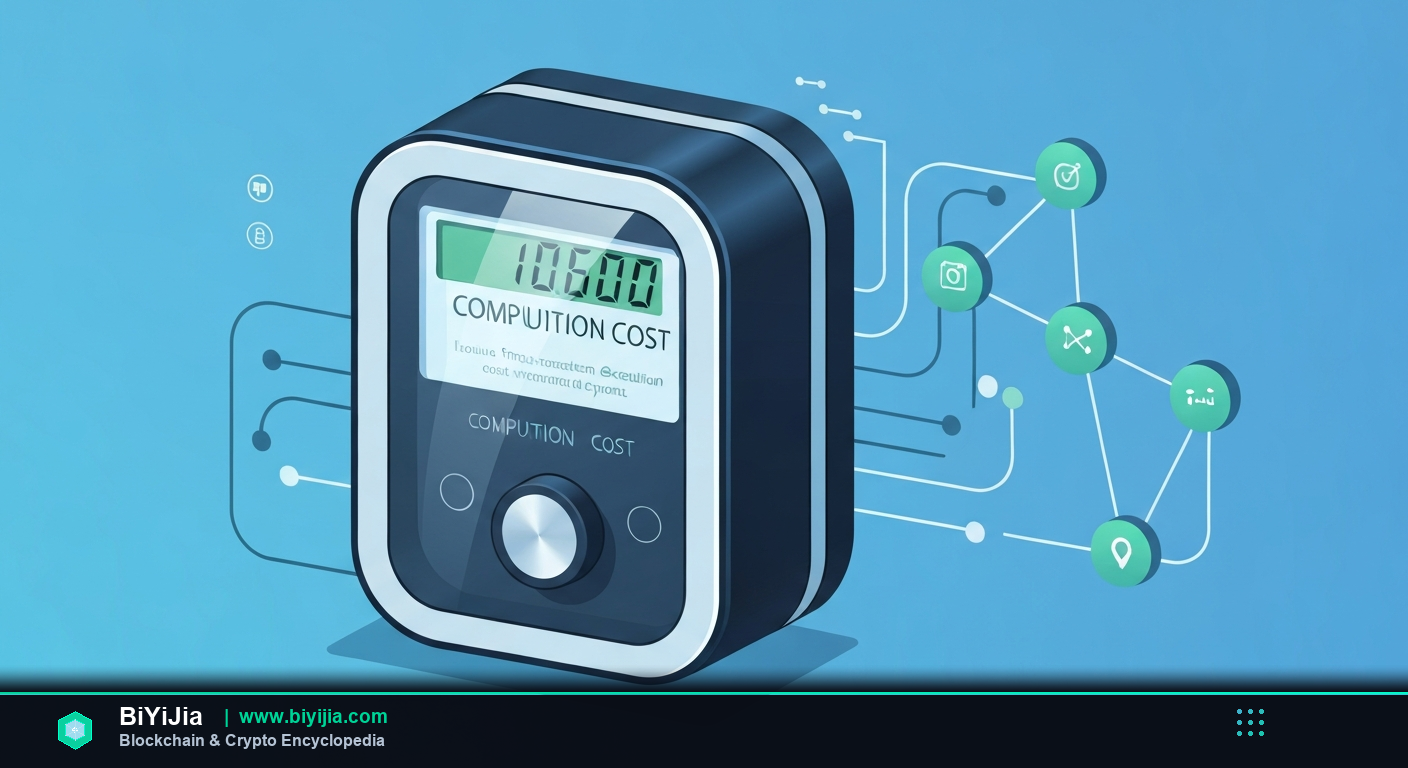
Gas is the computational fuel that powers transactions and smart contracts on blockchain networks, measured in units like Gwei and paid as a fee to miners or validators.
Key Takeaways
- Gas is the unit that quantifies the work required to execute operations on a blockchain.
- It protects the network from spam by attaching a cost to every computation.
- Users pay gas in the native cryptocurrency, influencing transaction speed and cost.
- Unlike traditional transaction fees, gas can be adjusted in real time based on network demand.
- Overpaying or underpaying gas can lead to failed transactions or excessive costs.
What Is Gas?
In plain language, gas is the fee you pay to get a transaction or smart‑contract call processed on a blockchain.
Technically, each operation that a virtual machine performs—like adding two numbers or writing to storage—has a predefined gas cost. When you submit a transaction, you specify a Gas Limit (the maximum units you’re willing to spend) and a Gas Price (how much you’re willing to pay per unit, usually expressed in Gwei). The network multiplies the two to calculate the total fee, which miners or validators collect for securing the block.
Think of it like filling up a car: the gas tank is your Gas Limit, the price per liter is your Gas Price, and the total you spend fuels the journey of your transaction across the blockchain highway.
How It Works
- Draft the transaction: include the desired operation, set a Gas Limit, and choose a Gas Price in Gwei.
- Broadcast to the network: nodes validate that the sender has enough balance to cover Gas Limit × Gas Price.
- Miners/validators pick transactions: those offering higher Gas Prices get priority, boosting Transaction Priority.
- Execution: the virtual machine consumes gas step by step; each opcode deducts its cost from the supplied limit.
- Settlement: any unused gas is refunded to the sender, while the consumed portion is paid to the block producer.
Core Features
- Gas Fee: The monetary amount paid for consumed gas, calculated as Gas Used × Gas Price.
- Gas Limit: The maximum amount of gas a user is willing to spend on a transaction; acts as a safety net against runaway code.
- Gwei: A sub‑unit of Ether (1 ETH = 1,000,000,000 Gwei) commonly used to express Gas Price.
- Transaction Priority: Determined by the Gas Price; higher prices push a transaction toward the front of the mempool.
- Dynamic Pricing: Gas Prices fluctuate with network congestion, allowing users to trade cost for speed.
- Refund Mechanism: Unused gas is returned to the sender, incentivizing efficient contract design.
Real-World Applications
- Ethereum: The original platform where gas concepts were introduced; average gas price in Q4 2025 was 22 Gwei (Etherscan).
- Polygon (Matic): Offers lower gas fees, typically under 1 Gwei, making it popular for NFT minting.
- Binance Smart Chain: Uses BNB for gas, with average transaction costs around $0.02 in 2026 (Dune Analytics).
- Arbitrum: An Optimistic Rollup that batches transactions, reducing gas per transaction by up to 70% compared to Ethereum mainnet.
- Decentralized Finance (DeFi) platforms like Uniswap: Users pay gas each time they swap tokens; a single trade cost about $0.45 in March 2026 (Dune Analytics).
Comparison with Related Concepts
Gas vs Gas Fee: Gas is the abstract unit of computation; Gas Fee is the actual monetary amount you pay, derived from Gas Used × Gas Price.
Gas Limit vs Gas Price: Gas Limit caps the total units you’re willing to consume; Gas Price determines how much you pay per unit, influencing priority.
Gwei vs Ether: Gwei is a denomination of Ether used for fine‑grained pricing; 1 Ether equals one billion Gwei.
Transaction Priority vs Confirmation Time: Higher Gas Prices improve Transaction Priority, often reducing the time a transaction waits to be included in a block.
Risks & Considerations
- Overpaying Gas: Setting an excessively high Gas Price can waste funds, especially in low‑congestion periods.
- Underpaying Gas: Too low a Gas Price may cause your transaction to sit in the mempool indefinitely, leading to delays.
- Out‑of‑Gas Errors: If the Gas Limit is too low, the transaction aborts mid‑execution, consuming the full fee without achieving the intended effect.
- Network Congestion: Sudden spikes (e.g., during popular token launches) can drive Gas Prices up dramatically, making otherwise cheap operations costly.
- Smart‑Contract Vulnerabilities: Poorly written contracts can consume excessive gas, exposing users to higher fees or potential DoS attacks.
Embedded Key Data
According to Etherscan, the average gas price on Ethereum in Q4 2025 settled at 22 Gwei, reflecting a 15% increase from the previous quarter.
Dune Analytics recorded that a standard ERC‑20 transfer cost roughly $0.45 in gas during March 2026, highlighting the impact of network demand on everyday users.
Frequently Asked Questions
What is gas in blockchain?
Gas is the unit that measures the computational effort required to execute operations on a blockchain. Users pay for gas in the network’s native token, and the fee ensures that miners or validators are compensated for securing the transaction.
How do I calculate the gas fee for a transaction?
Multiply the Gas Used (the amount of gas the operation consumes) by the Gas Price you set, usually expressed in Gwei. For example, if a transaction uses 21,000 gas and you set a price of 30 Gwei, the fee equals 630,000 Gwei, or 0.00063 ETH.
Why does gas price fluctuate so much?
Gas price is a market‑driven variable. When many users compete to have their transactions included, validators prioritize higher Gas Prices, pushing the average upward. Conversely, during calm periods, prices drop as demand eases.
Can I get a refund if my transaction uses less gas than I set?
Yes. Any unused portion of your Gas Limit is returned to your wallet after the transaction settles. This mechanism encourages users to set a generous limit without fear of losing the excess.
Is gas the same on every blockchain?
While the concept of paying for computational work exists across many chains, the units, pricing models, and denominating tokens differ. Ethereum uses Gwei, Binance Smart Chain uses BNB, and Polygon uses MATIC, each with its own fee dynamics.
How does gas affect DeFi interactions?
Every DeFi action—swapping tokens, providing liquidity, or borrowing assets—requires gas. High gas costs can erode yields, so savvy users often time their transactions during low‑congestion windows or use layer‑2 solutions to save on fees.
What happens if I set the gas limit too low?
The transaction will run out of gas mid‑execution, triggering an out‑of‑gas error. You’ll still pay the full Gas Fee for the consumed gas, but the intended operation won’t complete.
Summary
Gas is the essential fuel that powers blockchain activity, translating computational work into a market‑driven fee system. Understanding gas, its limits, and pricing helps you navigate transaction costs, avoid common pitfalls, and make smarter choices across Ethereum, DeFi, and beyond.
For deeper insight, explore related concepts such as Gas Fee, Gas Limit, Gwei, and Transaction Priority.