
Gas Fee refers to the amount of Ether you pay to compensate miners or validators for processing transactions and executing smart contracts on the Ethereum network.
Key Takeaways
- Definition: The monetary cost paid in Ether to run operations on Ethereum.
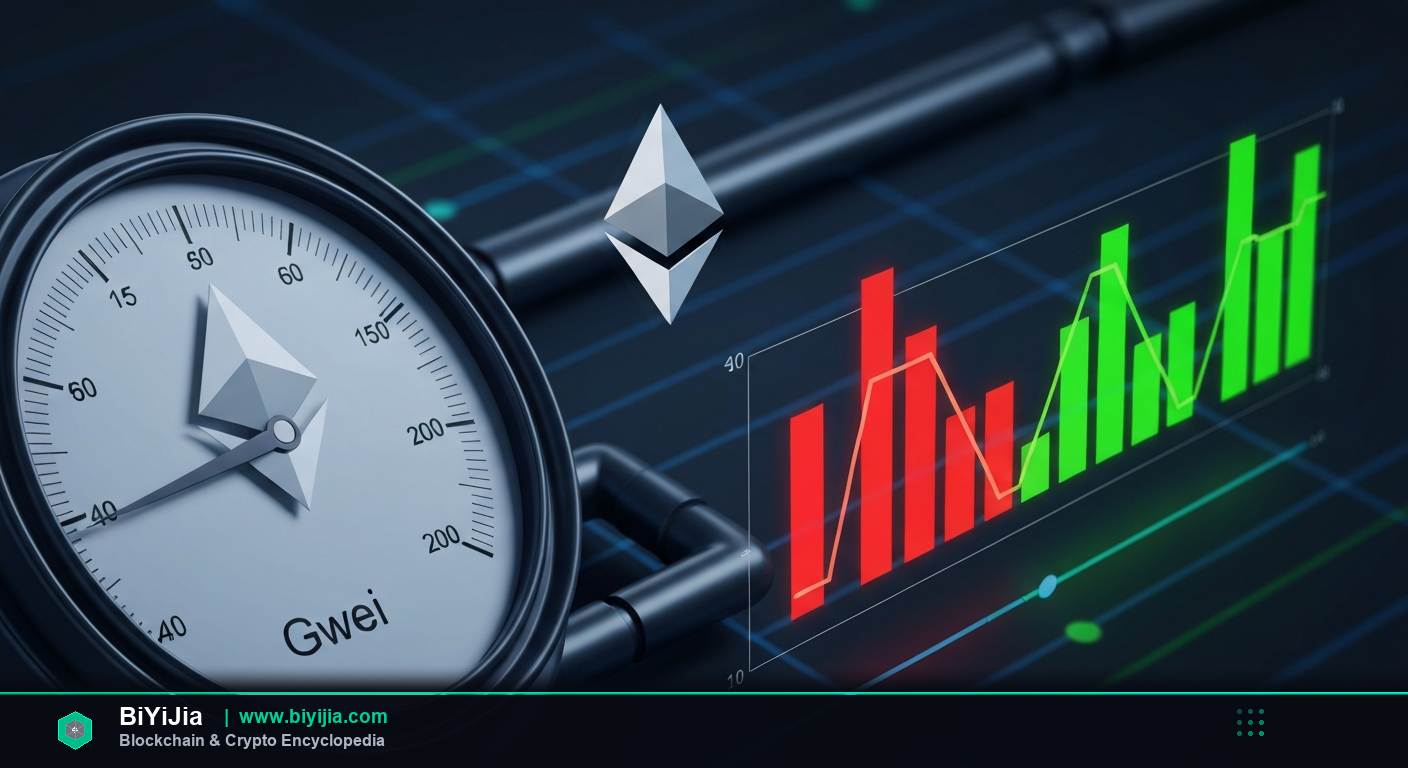
- Core feature: Measured in Gwei, a subunit of Ether, and dynamically adjusts to network demand.
- Real‑world use: Essential for swapping tokens on Uniswap, minting NFTs, or any DeFi interaction.
- Traditional comparison: Similar to a bank’s transaction fee, but market‑driven rather than flat‑rate.
- Risk warning: Overpaying or underpaying can lead to stuck transactions or excessive costs.
What Is Gas Fee?
In plain language, a gas fee is the price you pay to get a transaction processed on Ethereum.
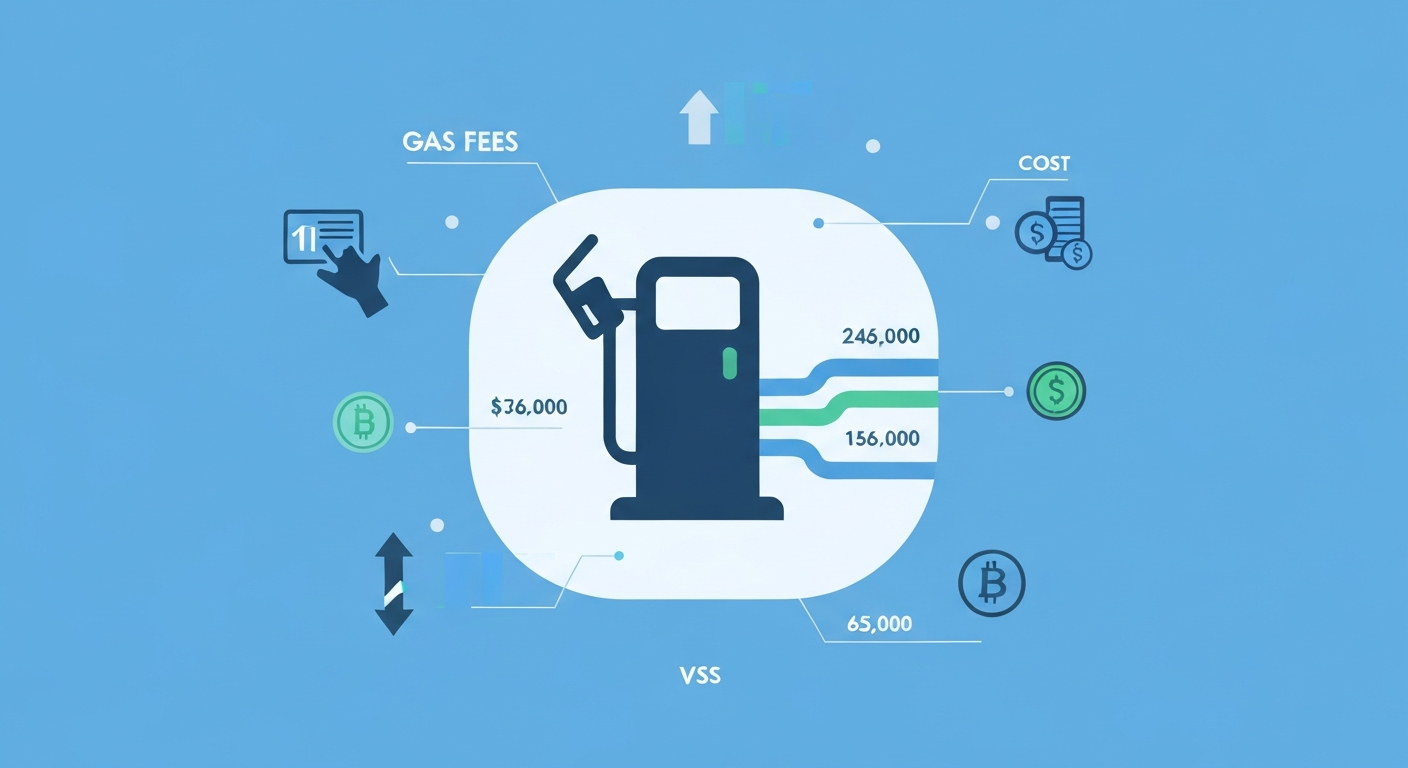
Technically, each operation that a smart contract performs consumes a certain amount of computational work, measured in "gas" units. Users attach a price per gas unit (in Gwei) and a maximum amount they’re willing to spend. The network then prioritizes transactions offering higher total fees, rewarding validators for the work they do.
Think of it like a toll road: the more traffic there is, the higher the toll you’ll pay to get through quickly, and the toll is collected by the agency that maintains the road—in this case, the Ethereum validators.
How It Works
- When you create a transaction, your wallet estimates how many gas units the operation will need.
- You set a gas price (in Gwei) you’re willing to pay per unit.
- The wallet also sets a gas limit, the maximum units you’ll allow the transaction to consume.
- Validators sort pending transactions by total fee (gas price × gas limit) and include the highest‑paying ones in the next block.
- After execution, any unused gas is refunded to your address.
Core Features
- Dynamic pricing: Gas fees fluctuate with network congestion, ensuring market‑driven cost allocation.
- Granular measurement: Each EVM opcode has a predefined gas cost, allowing precise accounting of computational work.
- Refund mechanism: Unused gas is returned, preventing over‑payment.
- EIP‑1559 base fee: Introduced a predictable base fee that burns Ether, with an optional tip for faster inclusion.
- Unit hierarchy: 1 Ether = 1,000,000,000 Gwei, making fee specification user‑friendly.
Real-World Applications
- Uniswap V4: Swaps typically cost 0.0003 ETH in gas; peak fees reached 0.015 ETH during high demand (Q2 2025).
- OpenSea NFT Marketplace: Minting a standard ERC‑721 token averages 0.02 ETH in gas, with spikes up to 0.08 ETH during popular drops.
- Aave V3: Borrowing or repaying a loan incurs around 0.001 ETH in gas, but flash loan attacks can push fees higher.
- Chainlink Oracles: Each data request consumes roughly 0.0005 ETH in gas, essential for price feeds in DeFi.
- Ethereum Name Service (ENS): Registering a .eth domain costs about 0.005 ETH in gas, varying with network load.
Comparison with Related Concepts
Gas Fee vs Transaction Fee: A transaction fee is the generic term for any cost to move value on a blockchain, while a gas fee is the specific mechanism Ethereum uses, measured in gas units and priced in Gwei.
Gas Fee vs Gwei: Gwei is the denomination of Ether used to price gas; you pay gas fees *in* Gwei, much like you pay dollars *in* cents.
Gas Fee vs EIP‑1559: EIP‑1559 introduced a base fee that automatically adjusts and is burned, whereas the tip (priority fee) remains optional and directly incentivizes validators.
Risks & Considerations
- Fee volatility: Sudden spikes can make transactions prohibitively expensive, especially for small‑value transfers.
- Stuck transactions: Setting a gas price too low may cause the transaction to linger in the mempool indefinitely.
- Over‑payment: Mis‑estimating gas limits can lock up more Ether than necessary, though refunds mitigate this.
- Network congestion: During popular events (e.g., NFT drops), fees can surge beyond 100 Gwei, affecting user experience.
- Validator centralization risk: If a few validators dominate, they could theoretically manipulate fee markets.
In Q4 2025, the average Ethereum gas fee peaked at 45 Gwei, according to data from Etherscan, representing a 12‑fold increase over the 2023 baseline.
Meanwhile, a recent study by The Block showed that 68 % of DeFi users consider gas fees the primary barrier to entry, highlighting the economic friction still present in Decentralized Finance (DeFi).
Frequently Asked Questions
What is a gas limit and how do I set it?
The gas limit is the maximum amount of gas you’re willing to allow a transaction to consume. Wallets usually estimate it automatically, but you can increase it for complex smart‑contract calls. Setting it too low will cause the transaction to fail; too high just means more Ether is temporarily locked.
Why do gas fees sometimes feel unfairly high?
Fees rise when demand for block space exceeds supply. During popular NFT launches or market crashes, many users compete for inclusion, driving the price per gas unit up. EIP‑1559’s base fee helps smooth extreme spikes, but the tip component can still cause short‑term surges.
Can I get a gas refund?
Yes. If your transaction consumes less gas than the limit you set, the unused portion is returned to your wallet at the same gas price you paid. This is why setting a reasonable limit is safe.
How does Ethereum’s gas fee compare to Bitcoin’s transaction fee?
Bitcoin fees are also market‑driven but measured in satoshis per byte, whereas Ethereum fees are measured in gas units per operation. Generally, Ethereum’s fees can be higher for complex smart‑contract interactions, while Bitcoin’s are more predictable for simple payments.
Will Ethereum’s move to proof‑of‑stake lower gas fees?
Proof‑of‑stake improves scalability and reduces the energy cost of validation, but fee dynamics also depend on demand. Layer‑2 solutions like Optimism and Arbitrum are expected to bring fees down dramatically, complementing the base layer’s improvements.
Summary
Gas Fee is the core economic incentive that powers Ethereum’s execution environment, ensuring validators are compensated for computational work. Understanding how it works helps you manage costs, avoid stuck transactions, and navigate the broader DeFi ecosystem. For deeper insight, check out related topics such as [internal link: Ethereum], [internal link: Transaction Fee], [internal link: Gwei], and [internal link: EIP-1559].