
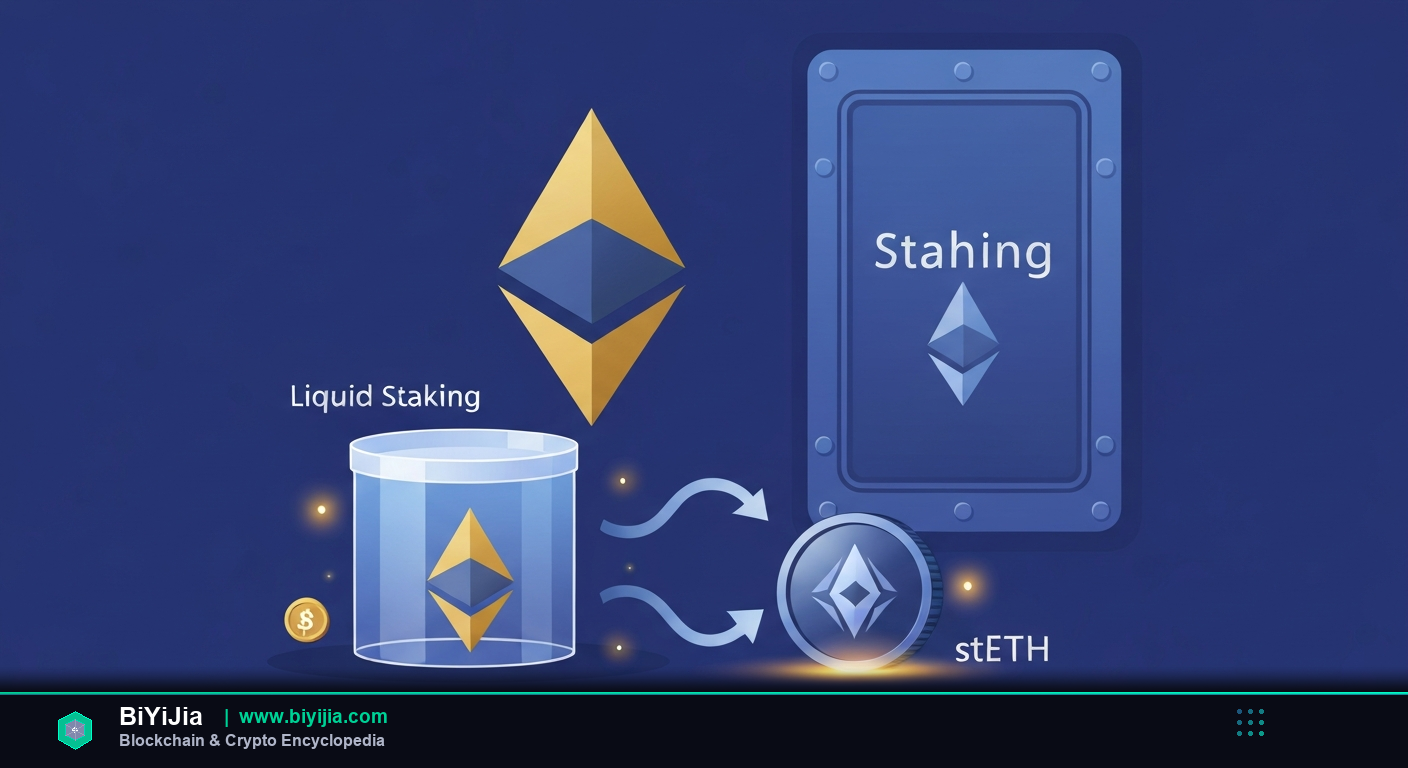
Liquid Staking refers to the process of staking blockchain assets while receiving a tradable token that represents the staked value, unlocking liquidity for DeFi use.
Key Takeaways
- Liquid Staking lets you earn staking rewards without locking up your assets.
- It creates a derivative token (e.g., stETH) that can be moved across DeFi protocols.
- Projects like Lido have turned liquid staking into a multi‑billion‑dollar market.
- Compared to traditional staking, you keep unlocked liquidity for composability.
- Smart‑contract risk and protocol centralization are the main cautions.
What Is Liquid Staking?
Liquid staking is a way to stake your crypto and still have a usable token representing that stake.
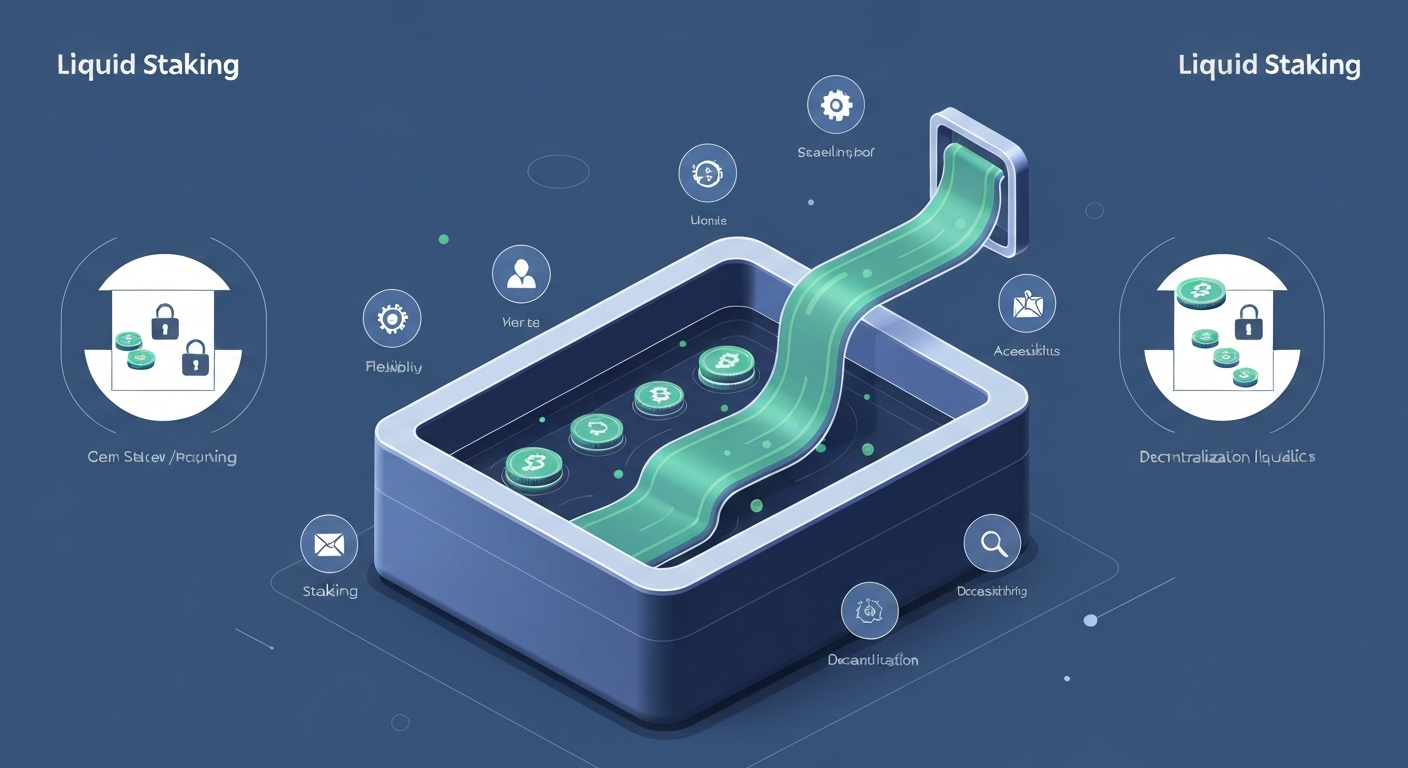
In simple terms, you lock your native asset—say ETH—into a staking contract, and the protocol mints a new token (stETH for Ethereum) that tracks both your principal and accrued rewards. The minted token lives on the same blockchain, so you can trade, lend, or provide it as collateral while the underlying asset continues to secure the network.
Think of it like putting money in a savings account that automatically gives you a debit card; you earn interest, but you can still spend the balance whenever you want.
How It Works
- Deposit. You send your native token to a liquid‑staking smart contract. The contract pools your deposit with others to meet the minimum required for network validation.
- Mint. The protocol instantly issues a derivative token—stETH for Ethereum, rETH for Rocket Pool, etc.—that represents your share of the pool plus any future rewards.
- Earn. Validators earn block rewards and transaction fees. Those earnings are automatically reflected in the value of the derivative token, increasing its redemption rate over time.
- Use. Because the derivative token follows the ERC‑20 standard, you can move it into any DeFi app: lend on Aave, provide liquidity on Uniswap, or use it as collateral on Maker.
- Redeem. When you’re ready, you can burn the derivative token to retrieve your original asset plus rewards, subject to any protocol‑specific withdrawal windows.
Core Features
Unlocked Liquidity: The derivative token can be transferred, sold, or used as collateral without waiting for a staking unbonding period.
Yield Accrual: Rewards earned by the validator set are continuously reflected in the token’s exchange rate, so holders see a growing balance.
DeFi Composability: Because the token adheres to ERC‑20, it plugs into the broader DeFi ecosystem, enabling stacking of strategies.
Permissionless Participation: Anyone can deposit assets without needing to run a validator node, lowering the technical barrier.
Transparency: On‑chain dashboards display total pooled assets, validator performance, and redemption rates in real time.
Real-World Applications
Lido: The leading liquid‑staking service for Ethereum; as of Q1 2026, stETH supply exceeds 25 million ETH, representing roughly 12 % of total ETH staked on Ethereum 2.0 (source: Lido Dashboard).
Rocket Pool: A decentralized network of node operators; rETH currently yields about 4.2 % APR and powers over $1 billion in DeFi collateral.
StakeWise: Issues sETH2 tokens, which have been used as collateral on Maker to generate DAI without locking the original ETH.
Marinade Finance: Provides liquid‑staking for SOL; mSOL is now supported on Raydium’s liquidity pools, attracting $500 million in TVL.
Comparison with Related Concepts
Liquid Staking vs Traditional Staking: Traditional staking locks your asset for a fixed unbonding period, preventing any use. Liquid staking swaps that lock for a tradable receipt, giving you immediate access to market actions.
Liquid Staking vs Wrapped Staking Tokens: Wrapped tokens (e.g., wETH) simply mirror the underlying asset’s price. Liquid‑staking derivatives also embed the accrued staking reward, so their value grows over time.
Risks & Considerations
Smart‑Contract Risk: If the staking contract is compromised, users could lose both the original asset and the derivative token.
Centralization Risk: Many liquid‑staking services concentrate a large share of network validators, which could affect decentralization and governance.
Redemption Lag: Some protocols impose a withdrawal window (e.g., 7‑30 days) after you burn the derivative token, delaying access to the underlying asset.
Market Risk: The derivative token can trade at a discount to its redemption value during network stress, leading to temporary loss of capital.
Regulatory Uncertainty: As derivative tokens become more integrated into financial products, they may attract tighter regulatory scrutiny.
Embedded Key Data
According to DeFi Pulse, the average annual yield on stETH hovered around 4.3 % in 2025, making it one of the most stable passive income sources in DeFi.
Data from Dune Analytics shows that liquid‑staking derivatives now account for over $30 billion in total value locked across all major Ethereum‑based protocols as of early 2026.
Frequently Asked Questions
What is liquid staking and how does it differ from regular staking?
Liquid staking lets you earn validator rewards while receiving a transferable token that represents your stake. Regular staking locks the asset for a set period, preventing any movement or use in other protocols.
Can I lose my staked assets when using liquid staking?
Yes, you face smart‑contract risk and potential protocol insolvency. However, reputable services like Lido undergo regular audits, and many offer insurance or slashing protection to mitigate losses.
How does stETH maintain its value relative to ETH?
stETH tracks a redemption rate that slowly increases as staking rewards accrue. The token trades close to this rate, but market dynamics can cause short‑term premiums or discounts.
Is liquid staking taxable?
Tax treatment varies by jurisdiction, but generally, the receipt of staking rewards is considered taxable income. When you redeem the derivative token, any capital gain or loss is also subject to tax.
Can I use liquid‑staking tokens as collateral for loans?
Absolutely. Platforms like Aave and Compound accept stETH, rETH, and similar tokens as collateral, allowing you to borrow stablecoins while still earning staking rewards.
Summary
Liquid Staking unlocks the value of staked assets by issuing a tradable receipt that continues to earn network rewards, bridging staking and DeFi composability. Understanding its mechanics, benefits, and risks is essential for anyone looking to maximize yield in 2026.
Explore related concepts such as Unlocked Liquidity and DeFi composability to deepen your strategy toolbox.