Minting refers to the process of creating a new digital token or NFT on a blockchain, permanently recording it as a unique, tradable asset.
Key Takeaways
- Minting is the blockchain method for generating fresh tokens or NFTs.
- It relies on smart contracts, gas fees, and immutable ledger entries.
- Artists, gamers, and DeFi platforms use minting to launch collectibles and utility tokens.
- Unlike printing paper money, minting can’t be reversed once confirmed.
- High gas costs or contract bugs pose real financial risks.
What Is Minting?
Minting is the act of issuing a brand‑new token or NFT onto a blockchain.
Under the hood, a smart contract defines the token standard—ERC‑20 for fungible coins or ERC‑721/1155 for NFTs—and then executes a transaction that writes the token’s metadata to the chain. The transaction consumes gas, which compensates validators for sealing the data in a block.
Think of minting like a bakery: the chef follows a recipe (the contract) and slides fresh loaves (tokens) onto the cooling rack (the blockchain). Once the loaf is on the rack, you can’t un‑bake it; you can only slice and serve it.
How It Works
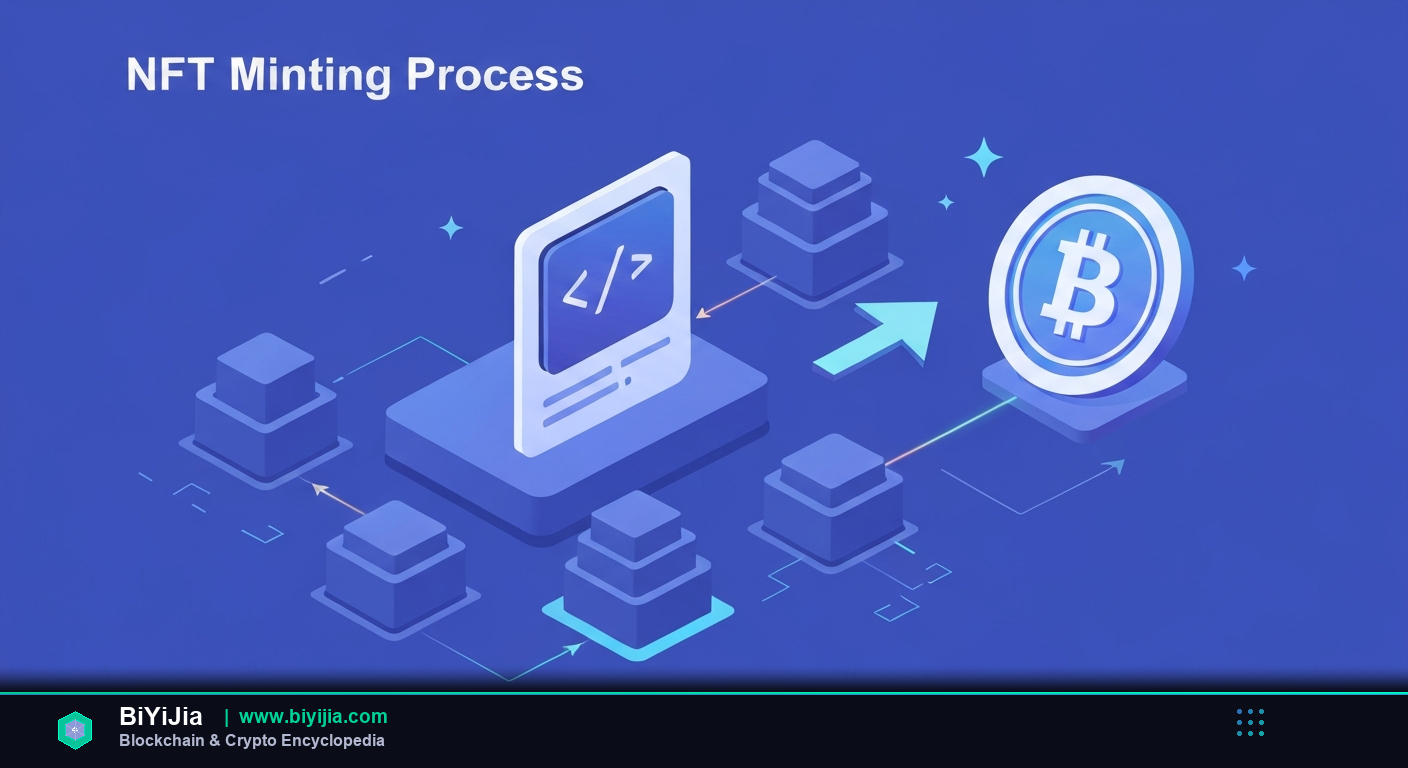
- Developer writes a smart contract that outlines token supply, ownership rules, and metadata.
- Contract is deployed to a blockchain, becoming an immutable address.
- User initiates a mint transaction, paying the required gas fee.
- Validators confirm the transaction, adding the new token record to the ledger.
- The token appears in the user’s wallet, ready for transfer, sale, or use.
Core Features
- Immutability: Once minted, the token’s existence and metadata cannot be altered without consensus.
- Uniqueness: NFT minting guarantees each token has a distinct identifier.
- Programmability: Smart contracts can embed royalties, access controls, or time‑locks.
- Transparency: All mint events are publicly visible on the blockchain explorer.
- Interoperability: Tokens follow standards that let them move across wallets and marketplaces.
- Gas Dependency: Minting cost fluctuates with network congestion.
Real-World Applications
- OpenSea – The leading NFT marketplace, where creators mint art, music, and domain names; over 9 million items were minted in 2023 (DappRadar).
- Axie Infinity – A play‑to‑earn game that mints creature NFTs; each Axie averages $150 in secondary‑market value (Sky Mavis report, 2024).
- Uniswap V3 – Uses mint crypto to create concentrated liquidity positions represented as NFTs.
- Foundation – Artists mint limited‑edition digital paintings; the platform recorded $1.2 B in sales in 2024 (Foundation data).
- Chainlink – Issues proof‑of‑attendance NFTs for hackathon participants, showcasing credential minting.
Comparison with Related Concepts
Minting vs Token Issuance: Token issuance often refers to distributing pre‑created tokens (e.g., airdrops), whereas minting is the act of generating the token itself on‑chain.
Minting vs Traditional Minting: Physical minting (coins, stamps) involves a central authority and tangible assets; blockchain minting is decentralized, trustless, and instantly global.
Minting vs Burning: Burning destroys tokens, reducing supply; minting expands supply, both are controlled by smart contracts.
Risks & Considerations
- Gas Spikes: Unexpectedly high fees can make minting prohibitively expensive, especially on Ethereum during peak demand.
- Smart Contract Bugs: Flaws can lead to duplicate mints or loss of royalties.
- Market Saturation: Over‑minting can dilute value and hurt secondary‑market prices.
- Regulatory Uncertainty: Some jurisdictions treat minted tokens as securities, exposing creators to legal risk.
- Metadata Hijacking: If off‑chain metadata is hosted insecurely, the NFT’s image or info can be altered.
Embedded Key Data
In 2024, Ethereum recorded more than 10 million NFT mint events, accounting for roughly 45 % of all NFT activity on public blockchains (source: DappRadar, 2024).
According to a 2025 survey by The Block, 62 % of creators cite minting costs as the primary barrier to launching new collections.
Frequently Asked Questions
What is minting in simple terms?
Minting is the blockchain equivalent of pressing a “create” button that writes a new token or NFT into the ledger, making it permanently owned by the address that initiated the transaction.
How much does NFT minting cost?
The cost depends on the network’s gas price, the contract’s complexity, and any additional platform fees. On Ethereum, minting a single ERC‑721 token can range from $20 to $200 during peak periods, while layer‑2 solutions often drop the fee below $5.
Can I mint crypto without coding?
Yes. Many platforms offer no‑code minting wizards where you upload artwork, set royalty percentages, and click “mint.” The underlying contract is generated automatically, but you still pay the on‑chain gas.
Is minting the same as creating a new coin?
Creating a new coin usually refers to deploying an ERC‑20 contract that defines a fungible supply. Minting can apply to both fungible coins (adding to total supply) and non‑fungible tokens, but the term is most commonly associated with NFTs.
Do I need a wallet to mint?
Yes. A compatible crypto wallet (MetaMask, Ledger, etc.) is required to sign the mint transaction and cover the gas fee. Some platforms integrate wallet‑creation steps for beginners.
Summary
Minting is the foundational process that turns code into a tradable digital asset on a blockchain, whether it’s a utility token, a collectible NFT, or a DeFi receipt. Mastering mint crypto opens doors to creator economies, gaming, and decentralized finance, while staying aware of gas costs and contract security.
Explore related concepts like NFT, Gas Fee, Smart Contract, and First Drop to deepen your understanding of the broader ecosystem.