

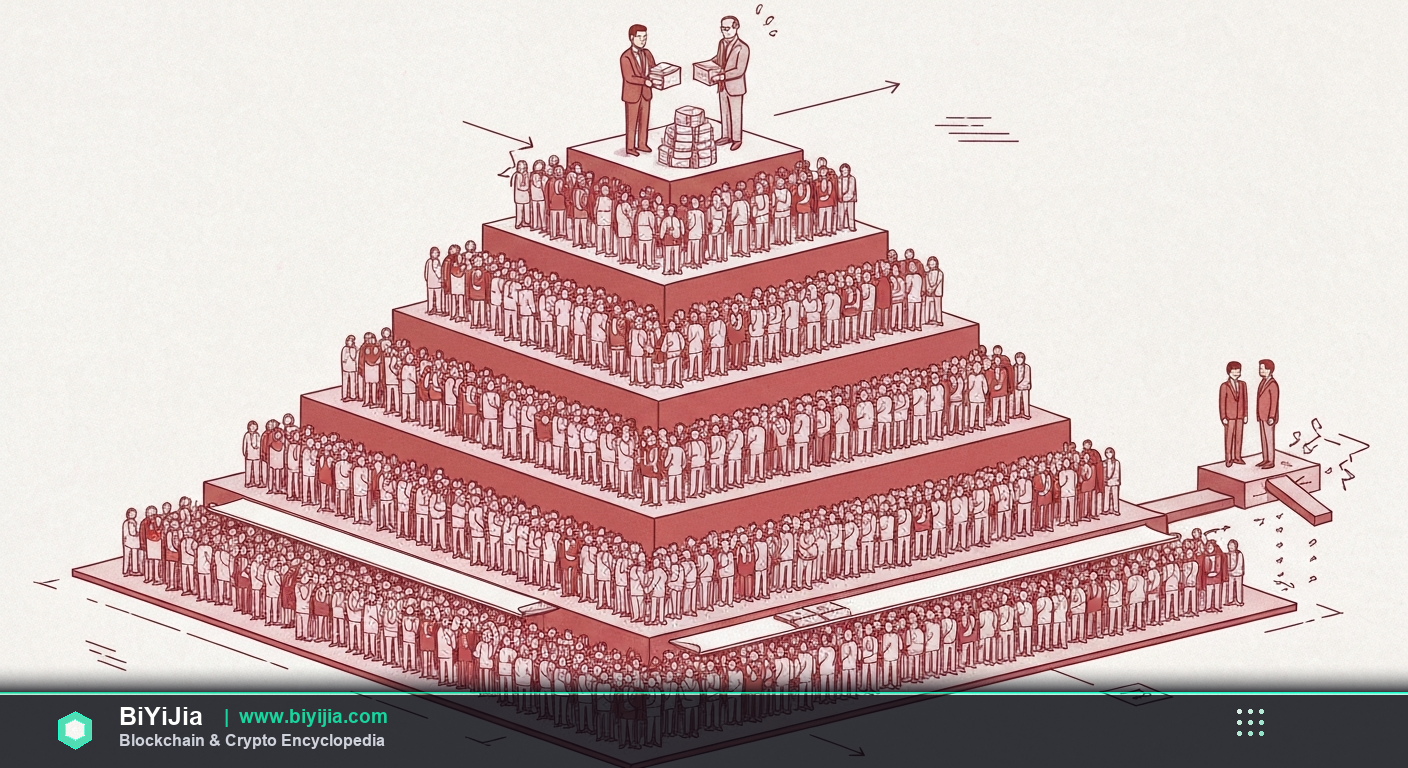
Ponzi Scheme refers to a fraudulent investment model that pays returns to earlier participants using the capital of newer investors, ultimately collapsing when new inflows dry up.
Key Takeaways
- Simple definition: a scam that promises high returns but relies on recruiting new money to pay existing investors.
- Core features include promised yields, continuous recruitment, and an unsustainable cash flow.
- Seen in crypto as crypto Ponzi projects that masquerade as legitimate DeFi platforms.
- Unlike traditional bonds or equity, there is no underlying revenue-generating activity.
- Investors risk total loss; regulators consistently warn that Ponzi scheme crypto offerings are illegal.
What Is Ponzi Scheme?
A Ponzi scheme is a fraud where returns are paid to earlier investors from the contributions of later investors rather than from profit earned.
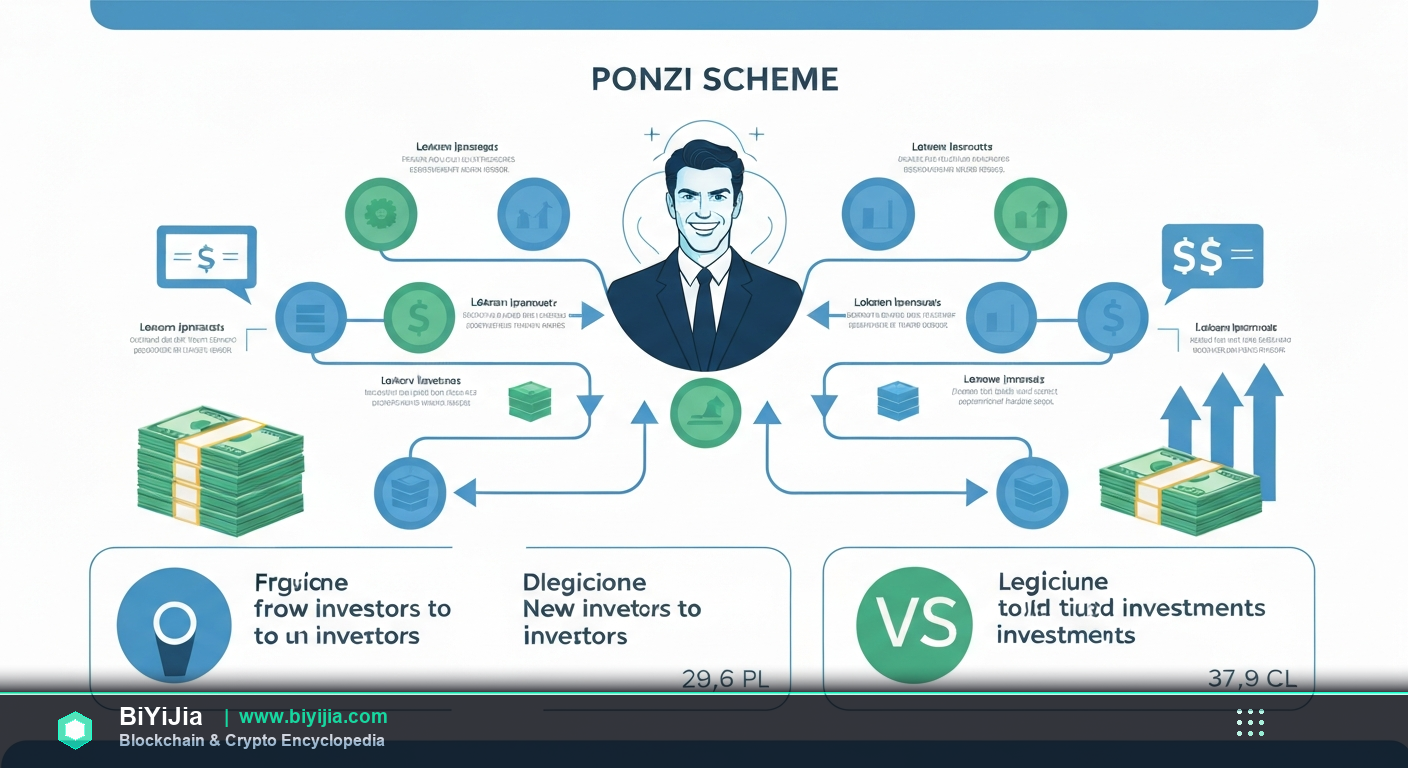
In practice, the organizer promises unusually high, often guaranteed, yields and uses new deposits to fulfill those promises, creating the illusion of a successful venture. The model is mathematically doomed because it requires an ever‑increasing pool of fresh capital to keep the payouts flowing.
Think of it like a pyramid of plates: each new plate added supports the ones below, but eventually the stack becomes too tall and collapses under its own weight.
How It Works
- Organizer advertises an investment with a fixed, high return, often citing proprietary algorithms or secret strategies.
- Early participants deposit money and receive the promised payouts, which are funded by the next wave of investors.
- Success stories spread, prompting more people to join and funnel additional capital into the scheme.
- As the pool of new investors shrinks, the organizer can no longer meet the promised returns.
- The scheme collapses, and most investors lose their principal.
Core Features
High‑Yield Promise: Guarantees far‑above market returns with little or no risk.
Recruiting Focus: Relies heavily on word‑of‑mouth or referral bonuses to attract fresh capital.
Unsustainable Cash Flow: No legitimate business activity generates the payouts; they come solely from new investors.
Opacity: Offers vague or proprietary “trading formulas” that cannot be independently verified.
Collapse Trigger: The moment inflows dip below the payout obligations, the scheme implodes.
Real‑World Applications
- BitConnect (2016‑2018) – marketed as a crypto lending platform; at its peak it claimed a 1% daily return and amassed over $2.6 billion before shutting down.
- OneCoin (2014‑2019) – posed as a blockchain education token; regulators estimated it raised roughly €4 billion from investors worldwide.
- PlusToken (2018‑2019) – a wallet service promising up to 18% monthly returns; allegedly defrauded $2 billion before disappearing.
- Turkish “Crypto Yield Farm” (2022) – a DeFi‑styled project that promised 30% APY; authorities reported $150 million vanished when the operator vanished.
Comparison with Related Concepts
Ponzi vs Pyramid: A pyramid scheme emphasizes hierarchical recruitment and often sells physical products, while a Ponzi scheme operates behind the scenes, presenting a single “investment” to all participants.
Ponzi vs High‑Yield Trap: A high‑yield trap is a broader category of scams that lure investors with excessive returns; Ponzi schemes are a specific mechanism within that trap, relying on continuous inflows.
Ponzi vs Legitimate DeFi: Legitimate Decentralized Finance (DeFi) protocols generate revenue through transparent mechanisms like transaction fees or lending interest, whereas a Ponzi scheme crypto project lacks any real economic activity.
Risks & Considerations
Total Loss: When the scheme collapses, investors typically lose 100% of their capital.
Legal Consequences: Participation can attract regulatory scrutiny; some jurisdictions prosecute both organizers and promoters.
Reputational Damage: Being associated with a known Ponzi can tarnish an individual’s credibility in the crypto community.
Liquidity Freeze: Operators often block withdrawals shortly before the collapse, trapping funds.
False Security: Promised insurance or audits are fabricated, giving a false sense of safety.
Embedded Key Data
According to the U.S. Securities and Exchange Commission, 27 crypto Ponzi schemes were identified in 2024, collectively siphoning $1.2 billion from investors (SEC report, 2024). A 2025 academic study from the University of Zurich found that 68% of participants in high‑yield crypto projects experienced losses exceeding 80% after the scheme collapsed.
Frequently Asked Questions
What is a Ponzi scheme and how does it differ from a legitimate investment?
A Ponzi scheme pays returns using new investors' money rather than actual profits. Legitimate investments generate earnings from real economic activity, such as business operations, interest, or dividends.
Can a Ponzi scheme exist in the crypto space?
Absolutely. Crypto Ponzi projects often masquerade as DeFi yield farms or token sales, promising astronomical APYs while lacking any transparent revenue source.
How can I spot a crypto Ponzi before investing?
Red flags include guaranteed high returns, lack of verifiable audits, heavy emphasis on recruiting friends, and opaque strategies. Always demand proof of on‑chain revenue and check regulatory warnings.
What should I do if I suspect I’m involved in a Ponzi scheme?
Stop adding funds immediately, document all communications, and report the activity to local regulators or consumer protection agencies. Consulting a legal professional can also help protect your rights.
Are there any legal consequences for participants?
While organizers face the brunt of prosecution, some jurisdictions also penalize promoters who knowingly market the scheme. Ignorance isn’t always a defense, especially if you actively recruited others.
Summary
Ponzi Scheme refers to a fraudulent model that lures investors with high, guaranteed returns funded solely by new participants, ultimately ending in collapse. Recognizing the hallmarks—high‑yield promises, recruitment focus, and opacity—helps protect against crypto Ponzi traps and preserves capital for genuine DeFi opportunities.