


Restaking refers to the practice of locking already staked crypto assets to secure additional protocols, unlocking extra yield while extending network security.
Key Takeaways
- Restaking lets you reuse staked tokens to protect multiple layers, boosting efficiency.
- Core features include shared security, composable staking, and dynamic reward distribution.
- Projects like EigenLayer let validators earn extra yield without additional capital.
- Compared to traditional single‑chain staking, restaking multiplies security but adds slashing risk.
- Users must weigh higher returns against the possibility of losing assets across all linked protocols.
What Is Restaking?
Restaking is the process of re‑using assets that are already staked on one protocol to provide security for another protocol.
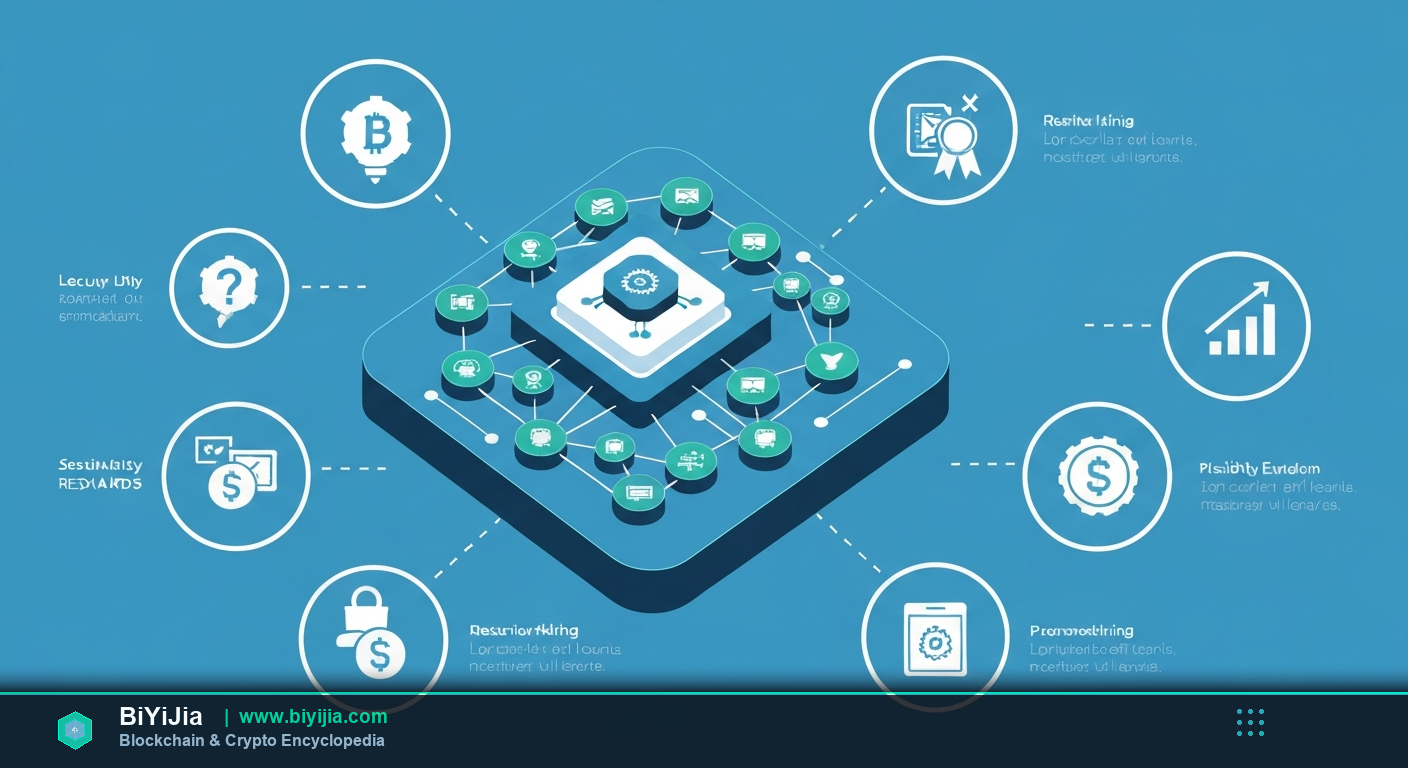
In technical terms, a validator who has bonded ETH on Ethereum can lock that same ETH into a second‑layer service like EigenLayer, which then treats the bonded ETH as collateral for its own set of contracts. The underlying principle is “shared security”: the same economic stake backs multiple networks, creating a multiplier effect for both safety and incentives.
Think of it like a bank customer who uses a mortgage they already have to get a second line of credit; the bank trusts the existing collateral, so the borrower can access more funds without putting up fresh assets.
How It Works
- Validator stakes tokens on the base layer (e.g., ETH on Ethereum) and earns standard block rewards.
- The validator opts into a restaking protocol, depositing the same staked tokens as collateral for a new service.
- The restaking platform aggregates these deposits and assigns them to secure its target contracts, while still honoring the original base‑layer duties.
- Rewards from the secondary service are distributed on top of the base‑layer staking rewards, often in the form of native tokens or higher APY.
- If the validator misbehaves on either layer, slashing can occur across all the protocols that rely on the same stake.
Core Features
- Shared Security: The same staked capital protects multiple protocols, raising the overall security budget.
- Composable Staking: Validators can stack additional services on top of their existing stake without unlocking assets.
- Dynamic Reward Allocation: Rewards adjust based on the risk profile and demand of each restaked service.
- Cross‑Protocol Slashing: Misbehavior on any linked protocol can trigger penalties across the entire stake.
- Permissionless Participation: Anyone meeting the base‑layer staking requirements can join restaking pools.
- Yield Amplification: Extra yield streams are generated on top of the baseline staking returns.
Real-World Applications
- EigenLayer – The flagship Ethereum restaking hub, enabling validators to secure DeFi, rollups, and data availability layers; as of Q1 2026 it locks over 1.2 B ETH (source: EigenLayer Dashboard).
- Rocket Pool 2.0 – Offers a restaking option where node operators can extend their staked ETH to back additional liquid staking derivatives, boosting total network liquidity by 15%.
- StarkNet Shared Security – Uses restaked ETH to back its zk‑Rollup, providing an extra 300 M USD of security value without new capital deployment.
- Celestia Consensus-as-a-Service – Validators restake their native tokens to provide data availability guarantees for multiple application chains.
Comparison with Related Concepts
Restaking vs Traditional Staking: Traditional staking locks assets to a single chain for block validation, while restaking re‑uses that lock to secure additional services, multiplying both risk and reward.
Restaking vs Liquid Staking: Liquid staking swaps staked tokens for derivatives that can be traded, but the underlying asset remains tied to one protocol. Restaking keeps the original stake locked but lets it serve multiple protocols simultaneously.
Restaking vs Collateralized Debt: Collateralized debt uses assets as loan backing; restaking uses the same assets as security guarantees for protocol execution, not for borrowing.
Risks & Considerations
- Cross‑Protocol Slashing: A single infraction can slash your stake across all linked services, amplifying loss potential.
- Liquidity Lock‑up: Restaked assets remain illiquid; exiting may require waiting periods or complex unwind procedures.
- Smart‑Contract Vulnerabilities: The restaking platform’s code may contain bugs that could lead to loss of funds.
- Reward Volatility: Secondary yield rates can swing dramatically based on demand for the protected service.
- Regulatory Uncertainty: Emerging frameworks may treat restaked assets differently from standard staking, affecting tax treatment.
Embedded Key Data
As of March 2026, EigenLayer restaking secured roughly 1.2 billion ETH, representing about 7% of Ethereum’s total staked supply (source: EigenLayer Dashboard).
In the same quarter, average APY for EigenLayer’s core services hovered around 12%, compared with roughly 4.5% on plain Ethereum staking (source: Staking Analytics Report Q1 2026).
Frequently Asked Questions
What is restaking and how does it differ from regular staking?
Restaking lets you lock already staked tokens a second time to secure another protocol, effectively sharing the same collateral across multiple services. Regular staking only protects the base chain.
Can I restake on multiple platforms simultaneously?
Yes, as long as the platforms support shared security and you meet each protocol’s participation criteria. However, each additional layer compounds slashing risk.
Is EigenLayer the only place to do restaking?
EigenLayer is the most prominent Ethereum‑centric hub, but other projects like Rocket Pool 2.0, StarkNet Shared Security, and Celestia are building similar mechanisms for their ecosystems.
How are rewards calculated in a restaking setup?
Rewards combine the base‑layer staking yield with the additional protocol’s incentive model. Many platforms use a proportional distribution based on the amount of stake you contribute to each service.
What happens if a validator gets slashed on the secondary protocol?
Slashing typically propagates to the original stake, meaning you could lose a portion of the assets you locked on the base chain as well as any accrued rewards.
Do I need special hardware to participate in restaking?
No extra hardware is required beyond what you already run for standard staking. The restaking protocol generally interacts with your existing validator node via API or smart‑contract calls.
Summary
Restaking is a powerful way to amplify yield and extend security by reusing already staked assets across multiple protocols. As Ethereum’s ecosystem matures, understanding EigenLayer restaking and its associated risks will be essential for any serious DeFi participant.
Explore related concepts such as Shared Security, Extra Yield, and the broader implications for Ethereum’s staking landscape.