

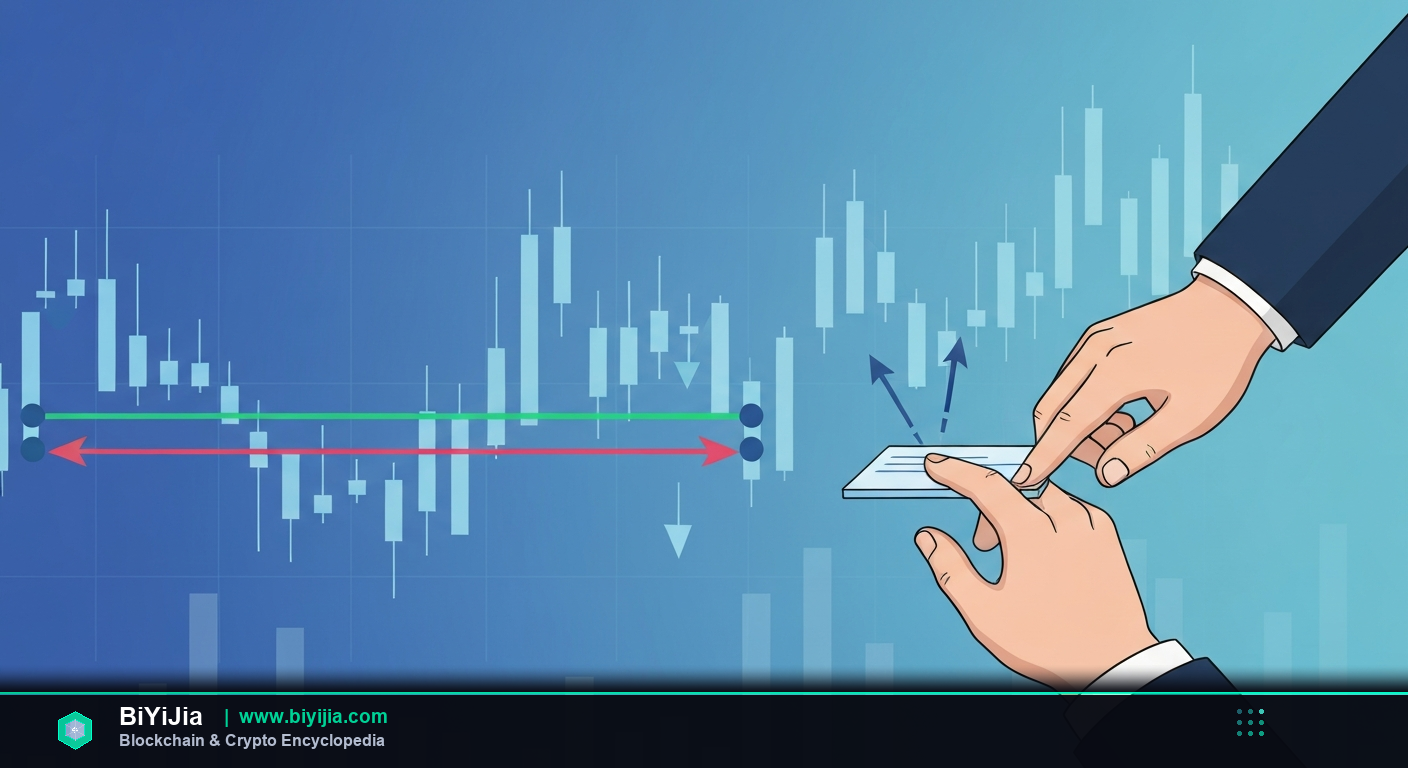
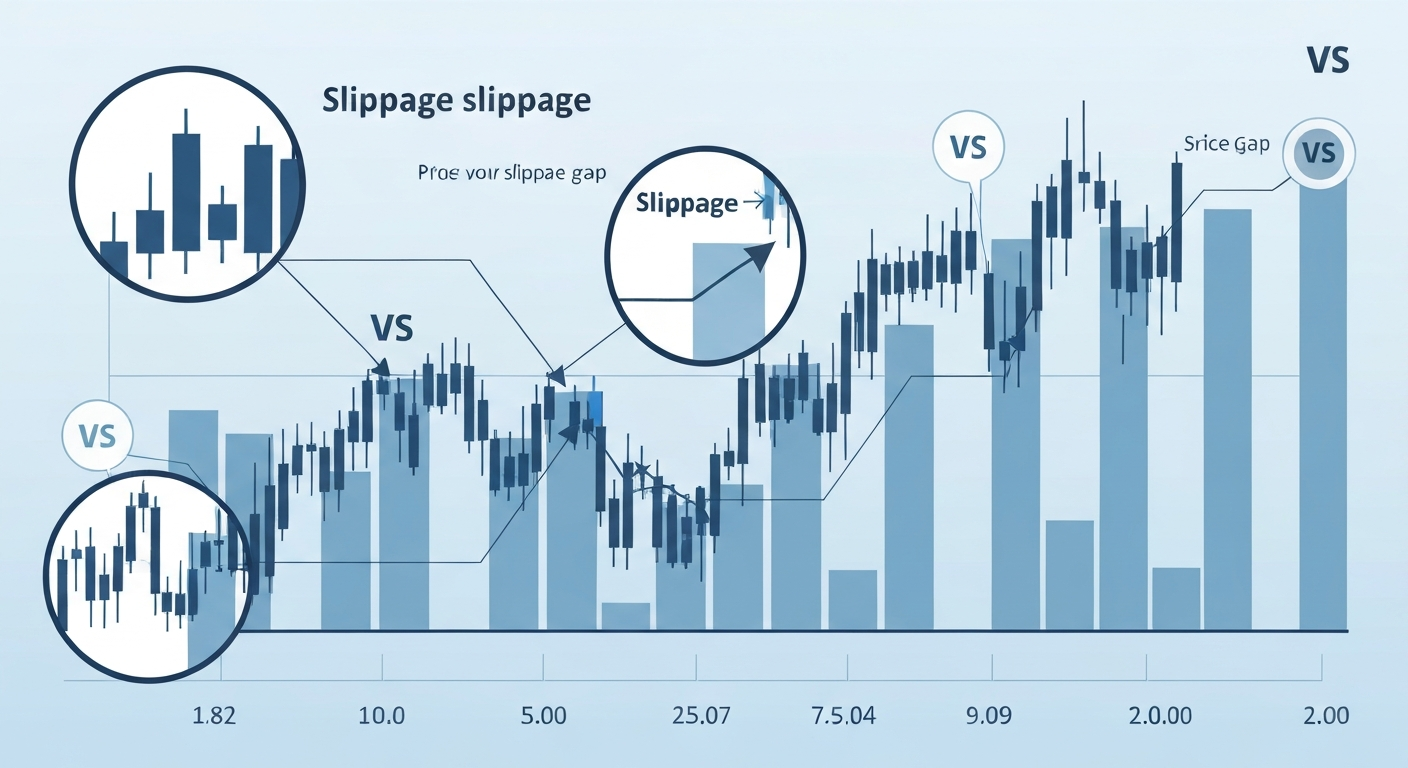
Slippage refers to the difference between the expected price of a trade and the price at which it actually executes, often caused by market volatility, low liquidity, or large order size.
Key Takeaways
- Slippage is the price deviation that occurs when an order is filled.
- It spikes on thin Liquidity pools, high Price Impact, or Large Orders.
- DeFi traders on DEXs experience slippage more often than on centralized exchanges.
- Compared to traditional finance, crypto slippage can be orders of magnitude larger.
- Ignoring slippage risk can erode profits or even cause losses.
What Is Slippage?
In plain language, slippage is the gap between the price you expect to pay for a crypto asset and the price you actually pay when the trade settles.
Technically, when you submit a market order, the protocol looks for matching liquidity across the order book or the automated market maker (AMM) curve. If the available liquidity cannot fulfill the whole size at the quoted price, the execution walks down the curve, pulling in worse rates until the order is complete. That walk‑down is what we call price slippage.
Think of it like a grocery store checkout line that suddenly runs out of your favorite cereal. You wanted a box at $3, but the only one left costs $5. The extra $2 is your slippage.
How It Works
- Trader places a market or limit order specifying the desired amount of a token.
- The DEX’s AMM algorithm checks the current pool reserves and calculates the marginal price for each incremental slice of the order.
- If the pool can’t satisfy the whole size at the quoted price, the algorithm moves further along the price curve, where each additional token costs slightly more (or less for sells).
- The cumulative effect of those incremental price changes becomes the final execution price, which may differ from the initial quote.
- Some platforms let you set a slippage tolerance; if the difference exceeds that tolerance, the transaction reverts.
Core Features
- Dynamic Pricing: Execution price adapts to real‑time pool depth and order size.
- Slippage Tolerance Settings: Users can cap acceptable deviation, protecting against extreme moves.
- Impact on Gas Costs: Higher slippage often means larger transactions, which can increase gas fees on congested networks.
- Visibility in UI: Most DEX interfaces display an estimated slippage percentage before confirming.
- Interaction with Price Impact: Slippage is the realized component of the theoretical price impact.
Real-World Applications
- Uniswap V3 – Offers concentrated liquidity which can reduce slippage for traders targeting specific price ranges; average slippage on 0.1 % trades fell to 0.03 % in Q4 2025 (Source: Uniswap Analytics).
- SushiSwap – Uses “Kashi” lending to let users borrow against collateral, mitigating slippage on large swaps.
- Balancer – Multi‑token pools allow diversified liquidity, often resulting in lower price slippage for complex swaps.
- Curve Finance – Designed for stablecoins and wrapped tokens, achieving sub‑0.01 % slippage on $10 M swaps (Source: Curve Weekly Report, Jan 2026).
Comparison with Related Concepts
DEX vs CEX: A DEX relies on on‑chain liquidity pools, making slippage more visible and often higher than a centralized exchange where order books are deeper.
Liquidity vs Slippage: High liquidity usually cushions price moves, reducing slippage; low liquidity amplifies it.
Price Impact vs Slippage: Price impact is the theoretical shift in price caused by a trade, while slippage is the actual deviation realized after execution.
Large Order vs Slippage: Bigger orders consume more of the pool’s depth, increasing the chance of crossing price tiers and generating higher slippage.
Risks & Considerations
- Unexpected Cost Overrun: Even a modest 0.5 % slippage on a $100 k trade adds $500 to your expense.
- Front‑Running: Bots can detect pending large swaps and jump ahead, inflating slippage for the original trader.
- Reversion Fees: Setting a tight slippage tolerance may cause frequent transaction reverts, wasting gas.
- Market Volatility: During rapid price swings, slippage can spike dramatically, turning a profitable trade into a loss.
- Pool Imbalance: Over‑exposed pools can suffer from skewed token ratios, making slippage unpredictable.
Embedded Key Data
According to Dune Analytics, the average trading slippage on Ethereum DEXs fell from 0.42 % in 2023 to 0.19 % in Q2 2026, reflecting deeper liquidity pools and improved AMM algorithms.
Research by The Block shows that price slippage accounts for roughly 12 % of total transaction costs for traders moving more than $5 M across DeFi protocols each month.
Frequently Asked Questions
What causes slippage in crypto trades?
Slippage occurs when the market cannot fill your order at the quoted price due to insufficient liquidity, rapid price movements, or the size of your order relative to the pool. In DeFi, the automated market maker’s curve determines how far the price moves as each token is swapped.
How can I reduce trading slippage?
Use limit orders with a reasonable price buffer, trade during periods of high liquidity, break up large orders into smaller chunks, and set a slippage tolerance that aligns with your risk appetite. Some platforms also let you route through multiple pools to find the best rate.
Is slippage the same as price impact?
Not exactly. Price impact is the theoretical shift in price caused by a trade, calculated before execution. Slippage is the actual difference you experience after the trade completes, which may be larger if the market moves in the meantime.
Do centralized exchanges have slippage?
Yes, but it’s usually less pronounced because order books are deeper and market makers can provide instant counter‑offers. However, during extreme volatility, even CEXs can exhibit noticeable slippage.
What happens if my slippage tolerance is too low?
If the market moves beyond your set tolerance, the transaction will revert, and you’ll still pay the gas fee for the failed attempt. This protects you from paying an unfavorable price but can be costly if it happens frequently.
Can I recover from a high slippage trade?
Recovering depends on market conditions. Some traders hedge by entering offsetting positions or using derivatives. Others simply wait for the price to revert, but there’s no guarantee the market will move back in your favor.
Summary
Slippage is the inevitable gap between expected and actual execution prices, driven by liquidity depth, order size, and market volatility. Understanding and managing slippage is crucial for anyone trading on DEXs, especially when dealing with large orders or low‑liquidity tokens. For deeper insight, explore related concepts like Liquidity, Price Impact, and Large Order dynamics.