
Key Takeaways
- Staking is the process of delegating tokens to help secure a blockchain and earn rewards.
- Core features include validator selection, APR calculation, and lock‑up periods.
- Real‑world use cases span from Ethereum 2.0 to Cosmos and Tezos.
- Compared with traditional savings accounts, staking can offer higher yields but comes with distinct technical risks.
- Key risks involve slashing, liquidity constraints, and protocol upgrades.
What Is Staking?
Staking is the act of committing crypto assets to a blockchain network to earn staking rewards.
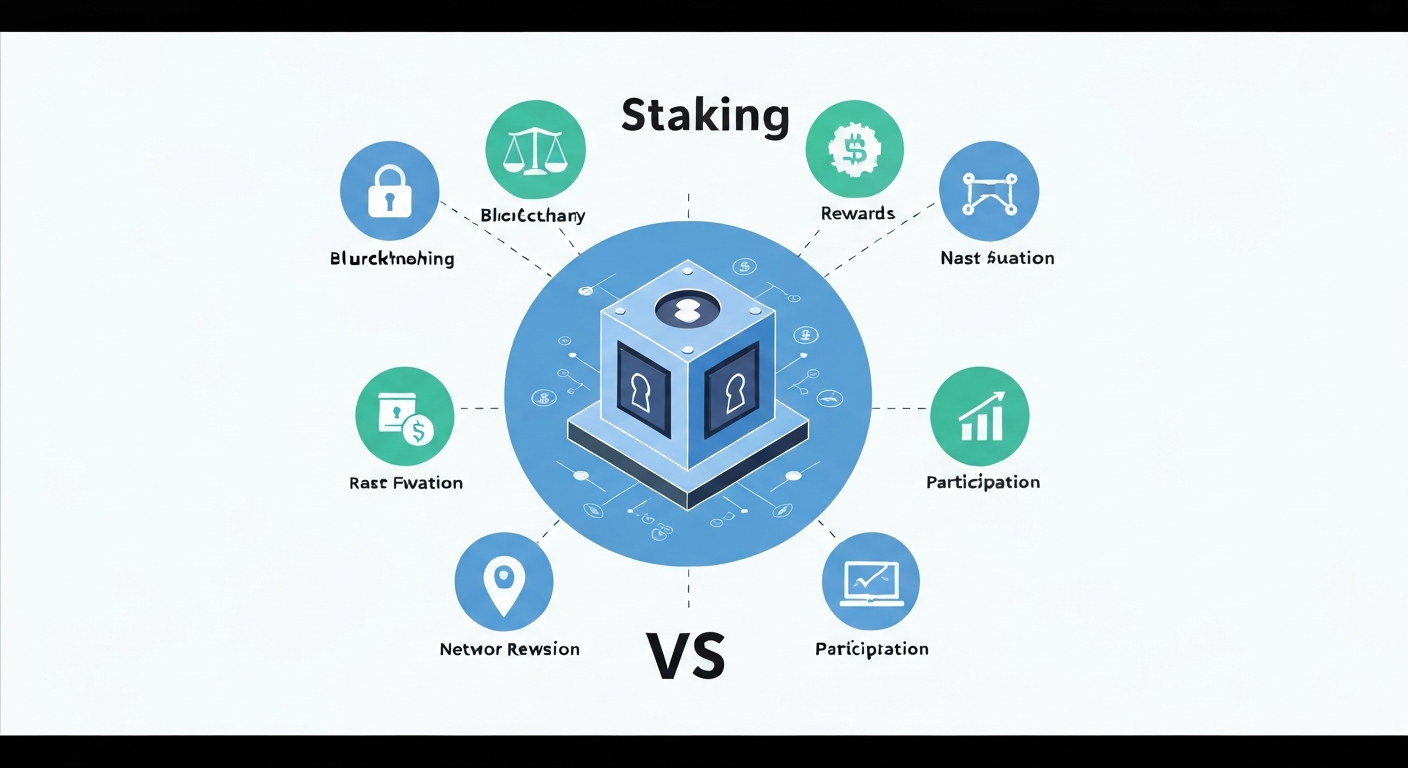
In a Proof‑of‑Stake (PoS) system, the network picks Validators based on the amount of tokens they lock up; those validators then propose and attest to new blocks, and the protocol distributes newly minted coins plus transaction fees to participants.
Think of staking like a savings account where you lock your money in a vault that also powers a community safe; the bank pays you interest, and the community benefits from the extra security.
How It Works
- Choose a PoS blockchain that supports staking, such as Ethereum, Solana, or Polkadot.
- Transfer the desired amount of tokens to a staking wallet or delegating interface.
- Either run your own validator node or delegate to an existing validator, depending on your technical comfort.
- The network aggregates all staked tokens, runs a validator election, and assigns block‑production rights proportionally.
- Rewards accrue daily, calculated as an annual percentage rate (APR), and are either automatically re‑staked or claimed to your wallet.
Core Features
- Validator Selection: Participants either run a validator node themselves or delegate to one; the more stake a validator holds, the higher its chance to propose blocks.
- APR (Annual Percentage Rate): Rewards are expressed as a yearly yield, often ranging from 2% to 20% depending on network inflation and transaction fees.
- Lock‑Up Period: Many protocols require you to keep tokens staked for a set time before you can withdraw, preventing sudden exits that could destabilize the network.
- Slashing: Misbehaving validators—by double‑signing or staying offline—can lose a portion of their stake, a deterrent against negligence.
- Compoundability: Some platforms automatically reinvest earned rewards, compounding returns over time.
- Governance Influence: Stakers often gain voting power on protocol upgrades, aligning incentives between network health and token holders.
Real-World Applications
- Ethereum 2.0 – The largest PoS network, where over 19 million ETH are staked, yielding roughly 4.5% APR (source: Ethereum Foundation, 2026).
- Cosmos Hub – Uses delegated proof‑of‑stake; staking rewards average 9% APR, and the ecosystem powers cross‑chain communication.
- Solana – Offers high‑throughput staking with rewards around 6% APR; its lock‑up period is only a few days, giving users flexibility.
- Polkadot – Features a nominated proof‑of‑stake system; nominators earn about 12% APR while helping secure parachain slots.
- Tezos – Known for on‑chain governance; stakers receive approximately 5.8% APR and can participate in protocol amendment votes.
Comparison with Related Concepts
Staking vs Mining: Staking replaces energy‑intensive hash calculations with token‑based voting power, making it greener but also dependent on token price stability.
Staking vs Lending: Lending platforms lend out assets to earn interest, while staking locks assets to secure a network; staking rewards often include native tokens, whereas lending interest is usually paid in stablecoins.
Staking vs Traditional Savings: Traditional savings earn fixed interest from banks, protected by deposit insurance; staking yields higher, variable returns but carries protocol‑specific risks like slashing.
Risks & Considerations
- Slashing Penalties: Validators that act maliciously or go offline can lose a portion of their staked capital, directly reducing your investment.
- Liquidity Constraints: Lock‑up periods prevent immediate withdrawal, exposing you to market volatility without the ability to sell quickly.
- Protocol Upgrades: Unexpected hard forks or parameter changes can alter reward structures or even render staked tokens unusable.
- Token Price Risk: Staking rewards are often paid in the same token you lock up; a price drop can offset the nominal APR.
- Validator Centralization: Concentrating stake on a few large validators can diminish decentralization and increase systemic risk.
According to Staking Rewards, the total value locked in staking across all PoS networks reached $130 billion in Q4 2025, illustrating the rapid growth of crypto staking as an asset class. A separate report by Messari shows that average staking APRs fell from 12% in 2022 to 5.3% in 2026 as more participants joined and inflation rates were adjusted.
Frequently Asked Questions
What is the minimum amount needed to start staking?
Minimums vary by network. Ethereum requires 32 ETH to run a solo validator, but you can delegate as little as 0.1 ETH through a staking service. Cosmos and Polkadot allow delegation with just a few tokens.
Do I need technical expertise to stake?
If you run your own validator node, you’ll need server knowledge, uptime monitoring, and security practices. Most newcomers opt for delegating to reputable validators, which is a click‑and‑stake experience.
How are staking rewards taxed?
In most jurisdictions, staking rewards are treated as ordinary income at the time of receipt, and subsequent capital gains are calculated on the sale of the tokens. Always consult a tax professional for your specific situation.
Can I unstake at any time?
Unstaking is subject to the network’s lock‑up or unbonding period. For example, Ethereum’s withdrawal queue can take weeks, while Solana’s unbonding period is roughly two days.
What happens if the validator I delegate to gets slashed?
Slashing penalties are proportionally shared among all delegators. Choosing reputable, well‑audited validators reduces this risk, and many services offer insurance or compensation mechanisms.
Staking transforms idle crypto into a productive asset, offering both network security and passive income. Understanding its mechanics, rewards, and risks is essential for anyone looking to participate in the evolving DeFi landscape. Explore related concepts like PoS, Validator, APR, and Lock‑Up Period to deepen your knowledge.