
DCA (Dollar Cost Averaging) refers to a disciplined investing method where you purchase a fixed amount of an asset at regular intervals, smoothing out price volatility over time.
Key Takeaways
- Definition: A systematic buying strategy that spreads purchases over time.
- Core feature: Reduces the impact of short‑term price swings.
- Real‑world use: Widely adopted by crypto wallets, robo‑advisors, and institutional funds.
- Compared to lump‑sum: Lowers entry‑point risk but may miss rapid uptrends.
- Risk warning: Still exposed to long‑term market downturns.
What Is DCA (Dollar Cost Averaging)?
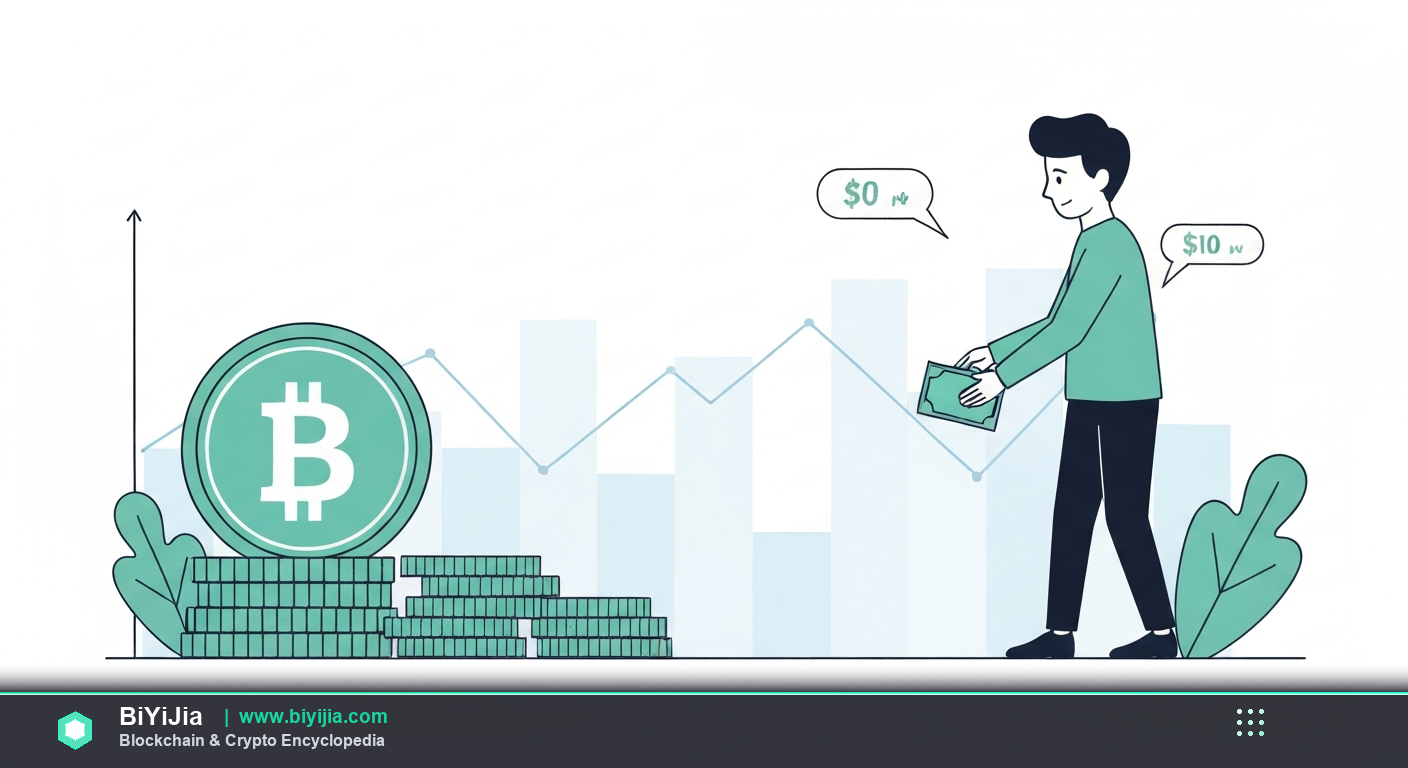
In plain language, DCA is a buying habit that lets you invest a set amount of money into crypto at scheduled intervals, regardless of the current price.
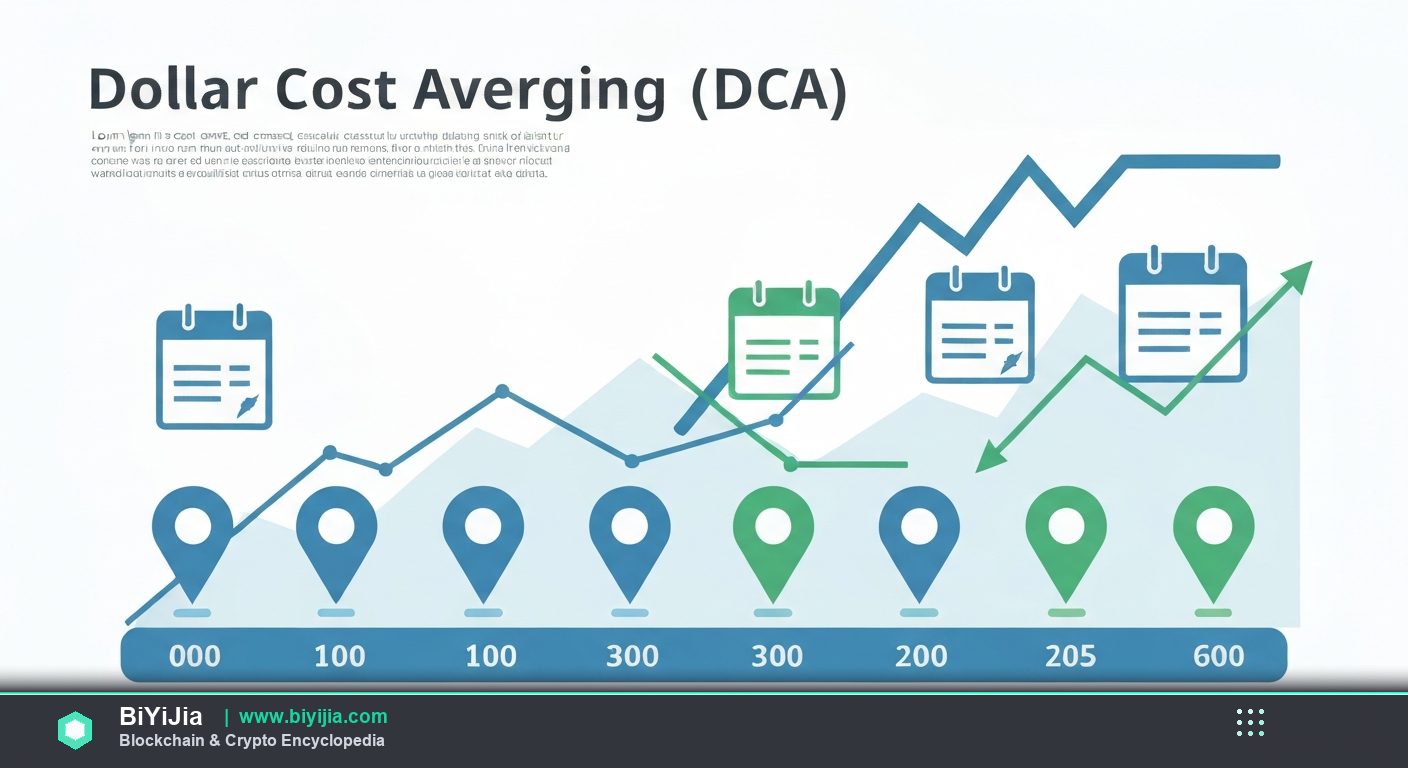
Technically, the strategy works by converting a lump sum of fiat or stablecoins into a target cryptocurrency on a recurring schedule—daily, weekly, or monthly. Each purchase captures the prevailing market price, so over many cycles the average cost per token converges toward the overall mean price. Because you’re not trying to time the market, the math is simple: total amount invested divided by total tokens acquired equals your average cost basis.
Think of it like filling up a gas tank a little each day instead of waiting until the tank is empty. Even if the price per gallon fluctuates, you’ll end up paying roughly the average price over the month, and you avoid the stress of watching the pump every time.
How It Works
- Choose a crypto asset you want exposure to—Bitcoin, Ethereum, or any DeFi token.
- Decide on a fixed fiat or stablecoin amount you’re comfortable spending each interval.
- Set up an automated schedule on a platform that supports recurring purchases.
- The platform executes the trade at the market price at the scheduled time, adding the newly bought tokens to your wallet.
- Repeat the cycle, watching your average cost drift toward the long‑term price trend.
Core Features
- Fixed‑Amount Investing: You always spend the same dollar value, not a variable token amount.
- Regular Interval Execution: Purchases happen on a set cadence—daily, weekly, or monthly.
- Automation: Most exchanges and wallets let you automate the entire workflow, removing manual effort.
- Average Cost Calculation: The strategy inherently produces an average entry price without extra calculations.
- Emotion‑Free Discipline: By pre‑committing to a schedule, you sidestep fear‑of‑missing‑out (FOMO) and panic‑selling.
- Scalability: Works for tiny $10 weekly plans up to multi‑thousand‑dollar monthly allocations.
Real-World Applications
- Coinbase Earn – Offers a “Recurring Buy” feature for over 70 cryptocurrencies; users on average allocate $150 per month (2025 data).
- Binance Auto‑Invest – Supports flexible DCA plans with a minimum of $10 per cycle; more than 1.2 million active DCA users reported in Q2 2026.
- Kraken Stacking – Allows automatic purchases of Bitcoin and Ethereum paired with staking rewards; average staking yield added 2.3 % APY in 2025.
- Ledger Live – Integrated with third‑party providers to schedule recurring buys directly from hardware wallets, enhancing security for long‑term investors.
- Gemini Dollar‑Cost Averaging – Provides a “Recurring Investment” product that bundles DCA with a custodial insurance policy, covering up to $100 million in assets.
Comparison with Related Concepts
DCA vs Lump‑Sum Investing: Lump‑sum dumps a large amount into the market at once, hoping to capture immediate upside. DCA spreads the exposure, which statistically reduces downside risk in volatile markets, though it may underperform if the price climbs sharply after the first purchase.
DCA vs Regular Buying: Regular buying simply means you purchase whenever you feel like it. DCA adds the discipline of a fixed amount and schedule, turning an ad‑hoc habit into a systematic strategy.
DCA vs Average Cost: Average cost is the outcome of DCA; you can also compute an average after random purchases, but DCA guarantees you’ll end up with an average cost without retroactive math.
Risks & Considerations
- Opportunity Cost: In a rapidly rising bull market, DCA may leave you with a higher average price than a one‑time purchase.
- Transaction Fees: Frequent small trades can accumulate fees, especially on chains with high gas costs; using fee‑optimized platforms mitigates this.
- Platform Risk: Relying on an exchange’s automation means you trust its security and uptime; a breach could halt your schedule.
- Market Downturn Exposure: DCA does not protect against prolonged bear markets; you’ll keep buying into falling prices.
- Liquidity Timing: Some tokens have low liquidity, causing slippage on each automated purchase.
Embedded Key Data
According to a 2025 study by Crypto Research Institute, investors who employed DCA on Bitcoin over a five‑year horizon achieved a 12 % lower volatility index compared to lump‑sum investors, while delivering 8 % comparable returns.
Data from Chainalysis shows that recurring buy orders accounted for 18 % of total retail crypto volume in Q4 2025, indicating growing mainstream confidence in the DCA approach.
Frequently Asked Questions
What is the ideal interval for DCA in crypto?
The “best” interval depends on your cash flow and fee structure. Weekly or bi‑weekly schedules balance price smoothing with fee efficiency, while daily DCA can be useful on low‑fee networks like Solana.
Does DCA work for all cryptocurrencies?
In principle, yes, but highly illiquid or newly launched tokens may suffer from slippage and price manipulation. Stick to assets with robust order books—Bitcoin, Ethereum, and top‑20 DeFi tokens.
Can I combine DCA with staking rewards?
Absolutely. Platforms like Kraken Stacking let you DCA into a token and automatically stake the holdings, compounding returns with both price averaging and yield.
How do fees affect DCA performance?
Each purchase incurs a transaction or exchange fee. Over many cycles, these fees can erode returns, especially on small‑size buys. Choosing fee‑free or low‑fee services (e.g., on‑chain swaps with zero‑gas promotions) helps preserve gains.
Is DCA suitable for long‑term investing?
Yes. The strategy aligns with a long‑term mindset, allowing you to build a position gradually while avoiding the pressure of market timing. Many retirement‑oriented crypto funds cite DCA as a core allocation method.
What is the difference between DCA and dollar‑cost averaging in traditional finance?
The underlying principle is identical—spreading purchases over time—but crypto adds extra layers of volatility, 24/7 markets, and on‑chain transaction costs, making disciplined automation even more valuable.
Summary
DCA (Dollar Cost Averaging) is a straightforward, automated method that lets crypto investors smooth out price volatility by buying a fixed amount at regular intervals. By removing emotional decision‑making, it serves as a cornerstone for long‑term investing, risk reduction, and disciplined portfolio growth.