
ROI (Return on Investment) refers to the percentage gain or loss on an investment relative to its cost, helping investors gauge performance across crypto, DeFi, and traditional markets.
Key Takeaways
- ROI measures profit as a percentage of the original cost.
- It works for crypto assets, token sales, and conventional stocks alike.
- Investors use ROI to compare the efficiency of different strategies.
- Unlike simple profit, ROI normalizes results, making apples‑to‑apples comparisons possible.
- High ROI can mask hidden risk; volatility and liquidity matter.
What Is ROI (Return on Investment)?
ROI is the ratio of net profit to the amount invested, expressed as a percentage.
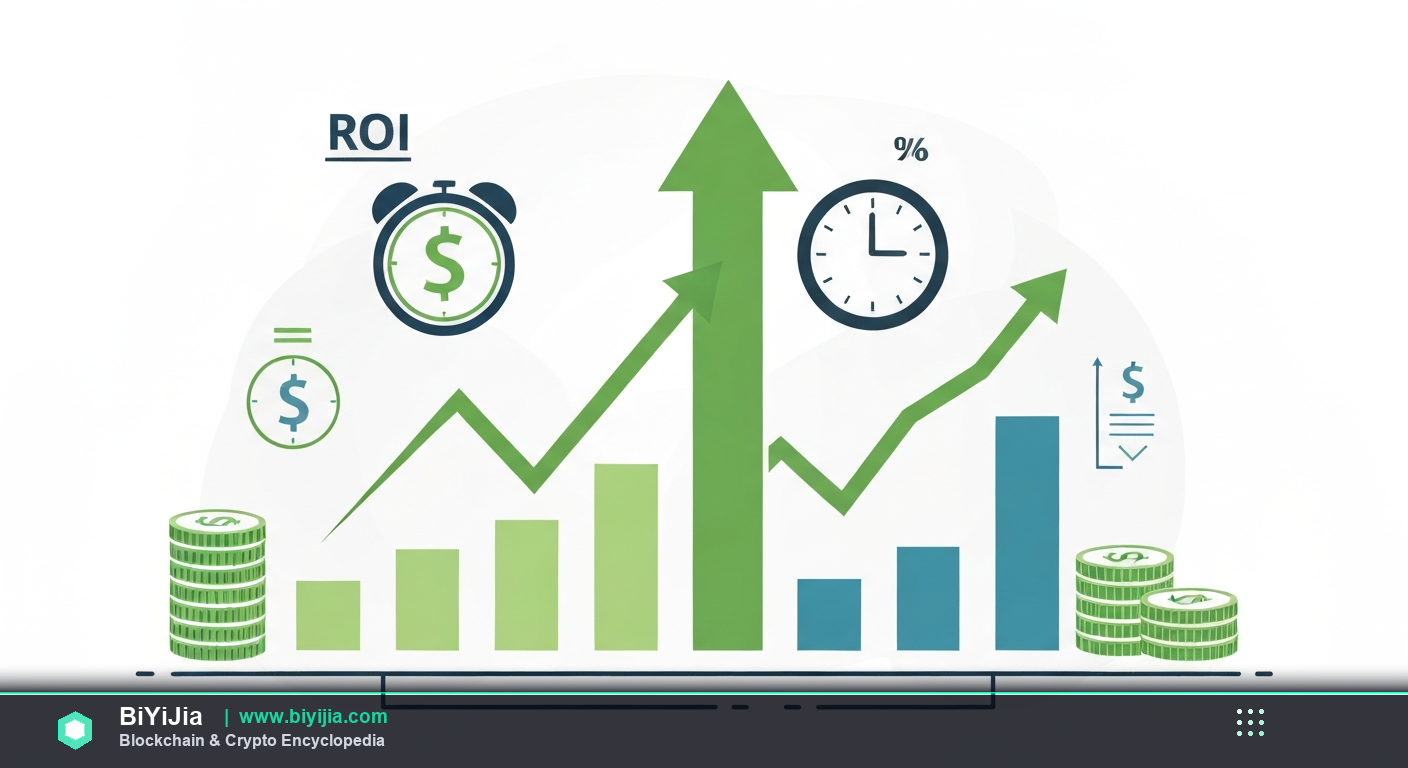
In technical terms, ROI = (Current Value – Initial Cost) / Initial Cost × 100%. The formula strips away currency units, leaving a pure performance metric that can be compared across any asset class, from Bitcoin to a real‑estate fund.
Think of ROI like a school report card: the initial cost is the effort you put in, the current value is the grade you receive, and the percentage tells you how well you did relative to the effort.
How It Works
- Identify the amount you originally spent on the asset or project.
- Determine the current market value or the amount you receive when you exit.
- Subtract the original cost from the current value to get net profit (or loss).
- Divide the net profit by the original cost.
- Multiply the result by 100 to convert it into a percentage.
Core Features
Percentage Basis: ROI always ends up as a percent, making it easy to compare disparate investments.
Time‑Neutral: The basic formula ignores holding period, so you must pair ROI with time‑based metrics like annualized ROI for a full picture.
Simplicity: No complex modeling required; a calculator and two numbers do the job.
Versatility: Works for crypto staking, token sales, DeFi yield farms, and traditional equities.
Scalability: Whether you’re evaluating a $10 meme coin or a $10 million venture fund, ROI scales linearly.
Real-World Applications
- Uniswap V3 Liquidity Provision: Providers earned an average 68% ROI over six months, according to Dune Analytics (2025).
- Bitcoin HODL: From Jan 2022 to Dec 2025, Bitcoin’s price rose 210%, delivering a 210% ROI for long‑term holders.
- Ethereum Staking: Stakers received roughly 5.2% annual ROI in 2024, as reported by the Ethereum Foundation.
- DeFi Yield Farm “Aurora”: The farm posted a 135% ROI in Q3 2025 before a market correction.
- Traditional S&P 500 Index Fund: Over the same 2022‑2025 window, the fund generated about 42% ROI, per Morningstar.
Comparison with Related Concepts
ROI vs Profit: Profit is the absolute dollar amount you earn; ROI expresses that profit relative to what you put in, letting you compare a $1,000 gain on a $10,000 investment (10% ROI) with a $100 gain on a $200 investment (50% ROI).
ROI vs Percentage Return: Percentage return is another name for ROI, but the term “percentage return” often appears in finance dashboards, while ROI is the label most crypto enthusiasts use.
ROI vs Performance: Performance encompasses many dimensions—volatility, risk‑adjusted returns, drawdowns—whereas ROI focuses solely on the net gain relative to cost.
Risks & Considerations
Time Blindness: ROI doesn’t tell you how long the investment took; a 200% ROI over five years is far less impressive than the same figure over three months.
Liquidity Risk: High ROI projects in DeFi may lock up capital, making it hard to exit without slippage.
Volatility Skew: Crypto prices swing wildly; a short‑term spike can inflate ROI, only to reverse later.
Fee Distortion: Transaction fees, gas costs, and platform fees can erode the apparent ROI if not accounted for.
Survivorship Bias: Publicized high‑ROI stories often ignore failed projects, leading to overly optimistic expectations.
Embedded Key Data
According to a 2025 report by Chainalysis, the average crypto ROI for retail investors across 2024‑2025 was 84%, outpacing the traditional market average of 48% in the same period.
Data from Messari shows that DeFi protocols collectively generated over $12 billion in ROI for liquidity providers in 2025, representing a 32% increase year‑over‑year.
Frequently Asked Questions
What is ROI and how is it calculated?
ROI stands for Return on Investment. You calculate it by subtracting the original cost from the current value, dividing that difference by the original cost, and multiplying by 100 to get a percentage. The result tells you how much you earned (or lost) relative to what you put in.
How does crypto ROI differ from traditional ROI?
Crypto ROI follows the same formula, but the underlying assets are far more volatile and often involve additional fees like gas and platform commissions. You also need to factor in tokenomics, lock‑up periods, and protocol risk, which are rarely present in traditional equities.
Can ROI be annualized?
Yes. To compare investments with different holding periods, you can convert ROI to an annualized figure using the formula: (1 + ROI)^(1/years) – 1. This gives a time‑adjusted perspective that’s essential for apples‑to‑apples comparisons.
Why do some DeFi projects advertise extremely high ROI?
High advertised ROI often comes from short‑term incentive programs, liquidity mining bonuses, or token price spikes. While tempting, such numbers can be fleeting and may hide underlying risk like impermanent loss or smart‑contract vulnerabilities.
Is ROI a good metric for evaluating NFTs?
ROI can be applied to NFTs by comparing the purchase price to the resale price. However, NFT markets are illiquid and pricing is highly subjective, so ROI alone may not capture the full risk profile.
How should I use ROI when building a crypto portfolio?
Treat ROI as one piece of a broader puzzle. Pair it with risk‑adjusted metrics like Sharpe ratio, consider the time horizon, and always factor in fees and liquidity constraints before allocating capital.
Summary
ROI (Return on Investment) is a straightforward percentage that tells you how much profit you earned relative to your initial outlay, whether you’re staking tokens, trading Bitcoin, or holding a stock. Understanding ROI helps you compare opportunities, manage risk, and make smarter allocation decisions across crypto, DeFi, and traditional finance.
Next, explore related concepts such as Profit, Cost, Percentage, and Performance to deepen your financial literacy.