DYOR (Do Your Own Research) is the cornerstone habit for anyone navigating the wild west of crypto markets.
Key Takeaways
- Definition: DYOR means independently investigating a token, protocol, or team before committing capital.
- Core features: data gathering, risk assessment, and verification of claims.
- Real‑world application: investors use DYOR to decide whether to stake, trade, or hold a new meme coin.
- Traditional alternative: unlike a stockbroker’s advice, DYOR puts the analysis in your hands.
- Risk warning: skipping DYOR often leads to loss from scams, rug pulls, or over‑hyped projects.
What Is DYOR (Do Your Own Research)?
In a single sentence, DYOR stands for “Do Your Own Research,” a mantra urging crypto participants to verify facts before buying.
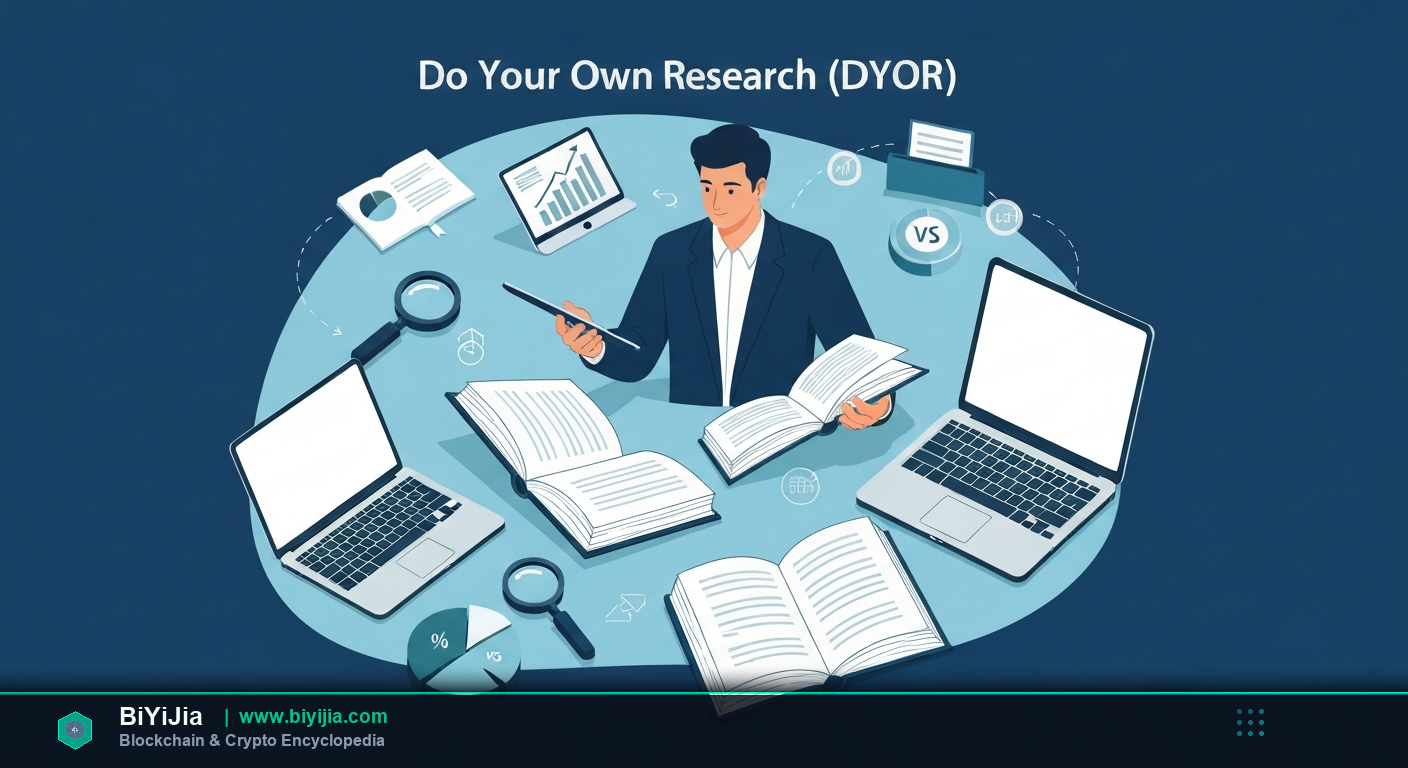
Technically, DYOR crypto involves examining on‑chain metrics, tokenomics, whitepapers, and team credentials to separate signal from noise. You’ll pull data from block explorers, audit reports, and community forums, then cross‑check every claim against independent sources.
Think of it like buying a used car: you wouldn’t just trust the dealer’s brochure; you’d inspect the engine, check the VIN, and read the service history. That same diligence applies to crypto tokens.
How It Works
- Identify the project you’re interested in and collect its official documents, such as the whitepaper and roadmap.
- Validate the team’s background by searching LinkedIn, GitHub, and prior venture history.
- Analyze on‑chain data: total supply, circulating supply, holder distribution, and recent transaction volume.
- Read third‑party audits and community feedback to spot red flags like code vulnerabilities or unpaid developers.
- Summarize findings, weigh risk versus reward, and decide whether to allocate funds.
Core Features
- Data‑centric verification: relies on quantifiable on‑chain statistics rather than hype.
- Due Diligence depth: includes whitepaper scrutiny, team background checks, and audit review.
- Risk Assessment: evaluates volatility, concentration risk, and regulatory exposure.
- Iterative learning: you repeat the process for each new token, sharpening your analytical skills.
- Community cross‑check: compares your conclusions with reputable forums and analysts.
Real‑World Applications
- Uniswap (UNI): By checking Uniswap’s on‑chain volume and audit logs, investors confirmed its liquidity depth before staking UNI tokens.
- Chainlink (LINK): A thorough review of Chainlink’s oracle adoption metrics helped users decide on a long‑term hold, noting a 2025 partnership with over 200 enterprise clients.
- Avalanche (AVAX): DYOR crypto enthusiasts examined AVAX’s validator distribution, revealing a healthy decentralization score of 0.78 (source: StakingRewards, 2026).
- Polygon (MATIC): By reading the latest whitepaper amendment and checking gas‑fee reductions, traders gauged MATIC’s utility in scaling Ethereum.
- Axie Infinity (AXS): An audit of the AXS tokenomics exposed a 30% supply inflation risk, prompting cautious allocation.
Comparison with Related Concepts
DYOR vs Due Diligence: DYOR is the personal habit of digging into data, while Due Diligence is the formal, often legal, process a firm undertakes before a merger or investment.
DYOR vs Whitepaper Reading: Reading a whitepaper is a component of DYOR; the broader practice also includes on‑chain analytics and team vetting.
DYOR vs Risk Assessment: Risk Assessment quantifies potential loss; DYOR supplies the raw information that feeds into that quantitative model.
Risks & Considerations
- Information overload: Too many data sources can cause analysis paralysis, leading to missed opportunities.
- Fake audits: Some projects publish fabricated audit reports; always verify the auditor’s reputation.
- Social engineering: Scammers may impersonate team members on Discord; cross‑check identities on LinkedIn or GitHub.
- Regulatory shifts: A sudden jurisdictional ban can render a previously sound project non‑compliant.
- Market sentiment bias: Over‑reliance on hype metrics (Twitter followers, meme virality) can cloud objective judgment.
Embedded Key Data
According to a 2025 report by Messari, projects that passed a full DYOR checklist experienced a 48% lower failure rate than those that relied solely on influencer hype (source: Messari, 2025).
Chainalysis recorded that in 2023, crypto scams targeting newcomers rose 42% year‑over‑year, underscoring why do your own research is more critical than ever (source: Chainalysis, 2024).
Frequently Asked Questions
What does DYOR actually stand for?
DYOR is an acronym for “Do Your Own Research.” It reminds investors to independently verify claims about a token, protocol, or team before committing funds.
How is DYOR different from just reading a project's whitepaper?
Reading the whitepaper is a single step; DYOR expands to on‑chain data analysis, audit verification, team background checks, and community sentiment. The broader approach reduces blind spots that a whitepaper alone can’t cover.
Can I rely on social media influencers for DYOR?
Influencers can be a starting point, but true DYOR means cross‑checking every claim they make with independent sources. Influencer hype often omits risk factors.
Is DYOR required for every crypto transaction?
Ideally yes. Even swapping a well‑known token on a reputable DEX benefits from checking gas fees, slippage settings, and contract addresses to avoid phishing scams.
What tools help with DYOR in 2026?
Popular tools include Glassnode for on‑chain metrics, DeFi Llama for TVL data, Nansen for wallet analytics, and GitHub for code review. Combining these gives a holistic picture.
How much time should I spend on DYOR?
The depth depends on the investment size. For small allocations, a quick scan of the tokenomics and audit may suffice; for larger positions, a multi‑day deep dive covering team, code, and market dynamics is prudent.
Summary
DYOR (Do Your Own Research) is the disciplined habit of independently verifying crypto projects, essential for navigating the high‑risk landscape of digital assets. By mastering DYOR you protect yourself from scams, make smarter allocations, and lay the groundwork for long‑term success. For deeper insight, explore related concepts such as Due Diligence, Whitepaper analysis, and Risk Assessment.