
Key Takeaways
- ERC-20 is the default token standard for Ethereum, enabling uniform interaction across wallets and dApps.
- Core features include balance tracking, transfer functions, and approval mechanisms.
- It powers billions of dollars in DeFi, NFTs, and gaming projects.
- Compared to legacy financial assets, ERC-20 offers programmable, borderless liquidity.
- Improper contract upgrades or poorly audited code can expose holders to loss.
What Is ERC-20?
ERC-20 is the technical specification that tells Ethereum how to handle a token.
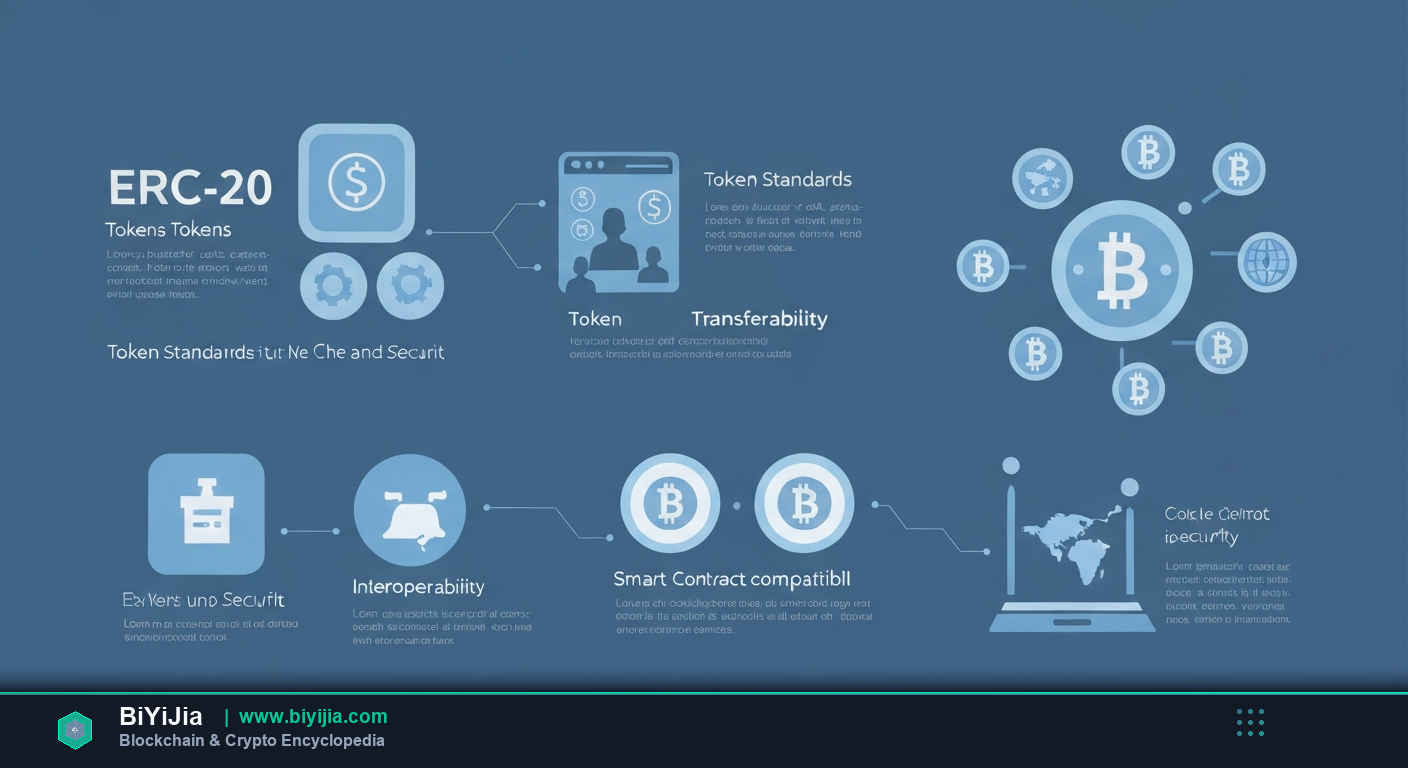
At its heart, the standard defines a small set of functions—like transfer and balanceOf—that every compliant contract must expose, making tokens interchangeable across wallets, exchanges, and smart contracts.
Think of ERC-20 as the "USB-C" of crypto: just as the connector lets any device charge or communicate, the standard lets any Ethereum‑based application recognize and move a token without custom code.
How It Works
- A developer writes a smart contract that implements the ERC-20 interface, publishing it to the Ethereum network.
- Users interact with the contract by calling its functions—sending a transaction to move tokens, check balances, or approve a third party.
- The Ethereum Virtual Machine validates the transaction, updates the token ledger, and broadcasts the new state to all nodes.
- Because every ERC-20 contract follows the same function signatures, wallets and dApps can read and display any ERC-20 token without special adapters.
- Optional extensions (like ERC-20 Permit) can be added, but the core set remains unchanged, preserving compatibility.
Core Features
Total Supply: The contract records the maximum number of tokens that can ever exist, providing scarcity guarantees.
Balance Tracking: balanceOf(address) returns the exact token count for any Ethereum address.
Transfer Function: transfer(to, amount) moves tokens directly between users, updating balances atomically.
Allowance System: approve(spender, amount) and transferFrom let a third party spend tokens on your behalf, enabling decentralized exchanges and automated market makers.
Event Emission: Every transfer and approval fires a standardized event, allowing off‑chain services to index activity efficiently.
Compatibility: By adhering to the same interface, new tokens inherit immediate support in existing wallets, DEXs, and DeFi protocols.
Real-World Applications
- Uniswap (UNI): The leading decentralized exchange uses UNI as its governance token; as of Q2 2026, UNI holders collectively control over $3.2 billion in liquidity.
- Chainlink (LINK): Provides decentralized oracle services; the token market cap topped $12 billion in early 2026, reflecting widespread enterprise adoption.
- Axie Infinity (AXS): Powers a play‑to‑earn ecosystem; daily active wallets surpassed 1.4 million in 2025, largely due to ERC-20’s ease of integration.
- MakerDAO (MKR): Governs the DAI stablecoin system; MKR’s supply is algorithmically adjusted, illustrating ERC-20’s flexibility for complex monetary policy.
- USDC (USD Coin): A fiat‑backed stablecoin that remains the most widely used Ethereum token for cross‑border payments, handling over $150 billion in daily transaction volume in 2026.
Comparison with Related Concepts
ERC-20 vs ERC-721: ERC-20 defines fungible tokens—each unit is identical—while ERC-721 creates non‑fungible tokens, where each token has unique metadata.
ERC-20 vs Bitcoin: Bitcoin is a native cryptocurrency with a fixed protocol, whereas ERC-20 tokens are smart‑contract‑based assets that can be programmed for a variety of use cases.
ERC-20 vs Traditional Equity: Traditional shares require centralized registries, but ERC-20 tokens provide immutable, on‑chain ownership records that can be transferred 24/7 without intermediaries.
Risks & Considerations
Smart Contract Bugs: Faulty code can freeze tokens or allow unlimited minting; thorough audits are essential.
Upgradeability Hazards: Proxy patterns enable upgrades but also create a central point of control that could be abused.
Regulatory Uncertainty: Some jurisdictions treat ERC-20 tokens as securities, exposing issuers to compliance risk.
Liquidity Fragmentation: Tokens that lack listings on major DEXs may suffer from low liquidity, leading to price slippage.
Approval Exploits: Over‑approving a spender can let malicious contracts drain balances; use the minimum necessary allowance.
Embedded Key Data
According to the Ethereum Foundation’s 2026 State of the Network report, ERC-20 tokens accounted for 68% of total token transactions on Ethereum in the past year.
Chainalysis data shows that ERC-20 based stablecoins moved $1.9 trillion in cross‑border payments in 2025, outpacing traditional remittance services by a factor of three.
Frequently Asked Questions
What is the difference between ERC-20 and ERC-1155?
ERC-1155 is a multi‑token standard that can handle both fungible and non‑fungible assets within a single contract, reducing gas costs for batch operations. ERC-20 only supports fungible tokens, requiring separate contracts for each asset type.
Do I need to own ETH to receive ERC-20 tokens?
Yes, because every ERC-20 transfer is an Ethereum transaction that consumes gas paid in ETH. Receiving tokens itself costs no gas, but moving them out of your wallet does.
Can an ERC-20 token be paused?
Many implementations include a pause() function that only the contract owner can call, temporarily halting transfers. This feature is optional and not part of the core standard.
How do I verify if a token is truly ERC-20 compliant?
Use a block explorer to check the contract’s source code for the required function signatures (totalSupply, balanceOf, transfer, approve, allowance, transferFrom) and see if it emits the standard events.
Are ERC-20 tokens safe for long‑term storage?
When stored in a hardware wallet or a reputable custodial service, ERC-20 tokens inherit the same security guarantees as ETH. However, the token’s contract code can introduce vulnerabilities, so it’s wise to monitor audit reports.
Summary
ERC-20 defines the universal language that lets any Ethereum token be moved, exchanged, and integrated across the ecosystem. Its simplicity and compatibility have made it the backbone of DeFi, NFTs, and countless other use cases, cementing its role as a foundational building block of modern blockchain finance.
Understanding ERC-20 opens the door to related concepts like Ethereum, Token, Smart Contract, and Standard, each of which builds on the same open‑source ethos.