

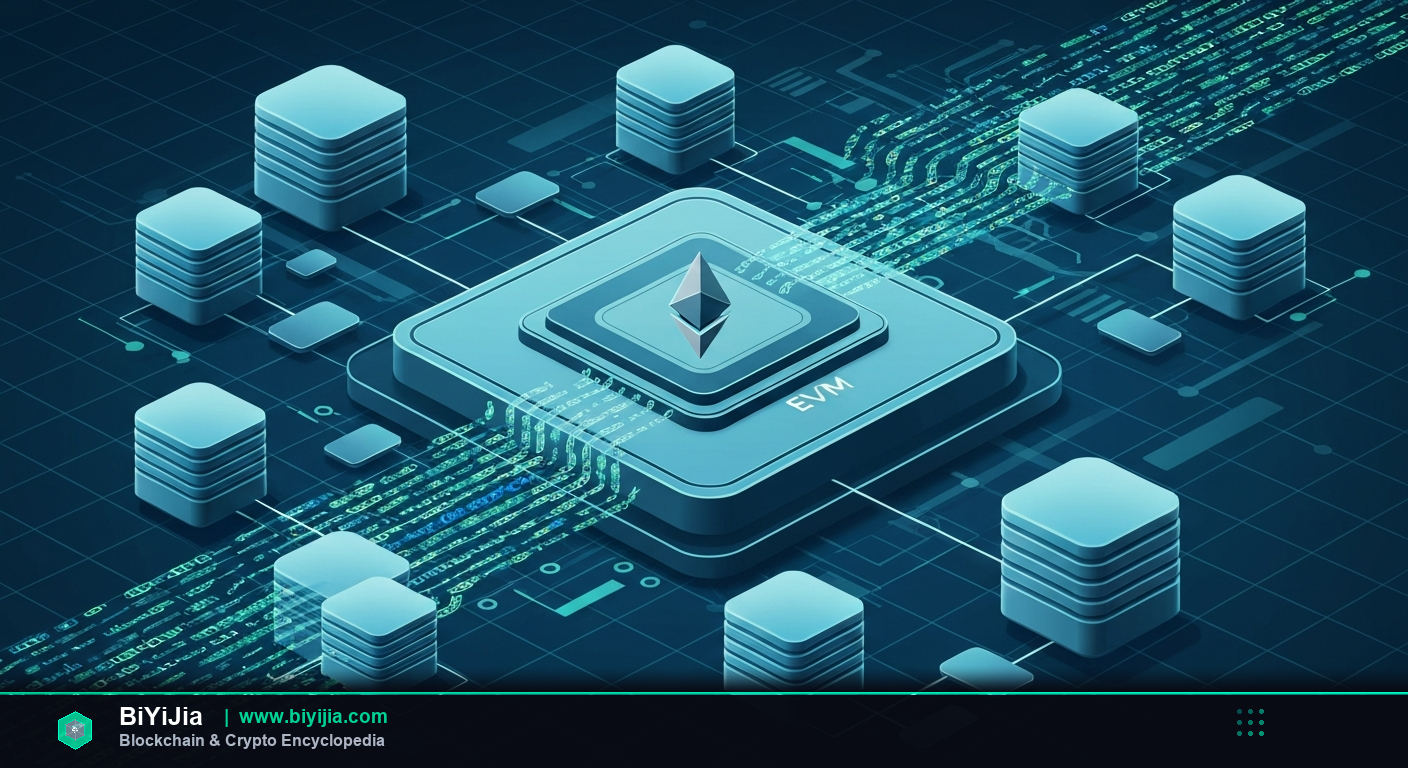
EVM (Ethereum Virtual Machine) is the runtime environment that executes smart contracts on Ethereum and compatible blockchains, turning bytecode into state changes.
Key Takeaways
- One‑line definition: The EVM is a sandboxed virtual processor that runs contract bytecode on Ethereum.
- Core features include deterministic execution, gas metering, and stack‑based architecture.
- Real‑world application: Every DeFi protocol, NFT marketplace, and DAO on Ethereum relies on the EVM.
- Compared to traditional servers, the EVM provides trustless, immutable computation without a central operator.
- Risk warning: Bugs in bytecode or gas‑price spikes can lead to lost funds or failed transactions.
What Is EVM (Ethereum Virtual Machine)?
In plain English, the EVM is the computer that runs every smart contract on Ethereum.
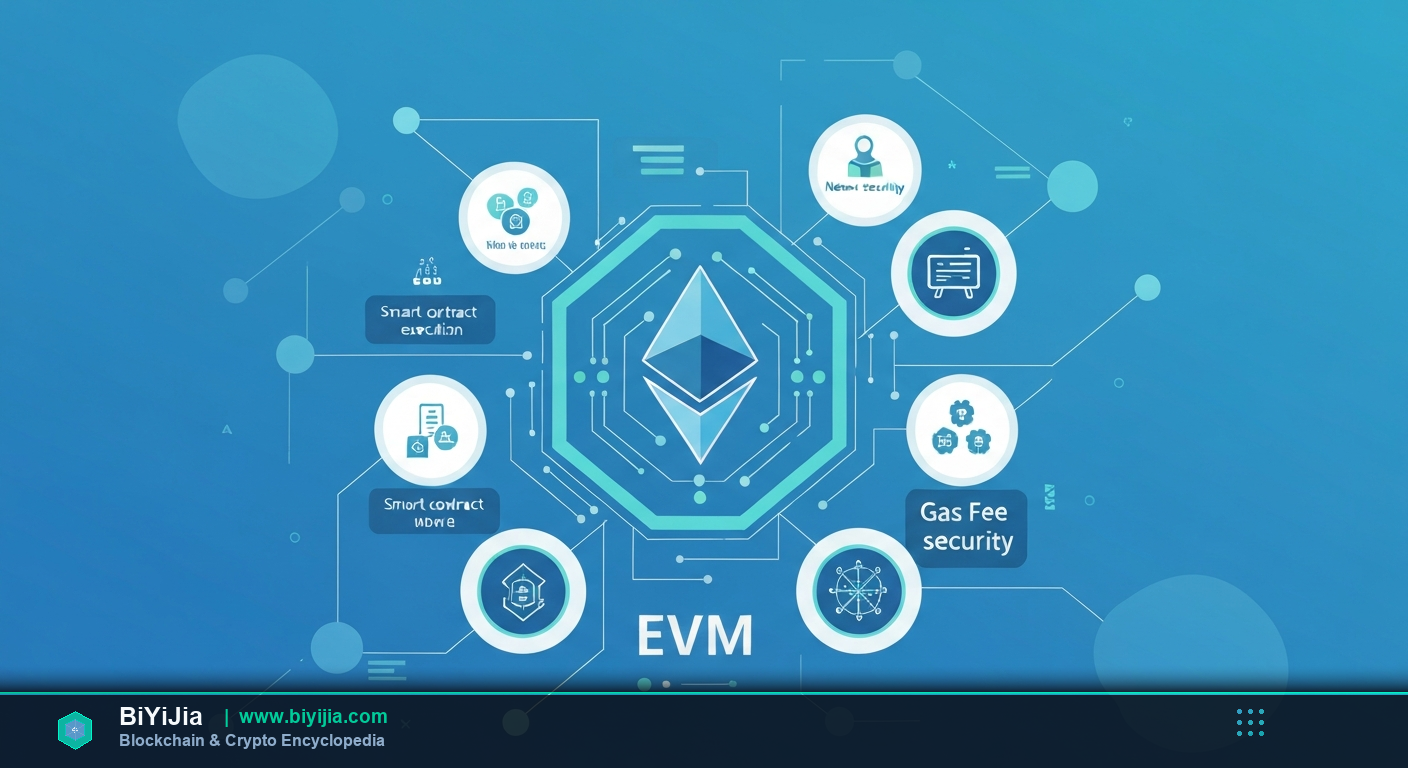
Technically, it’s a stack‑based virtual machine that interprets compiled Solidity (or Vyper) bytecode, enforces gas limits, and updates the global state stored in the blockchain’s world state. It guarantees that the same input always yields the same output, which is why developers can trust that a contract will behave identically on every node.
Think of the EVM like a universal vending machine: you insert a “code token” (the transaction), the machine checks you have enough “gas credits,” then dispenses the programmed result—whether that’s a token transfer, a loan approval, or a new NFT.
How It Works
- Transaction submission: A user signs a transaction containing contract bytecode and a gas limit, then broadcasts it to the network.
- Node validation: Every full node runs the EVM to verify the transaction can be executed within the supplied gas and that the sender has enough Ether to pay for it.
- Bytecode execution: The EVM steps through the bytecode instruction by instruction, manipulating a stack, memory, and storage while deducting gas for each operation.
- State update: Once execution finishes (or runs out of gas), the node writes the resulting changes—balances, storage slots, logs—to the world state.
- Block finality: The updated state is included in a block; after consensus, the changes become immutable and visible to all participants.
Core Features
- Deterministic Execution: Identical input always produces identical output across all nodes, eliminating ambiguity.
- Gas Metering: Every opcode has a gas cost; this prevents infinite loops and incentivizes efficient code.
- Stack‑Based Architecture: The EVM uses a 1024‑item stack for temporary values, making it simple yet powerful.
- Isolation (Sandbox): Contracts run in a confined environment; they cannot directly access the host file system or network.
- State Persistence: Contract storage is persisted on‑chain, enabling long‑term data retention across transactions.
- EVM Compatibility: Many chains (Polygon, Arbitrum, Optimism, Binance Smart Chain) implement the same instruction set, allowing code reuse.
Real-World Applications
- Uniswap: The leading decentralized exchange processes over $20 billion in daily volume (2025 data, Dune Analytics).
- OpenSea: Powers the largest NFT marketplace, supporting more than 10 million listed items as of Q4 2025.
- Compound: A money‑market protocol that has supplied $12 billion in assets to borrowers, all managed by EVM contracts.
- Chainlink: Provides off‑chain data feeds to smart contracts, with over 200 live price feeds feeding DeFi apps.
- Aave: A lending platform that facilitated $8 billion in flash loans in 2025 alone.
Comparison with Related Concepts
EVM vs Traditional VM: A traditional virtual machine (like the JVM) runs on a single server under a trusted operator, while the EVM runs on a decentralized network where every node validates each step.
EVM vs WebAssembly (Wasm): Wasm is gaining traction for performance, but the EVM remains the default because of its mature tooling, massive developer base, and entrenched DeFi ecosystem.
EVM vs Bitcoin Script: Bitcoin’s script is intentionally limited to simple transactions; the EVM is Turing‑complete, enabling complex programmable finance.
Risks & Considerations
- Gas Price Volatility: Sudden spikes can make transactions prohibitively expensive; users may over‑pay or get stuck.
- Reentrancy Bugs: Improper handling of external calls can let attackers drain funds, as seen in the 2022 DAO hack.
- State Bloat: Unlimited storage growth can increase node sync times and centralize the network.
- Upgrade Uncertainty: Future EIP upgrades (e.g., EIP‑4844) may change gas semantics, requiring contract migrations.
- Compatibility Drift: Not all EVM‑compatible chains implement every EIP identically, leading to subtle bugs when porting contracts.
In 2025, the average gas price on Ethereum hit 22 gwei, according to Etherscan, while Layer‑2 solutions like Arbitrum reduced the average to under 1 gwei, illustrating the economic pressure to migrate off‑chain.
Dune Analytics reports that over 5,000 distinct dApps were active on EVM‑compatible chains by the end of 2025, confirming the ecosystem’s breadth and the importance of understanding the EVM.
Frequently Asked Questions
What does EVM stand for?
EVM stands for Ethereum Virtual Machine, the sandboxed environment that processes smart contract bytecode on Ethereum and compatible networks.
Can I run the EVM on my laptop?
Yes. Tools like Hardhat, Ganache, and Foundry let developers spin up a local EVM instance to test contracts before deploying to a live chain.
Why do I need to pay gas?
Gas is the fee that compensates miners or validators for the computational work required to execute your transaction. It also prevents abusive code like infinite loops.
Is the EVM the same on every chain?
Most EVM‑compatible chains follow the same instruction set, but subtle differences in gas schedules, pre‑compiles, or supported EIPs can cause compatibility issues.
How does the EVM relate to DeFi?
Every DeFi protocol—whether it’s a DEX, lending platform, or stablecoin—relies on the EVM to enforce trustless rules, making it the backbone of Decentralized Finance (DeFi).
Will the EVM be replaced by something else?
There’s active research around alternatives like eWASM and native WebAssembly, but the EVM’s network effects and tooling make it the dominant choice for now.
Summary
The Ethereum Virtual Machine is the deterministic, gas‑metered engine that powers smart contracts across Ethereum and dozens of compatible chains. Understanding its mechanics is essential for anyone building or using DeFi, NFTs, or any on‑chain application.