

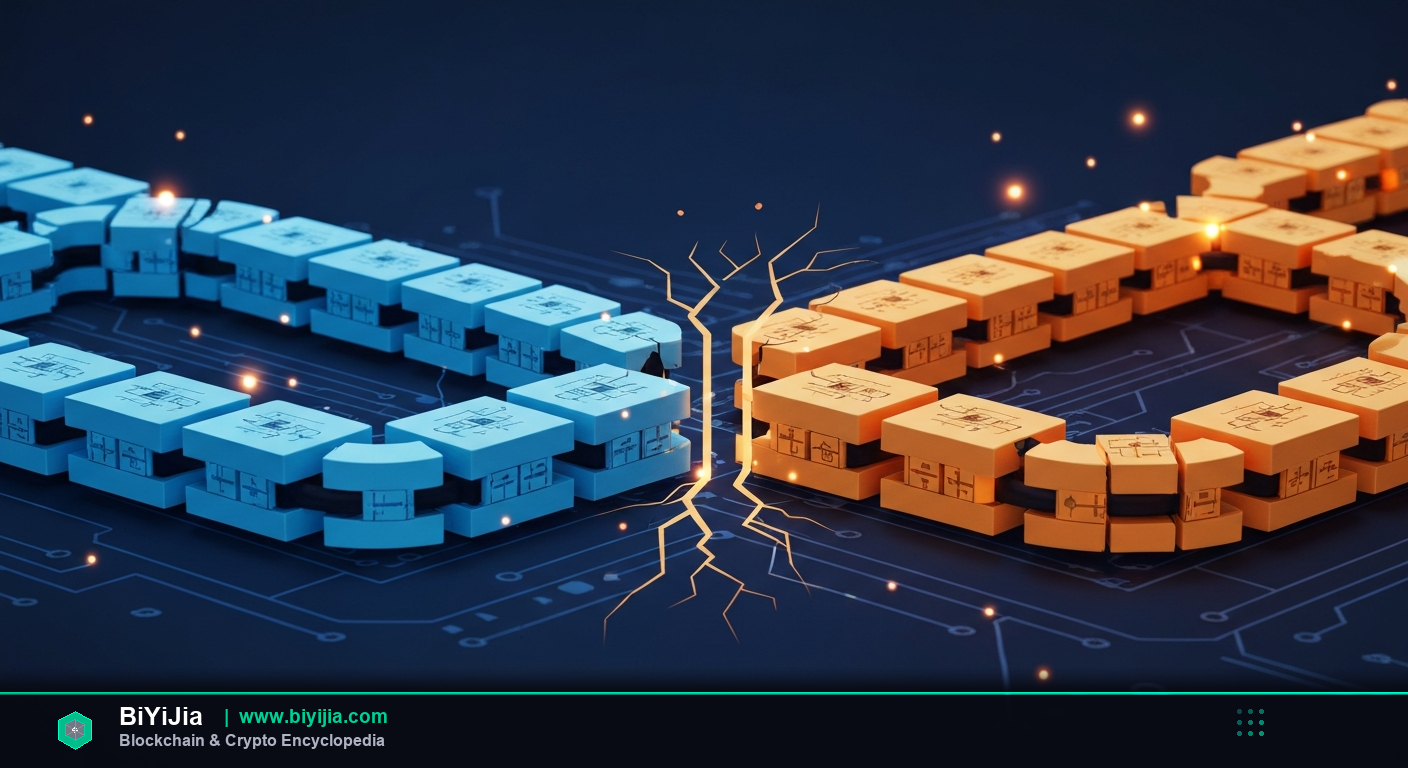
Hard Fork refers to a permanent, rule‑changing split in a blockchain that creates an incompatible upgrade and often results in a new chain.
Key Takeaways
- Hard Fork is a non‑backward‑compatible protocol change that forces all nodes to upgrade.
- Core feature: creates a new chain while preserving the original transaction history up to the fork point.
- Real‑world use: Bitcoin Cash (BCH) emerged from a Bitcoin hard fork in 2017.
- Unlike soft forks, hard forks require unanimous consensus among participants.
- Risk: community division can lead to reduced security and market volatility.
What Is Hard Fork?
In plain language, a hard fork is a permanent divergence in a blockchain’s protocol that makes the old version incompatible with the new one.
Technically, developers alter consensus rules—such as block size limits or transaction validation logic—in a way that nodes running the old software will reject blocks created under the new rules. Because the change is not backward‑compatible, the network splits into two separate ledgers at a predetermined block height.
Think of it like a road that suddenly branches into two separate highways; drivers must choose which route to follow, and each highway continues independently after the split.
How It Works
- Developers propose a protocol change that cannot be accommodated by existing software.
- The community debates the proposal and decides on a activation block height.
- At the activation height, nodes running the new software start enforcing the new rules, while nodes that stay on the old software reject the new blocks.
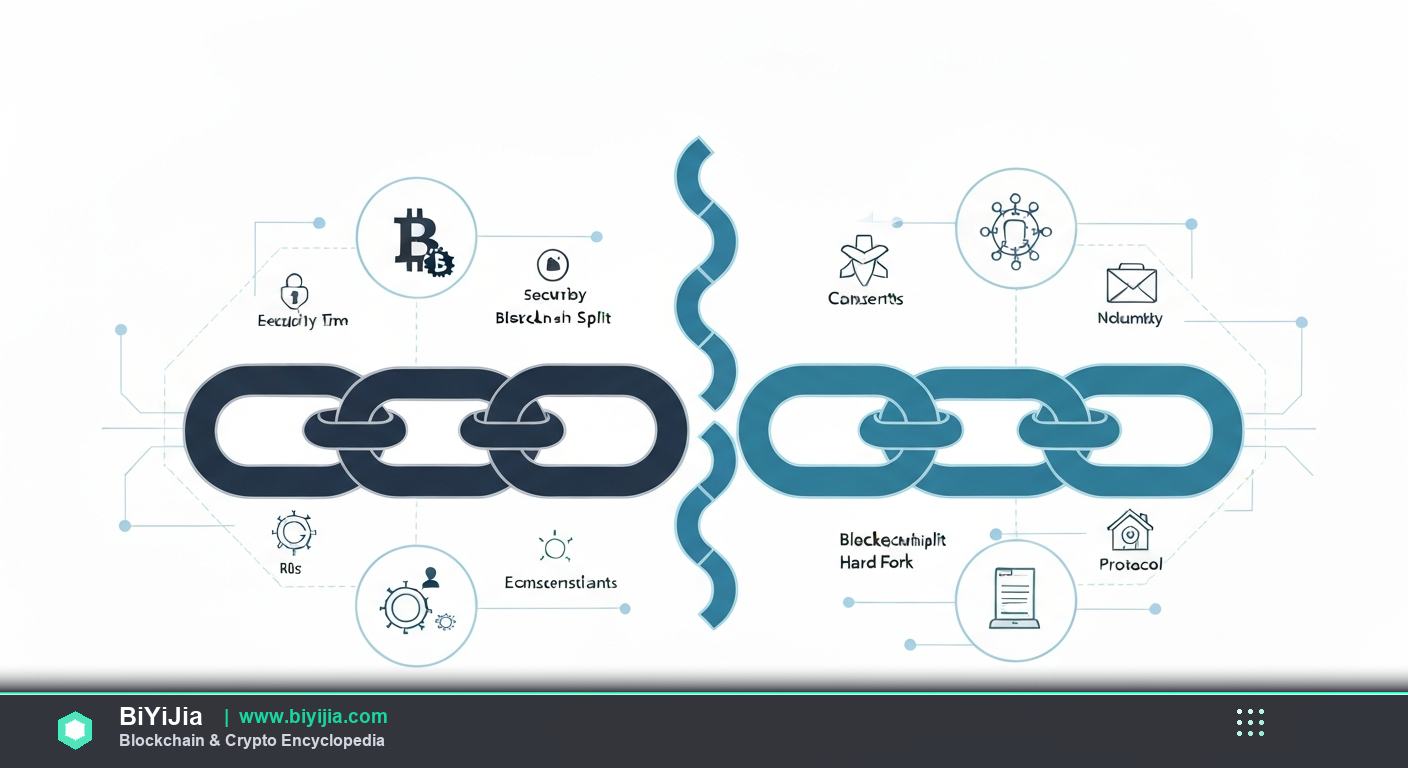
- The blockchain splits into two parallel chains: the original chain and the new chain, each with its own set of validators.
- Users and exchanges must choose which chain to support, often leading to token swaps or dual‑token listings.
Core Features
- Incompatible Upgrade: The new protocol does not recognize blocks produced under the old rules.
- Chain Split: A single ledger becomes two distinct ledgers sharing history up to the fork point.
- New Chain: The fork creates a separate cryptocurrency that can have its own market dynamics.
- Consensus Reset: Validators must re‑align with the new rule set, often requiring software updates.
- Community Governance: Successful hard forks usually involve community voting or broad stakeholder agreement.
- Market Impact: The event typically triggers price volatility for both the original and new assets.
Real-World Applications
- Bitcoin Cash (BCH) – Launched in August 2017 to increase block size to 8 MB, attracting merchants needing faster transaction throughput.
- Ethereum Classic (ETC) – Formed after the 2016 DAO hard fork, preserving the original Ethereum chain without the rollback.
- Monero (XMR) – Periodically hard forks to integrate privacy upgrades like RingCT, keeping the network resistant to tracing.
- Polkadot (DOT) – Executed a scheduled hard fork in 2023 to introduce parachain slot auctions, expanding scalability.
- Bitcoin SV (BSV) – Split from Bitcoin Cash in 2018, aiming for massive block sizes to support enterprise use cases.
Comparison with Related Concepts
Hard Fork vs Soft Fork: A hard fork creates an irreversible split and requires all participants to upgrade, while a soft fork is backward‑compatible, allowing old nodes to continue operating under the new rules.
Hard Fork vs Chain Split: A chain split is the outcome of a hard fork; the terms describe the event (hard fork) and its result (chain split).
Hard Fork vs Incompatible Upgrade: The phrase “incompatible upgrade” simply describes the nature of the change, whereas a hard fork refers to the entire process, including community coordination and network bifurcation.
Risks & Considerations
- Community Fragmentation: Diverging visions can lead to reduced developer support and a split user base.
- Security Dilution: Splitting hash power between two chains can make each chain more vulnerable to attacks.
- Liquidity Issues: Exchanges may delay listing the new token, causing temporary market freezes.
- Regulatory Uncertainty: New tokens may fall under different legal frameworks, complicating compliance.
- Technical Debt: Maintaining two codebases can increase future development overhead.
Embedded Key Data
According to CoinMetrics, 2024 recorded 37 major blockchain hard forks, a 12 % increase from the previous year, reflecting growing experimentation with protocol upgrades.
A Q1 2025 study by The Block indicated that 18 % of Bitcoin holders actively participated in the Bitcoin Cash (BCH) fork, highlighting significant community engagement during hard fork events.
Frequently Asked Questions
What triggers a hard fork?
A hard fork is typically triggered when developers propose a change that cannot be implemented within the existing consensus rules. The community then votes on the proposal, and if consensus is reached, the change is scheduled to activate at a specific block height.
Can I stay on the original chain after a hard fork?
Yes. Nodes that do not upgrade will continue to follow the original protocol, effectively remaining on the legacy chain. However, they may face reduced liquidity and support as the ecosystem shifts toward the new chain.
Do hard forks always create a new cryptocurrency?
Most hard forks result in a new token because the split creates two separate ledgers. Exceptions exist when the community decides to discard the new chain or merge it back, but those cases are rare.
How does a hard fork affect my wallet balances?
Your balance up to the fork point is duplicated on both chains. After the split, each chain tracks its own transactions, so you will see the same amount of tokens on both the original and new networks unless you move them.
Is a hard fork a security risk?
Splitting hash power can lower the overall security of both chains, especially for proof‑of‑work networks. Additionally, rushed upgrades may introduce bugs that attackers could exploit.
How do exchanges handle hard forks?
Exchanges typically pause withdrawals before the fork, then list the new token after confirming its technical stability. Some may offer token swaps or airdrops to existing holders.
What is the difference between a hard fork and an airdrop?
An airdrop distributes tokens to existing holders without altering the underlying protocol. A hard fork, on the other hand, changes the consensus rules, creating a new blockchain that mirrors the old one up to the fork point.
Summary
Hard Fork is a permanent, rule‑changing split that creates an incompatible upgrade and often results in a new chain such as BCH. Understanding its mechanics, risks, and real‑world examples helps participants navigate the volatile but innovative landscape of blockchain development.