

Key Takeaways
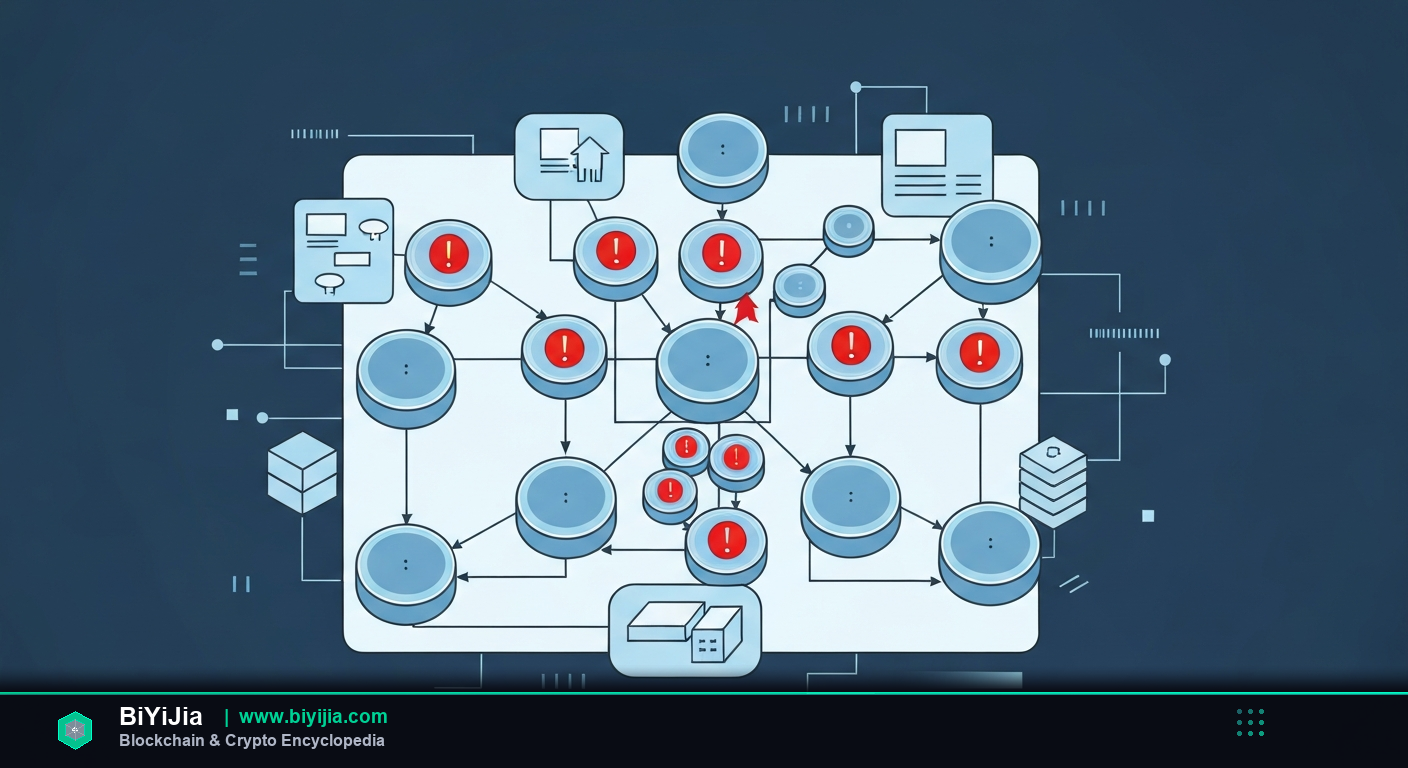
- Byzantine Fault Tolerance (BFT) lets a network reach agreement despite faulty or malicious nodes.
- Core features include quorum, view changes, and deterministic finality.
- Permissioned blockchains and critical infrastructure rely on BFT for safety.
- Compared with simple crash fault tolerance, BFT handles arbitrary failures.
- Improper configuration can expose the system to denial‑of‑service attacks.
What Is Byzantine Fault Tolerance (BFT)?
Byzantine Fault Tolerance (BFT) is a consensus method that ensures a distributed system continues to operate correctly even when some nodes act arbitrarily or maliciously.
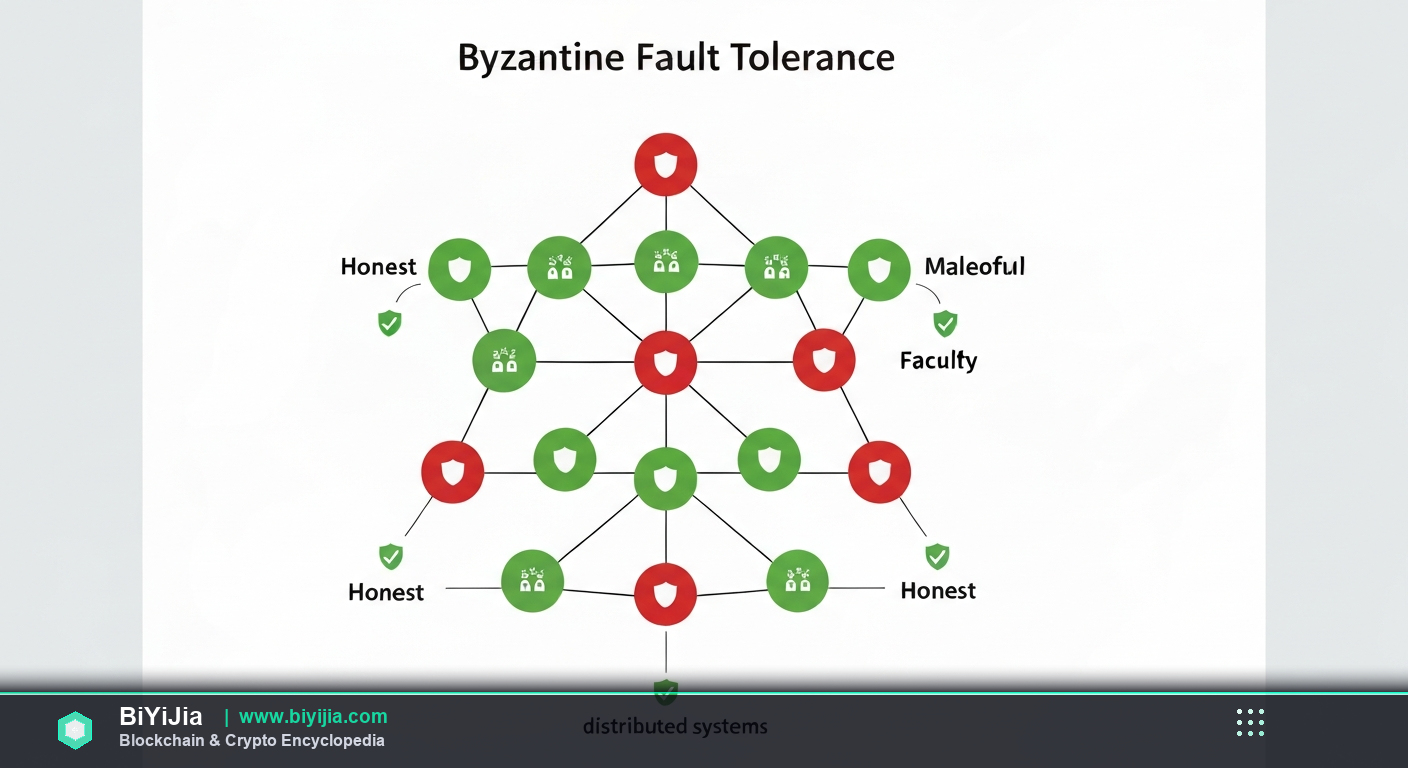
At its heart, BFT assumes that up to one‑third of participants may lie, crash, or collude, and still guarantees that honest nodes will agree on the same state. The algorithm works by having every node exchange signed messages, forming a quorum that can outvote the faulty ones, and by rotating leadership to avoid single points of failure.
Think of a group of friends trying to decide on a restaurant while a few are deliberately giving wrong suggestions; they keep sharing their choices until a majority aligns, ensuring the final decision reflects the honest majority.
How It Works
- All nodes broadcast their proposed transaction block to the network, attaching a cryptographic signature.
- Each node collects signatures from at least 2/3 of the participants, forming a quorum that validates the block.
- If the quorum is reached, the block is committed and becomes immutable; otherwise, a view change is triggered to select a new leader.
- The new leader re‑initiates the proposal round, and the process repeats until consensus is achieved.
Core Features
Deterministic Finality: Once a block gathers a 2/3 quorum, it cannot be reversed, giving instant finality.
Fault Threshold: The protocol tolerates up to one‑third of nodes behaving arbitrarily without breaking safety.
Leader Rotation: Periodic view changes prevent a single malicious leader from stalling the network.
Message Authentication: Every message is signed, making it easy to spot forged or replayed communications.
State Machine Replication: All honest nodes execute the same sequence of transactions, keeping the ledger identical.
Real-World Applications
Hyperledger Fabric – A permissioned blockchain platform that offers a BFT ordering service; over 1,200 enterprises use it as of 2025 (source: Hyperledger Survey).
Cosmos SDK – Implements Tendermint BFT, powering more than 300 zones with a combined TVL of $45 billion in 2026 (source: Cosmos Hub Report).
Algorand – Uses a pure proof‑of‑stake BFT variant, processing over 1,200 transactions per second with sub‑second finality (source: Algorand Whitepaper 2024).
Ripple (XRPL) – Employs the RPCA consensus algorithm, a BFT style protocol that validates ~1,500 transactions per second for cross‑border payments (source: Ripple Annual Report 2025).
Ethereum’s Sharding – The upcoming Danksharding design incorporates BFT committees to finalize shard blocks, expected to handle 100 k TPS by 2027 (source: Ethereum Foundation Roadmap).
Comparison with Related Concepts
BFT vs Crash Fault Tolerance (CFT): CFT only assumes nodes may stop working, while BFT also guards against malicious behavior and arbitrary data corruption.
BFT vs Proof‑of‑Work (PoW): PoW achieves consensus by expending computational power, whereas BFT reaches agreement through message exchange and voting, offering faster finality and lower energy use.
BFT vs Proof‑of‑Stake (PoS): PoS selects validators based on stake, but BFT still requires a quorum of signatures; many modern PoS systems embed BFT for finality layers.
Risks & Considerations
Network Size Limitation: BFT protocols become communication‑heavy as node count grows, making them less suitable for large public networks.
View‑Change Exploits: Malicious actors can trigger frequent leader changes, leading to denial‑of‑service if not rate‑limited.
Key Management: Since every message is signed, compromised private keys can allow an attacker to masquerade as an honest node.
Assumption of Synchronous Network: BFT assumes bounded message latency; severe network partitions can break safety guarantees.
Complex Implementation: Incorrect handling of quorum thresholds or signature aggregation can introduce subtle bugs that jeopardize security.
Embedded Key Data
In 2024, more than 30 % of permissioned blockchains reported using Practical Byzantine Fault Tolerance (PBFT) or its variants, according to Ledger Research.
A 2025 IEEE study demonstrated that Byzantine fault‑tolerant systems can safely tolerate up to one‑third malicious nodes without compromising consensus safety.
Frequently Asked Questions
What is BFT and why does it matter for blockchain?
BFT, or Byzantine Fault Tolerance, is a consensus mechanism that lets a distributed ledger stay consistent even when some participants act maliciously. It matters because it provides fast finality and strong security without the energy waste of Proof‑of‑Work.
How does BFT differ from the Byzantine generals problem?
The Byzantine generals problem is a thought experiment describing the difficulty of achieving agreement with unreliable parties. BFT is the practical algorithmic solution that solves that problem in real networks.
Can a public blockchain use BFT?
Yes, but scalability becomes a challenge. Projects like Cosmos and Algorand use BFT‑style consensus with a limited validator set, achieving high throughput while keeping the network open to new participants.
What is the maximum number of faulty nodes BFT can handle?
Classic BFT tolerates up to one‑third of the total nodes being faulty. If more than 33 % act maliciously, safety and liveness guarantees can no longer be assured.
Is BFT suitable for DeFi applications?
Absolutely. Since DeFi (Decentralized Finance) requires fast, final settlement, many layer‑2 solutions and permissioned DEXs adopt BFT to guarantee that trades cannot be reversed after confirmation.
Summary
Byzantine Fault Tolerance (BFT) is a robust consensus approach that keeps distributed systems safe even when some participants misbehave. Its ability to deliver instant finality makes it a cornerstone for modern blockchains, permissioned ledgers, and critical infrastructure, linking directly to concepts like Consensus, Fault Tolerance, Distributed Systems, and Security.