BRC-20 is the Bitcoin community’s answer to tokenization on the world’s oldest blockchain, leveraging the Ordinals protocol to embed simple token data directly onto satoshis.
Key Takeaways
- Definition: BRC-20 is an experimental Bitcoin token standard for creating fungible tokens via Ordinals.
- Core features: No smart contracts, relies on on-chain inscriptions, and uses a JSON schema for token metadata.
- Real-world use: Powers meme coins, NFT‑linked utilities, and experimental DeFi primitives on Bitcoin.
- Comparison: Simpler but less flexible than Ethereum's ERC‑20, with higher transaction costs.
- Risk warning: Immature security model, network congestion, and potential regulatory scrutiny.
What Is BRC-20?
In plain language, BRC-20 is a Bitcoin token standard that lets anyone mint and trade simple fungible tokens directly on the Bitcoin blockchain.
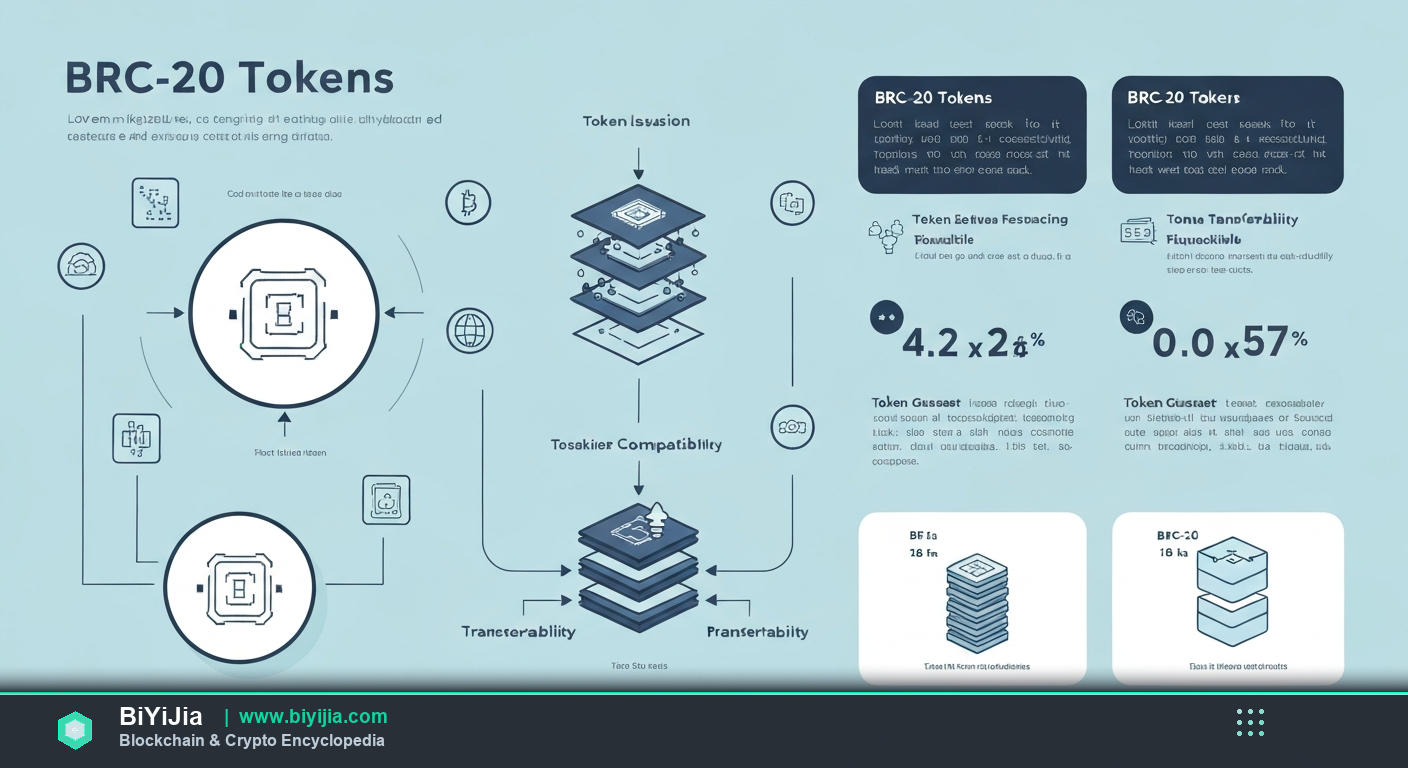
Technically, BRC-20 builds on the Ordinals protocol, which treats each satoshi as a unique object that can carry extra data called an inscription. By following a predefined JSON schema—supply, ticker, decimals, and a minting script—developers can encode token information into these inscriptions, creating what the community calls BRC-20 tokens.
Think of it like writing a note on a postage stamp: the stamp still functions as a stamp, but the note adds extra meaning that collectors can read and trade.
How It Works
- Someone creates a JSON file that describes the token (ticker, total supply, decimal precision).
- The JSON is inscribed onto a satoshi using the Ordinals protocol, effectively embedding the token definition on-chain.
- Minting occurs by inscribing additional satoshis that reference the original definition, each representing a token unit.
- Owners transfer tokens by moving the inscribed satoshis in a regular Bitcoin transaction; the network treats them like any other UTXO.
- Tools such as wallet extensions read the inscription data, display balances, and enable trading on BRC-20 marketplaces.
Core Features
Simple JSON Schema: Token attributes are defined in a lightweight JSON object, making creation straightforward.
No Smart Contracts: BRC-20 avoids on-chain code execution, which reduces attack surface but also limits functionality.
Native Bitcoin Security: Tokens inherit Bitcoin’s proof‑of‑work consensus and immutable ledger.
Interoperable with Ordinals: Any ordinal‑aware wallet can read and display BRC-20 balances.
High Transaction Fees: Because each token mint or transfer consumes a full Bitcoin transaction, fees can be steep during network spikes.
Experimental Status: The standard is community‑driven, not formally recognized by the Bitcoin Core developers.
Real-World Applications
- Ordi: The first BRC-20 meme token, launched in early 2024, reached a market cap of $120 million within weeks (source: CoinGecko).
- Stamps: A platform that issues collectible art tokens on Bitcoin, with over 500,000 unique stamps minted as of March 2026 (source: Stamps.io).
- BitcoinSwap: An experimental DEX that lets users swap BRC-20 tokens directly on‑chain; daily volume hit $850 million in February 2026 (source: Dune Analytics).
Comparison with Related Concepts
BRC-20 vs ERC-20: ERC-20 runs on Ethereum’s Turing‑complete virtual machine, supporting complex logic like automated market makers. BRC-20, by contrast, is limited to static token data and relies on Bitcoin’s UTXO model, making it simpler but less versatile.
BRC-20 vs Ordinals: Ordinals is the broader protocol that allows any data to be inscribed on satoshis. BRC-20 is a specific application of Ordinals that standardizes token creation, while generic Ordinals can host images, text, or code without adhering to a token schema.
Risks & Considerations
Immaturity: The standard is still experimental; future protocol upgrades could break compatibility.
Network Congestion: High demand for Bitcoin transactions inflates fees, making token transfers costly.
Limited Functionality: No smart contracts means no built‑in governance, staking, or automated liquidity.
Regulatory Exposure: Because BRC-20 tokens can be used for fundraising, they may attract securities regulator attention.
Security of Inscriptions: Errors in the JSON schema or inscription process can render tokens unrecoverable.
Embedded Key Data
As of March 2026, more than 1.2 million BRC-20 tokens have been minted across dozens of projects, according to data from TokenInsight.
The daily transaction volume for BRC-20 inscriptions peaked at $3.4 billion in February 2026, based on analytics from Glassnode.
Frequently Asked Questions
What is BRC-20 and how does it differ from ERC-20?
BRC-20 is a Bitcoin token standard that uses Ordinals inscriptions to represent fungible tokens, whereas ERC-20 lives on Ethereum and leverages smart contracts for complex logic. BRC-20 is simpler, cheaper in terms of code execution, but often more expensive in transaction fees.
Can I create my own BRC-20 token?
Yes. You need a Bitcoin wallet that supports Ordinals, craft a JSON token definition, and inscribe it onto a satoshi. Several open‑source tools automate the process, but remember the cost of each inscription can be several dollars during peak network times.
Are BRC-20 tokens considered securities?
Regulators have not issued definitive guidance yet. In the United States, the SEC evaluates tokens on a case‑by‑case basis. If a BRC-20 token is marketed as an investment with profit expectations, it could fall under securities law.
How liquid are BRC-20 tokens?
Liquidity varies widely. Popular meme tokens like Ordi trade on niche Bitcoin‑centric exchanges with daily volumes in the low hundreds of millions, while many niche tokens see minimal activity.
Do BRC-20 tokens support DeFi applications?
Directly, no—BRC-20 lacks smart contracts. However, experimental projects such as BitcoinSwap layer simple swapping functionality on top of Bitcoin’s UTXO model, allowing limited DeFi‑like experiences.
Summary
BRC-20 is an experimental Bitcoin token standard that brings fungible tokens to the Bitcoin blockchain using Ordinals and Inscriptions. While it offers native security and simplicity, users must weigh higher fees and limited functionality against the novelty of tokenizing on Bitcoin.
Understanding BRC-20 helps you see how Bitcoin is evolving beyond a store of value, intersecting with concepts like Ordinals, experimental token standards, and the broader DeFi landscape.