Chainlink (LINK) refers to a decentralized oracle network that connects smart contracts with real-world data, APIs, and payment systems, enabling reliable off‑chain information for blockchain applications.
Key Takeaways
- Definition: Chainlink is a decentralized oracle protocol that feeds external data to blockchain smart contracts.
- Core features: Secure data aggregation, verifiable randomness, and cross‑chain interoperability.
- Real‑world application: Powers price feeds for DeFi platforms, insurance triggers, and gaming randomness.
- Traditional alternative: Replaces centralized data providers that act as single points of failure.
- Risk warning: Oracle manipulation, network congestion, and regulatory scrutiny can affect reliability.
What Is Chainlink (LINK)?
Chainlink (LINK) is a decentralized oracle network that supplies smart contracts with trustworthy off‑chain data.
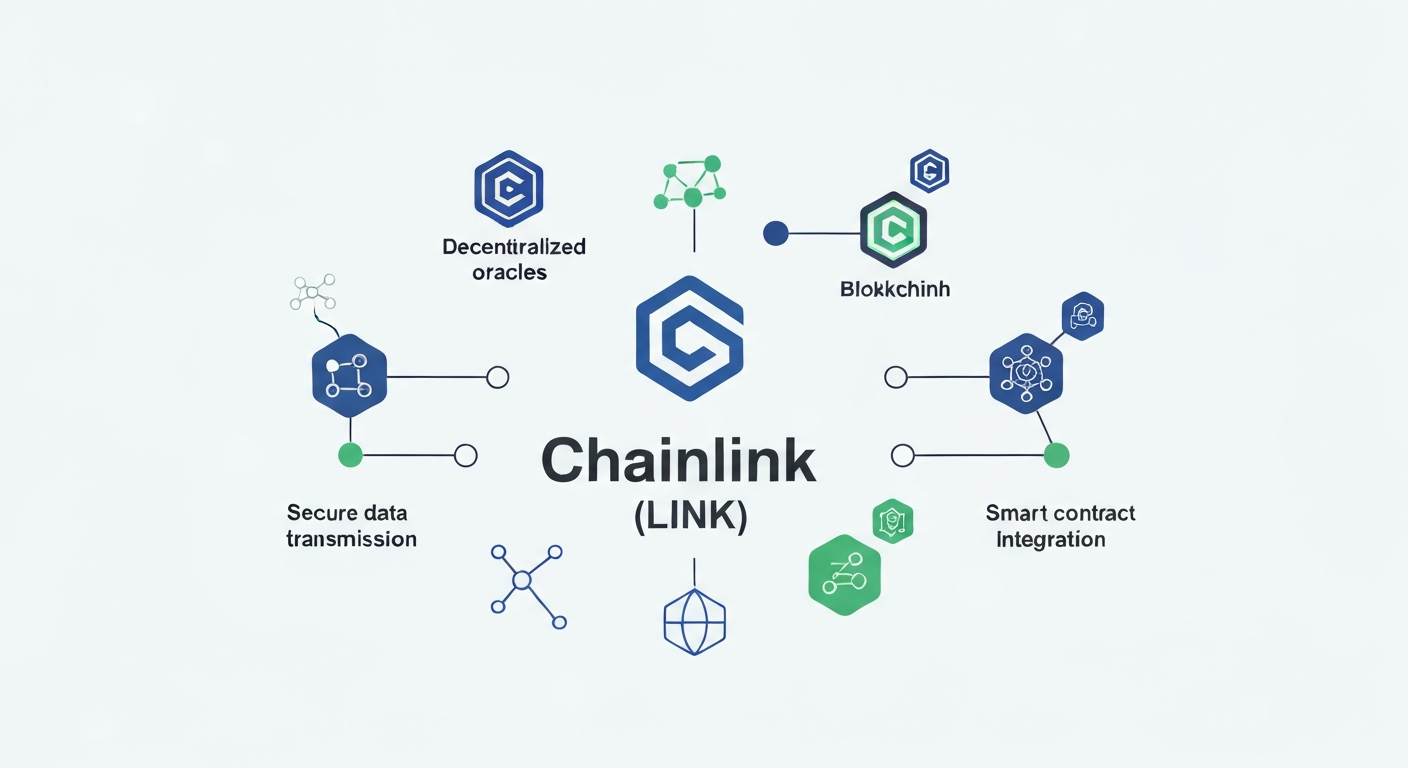
In plain terms, the protocol aggregates data from multiple independent nodes, runs cryptographic proofs, and delivers a consensus result back to the blockchain. This design eliminates the need for a single data source, reducing the attack surface and boosting confidence in the information that contracts act upon. The system also supports custom adapters, allowing developers to pull data from any API, web service, or even traditional banking system.
Think of Chainlink as a weather‑reporting service for smart contracts: instead of trusting one lone reporter, the network asks dozens of stations, cross‑checks the numbers, and then publishes a single, reliable forecast that any contract can use.
How It Works
- Request: A smart contract emits a request for data, specifying the type of information it needs (e.g., ETH/USD price).
- Selection: The Chainlink network selects a group of independent oracle nodes based on reputation and staking of LINK tokens.
- Fetching: Each node pulls the requested data from its own source—be it an exchange API, a sensor, or a database.
- Aggregation: Nodes submit their answers to an on‑chain aggregator contract, which calculates a median or weighted result.
- Delivery: The final, consensus‑validated data is written back to the original contract, ready for execution.
Core Features
- Decentralized Data Aggregation: Multiple independent nodes provide inputs, and the aggregator contract computes a tamper‑resistant result.
- Verifiable Random Function (VRF): Generates provably fair randomness for gaming, NFTs, and lottery applications.
- Cross‑Chain Interoperability (CCIP): Enables secure messaging and token transfers between disparate blockchains.
- Staking & Reputation: LINK holders can stake tokens to vouch for node honesty, earning rewards and penalties based on performance.
- Custom Adapters: Developers can write bespoke adapters to connect any external API without waiting for core updates.
- On‑Chain Governance: The community can propose upgrades to the protocol via a decentralized voting process.
Real-World Applications
- Aave: Uses Chainlink price feeds to determine collateral ratios; over $30 B in loans rely on these feeds (Aave Docs, 2026).
- Synthetix: Issues synthetic assets pegged to real‑world prices, sourced through Chainlink oracles; represents $12 B in synthetic market cap.
- OpenSea: Employs Chainlink VRF to fairly assign traits during NFT minting events, enhancing collector confidence.
- Worldcoin: Leverages Chainlink CCIP for cross‑chain identity verification, facilitating global onboarding.
- Insurance Protocol Nexus Mutual: Triggers claim payouts based on verified weather data delivered via Chainlink.
Comparison with Related Concepts
Chainlink vs Traditional Oracle: Traditional oracles are centralized services that provide a single data point, making them vulnerable to outages or manipulation. Chainlink's decentralized approach spreads trust across many nodes, dramatically lowering single‑point‑of‑failure risk.
Chainlink vs Band Protocol: Both are decentralized oracle networks, but Chainlink boasts a larger node ecosystem and deeper integration with major DeFi platforms. Band often focuses on low‑latency data for high‑frequency trading, whereas Chainlink emphasizes security and broad cross‑chain support.
Chainlink vs Oraclize (now Provable): Oraclize offers cryptographic proofs for data authenticity but remains a largely centralized service. Chainlink combines proofs with a staking‑based incentive model, making it more resilient at scale.
Risks & Considerations
- Oracle Manipulation: If a majority of nodes collude or are compromised, the aggregated data could be skewed, affecting downstream contracts.
- Network Congestion: High on‑chain demand can increase gas fees, making oracle calls expensive during peak periods.
- Regulatory Uncertainty: As regulators scrutinize data providers, Chainlink could face compliance mandates that affect node operations.
- Token Volatility: LINK price swings impact node operators' staking economics, potentially discouraging participation during downturns.
- Smart Contract Bugs: Faulty integration code on the requesting contract side can misinterpret oracle data, leading to unintended outcomes.
Chainlink's market cap reached $8.2 B as of February 2026 (CoinMarketCap). The Chainlink Price Feeds are used by over 350 DeFi protocols, representing more than $1.3 T in total value locked (TVL) as of Q1 2026 (DefiLlama).
Frequently Asked Questions
What is Chainlink and why do I need it?
Chainlink is a decentralized oracle network that brings off‑chain data onto the blockchain. Without it, smart contracts would be confined to the data that exists on‑chain, limiting use cases like price tracking, weather triggers, or random number generation.
How does Chainlink ensure data integrity?
Integrity comes from multiple independent nodes fetching the same data, a consensus‑based aggregation contract, and cryptographic proofs that each node’s response matches its source. Staking of LINK further incentivizes honest behavior.
Is LINK the same as the Chainlink network?
No. LINK is the native utility token used to pay node operators, stake for reputation, and secure the network. The Chainlink network itself is the collection of oracle nodes and smart contracts that facilitate data delivery.
Can I run my own Chainlink node?
Absolutely. Anyone can set up a node, provide data, and earn LINK rewards. The process involves staking, meeting performance SLAs, and optionally creating custom adapters for niche data sources.
What are the fees for using Chainlink?
Fees consist of the gas cost to write data on‑chain plus the LINK payment to the oracle nodes. Pricing varies by request complexity, data frequency, and network congestion.
How does Chainlink compare to other oracle solutions?
Chainlink leads in node count, ecosystem adoption, and feature breadth (VRF, CCIP). Competing solutions may excel in latency or cost, but Chainlink’s security model and cross‑chain capabilities make it the go‑to choice for most DeFi projects.
In short, Chainlink (LINK) is the backbone that lets smart contracts talk to the outside world, turning isolated code into dynamic, data‑driven applications. Understanding its mechanics, strengths, and risks is essential for anyone building or investing in blockchain ecosystems. Explore related concepts like [internal link: Oracle], [internal link: Data Feed], [internal link: VRF], and [internal link: CCIP] to deepen your knowledge.