
Ethereum (ETH) refers to a decentralized, programmable blockchain platform that enables smart contracts, dApps, and a thriving token ecosystem.
Key Takeaways
- Ethereum is a global, open-source network that runs smart contracts without intermediaries.
- It introduced gas, ERC‑20 tokens, and the concept of programmable money.
- DeFi platforms like Uniswap and NFT marketplaces such as OpenSea run on Ethereum.
- Compared with Bitcoin, Ethereum focuses on computation rather than pure value transfer.
- Network congestion can cause high fees and occasional downtime.
What Is Ethereum (ETH)?
Ethereum is a blockchain that lets developers write code that runs exactly as programmed.
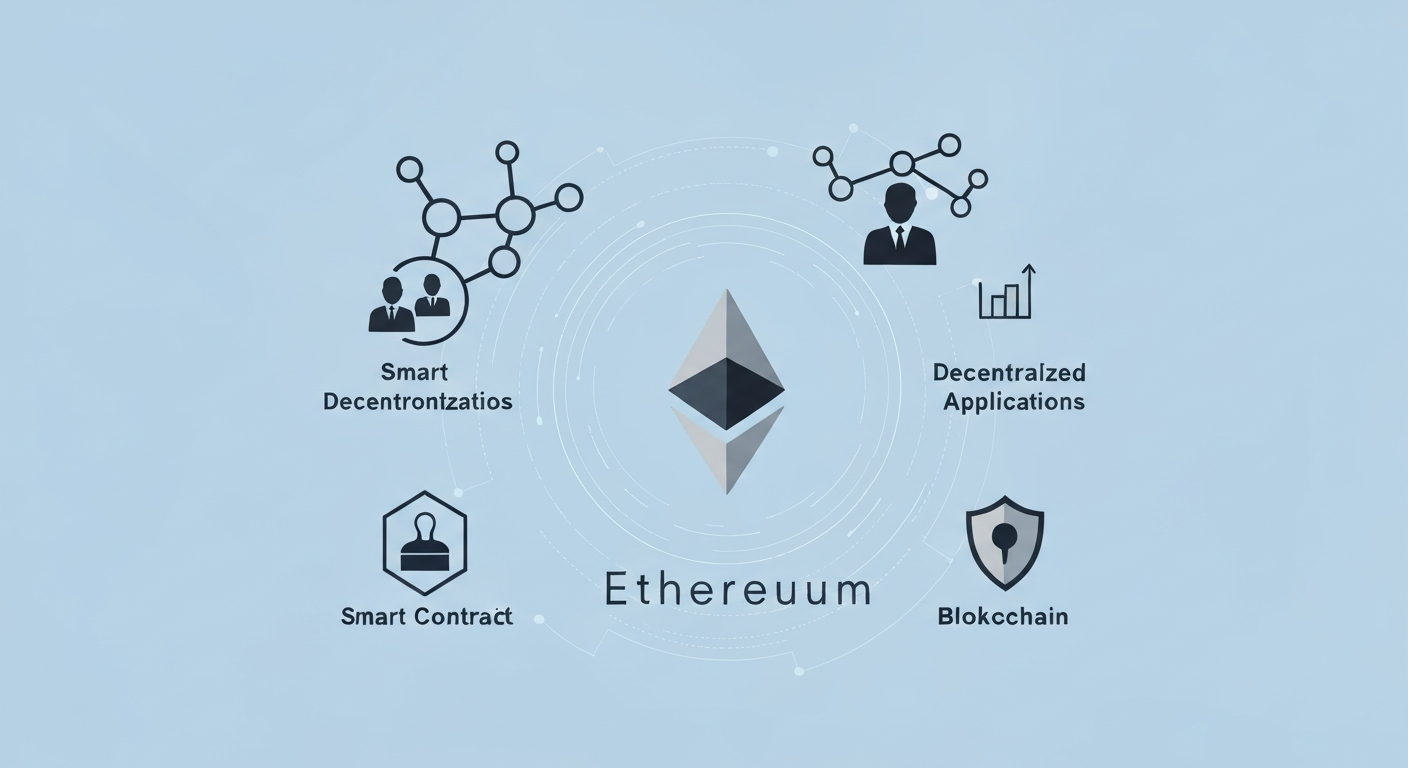
At its core, Ethereum maintains a ledger of accounts and a state machine that updates whenever a transaction triggers a [internal link: Smart Contract]. Each block contains a batch of transactions, and validators (formerly miners) reach consensus using Proof‑of‑Stake, which replaced the original Proof‑of‑Work in 2022.
Think of Ethereum as a worldwide computer that anyone can rent a slice of; just as you might rent a server to host a website, developers rent “gas” to execute code on this shared machine.
How It Works
- Users create a transaction that includes a destination address, data payload, and a gas limit.
- The transaction is broadcast to the network, where validators verify its signature and check that the sender has enough ETH to cover the gas fee.
- Validators propose a block, and the network finalizes it through the Beacon Chain’s consensus algorithm.
- When the block is added, the [internal link: Smart Contract] code executes, updating the blockchain state.
- Any resulting changes—token transfers, state updates, or emitted events—are permanently recorded.
Core Features
Smart Contracts: Self‑executing code that runs on the ethereum blockchain without a central authority.
Gas Fees: Users pay in ETH to compensate validators for computational work, preventing spam.
ERC‑20 Standard: A template that defines how fungible tokens behave, enabling thousands of assets to coexist.
Proof‑of‑Stake (PoS): The consensus model that secures the network while reducing energy consumption by over 99% compared to Proof‑of‑Work.
Layer‑2 Scaling: Solutions like Optimism and Arbitrum offload transactions, cutting fees and latency.
Developer Tooling: Languages such as Solidity and Vyper, plus frameworks like Hardhat and Truffle, make building dApps approachable.
Real-World Applications
- Uniswap: A decentralized exchange that processed $12 billion in volume in Q1 2026, allowing anyone to swap ERC‑20 tokens without a middleman.
- OpenSea: The leading NFT marketplace, hosting over 5 million assets and generating $2.3 billion in sales last year.
- MakerDAO: A stablecoin system that locked $8 billion in collateral, enabling the DAI token to stay pegged to the US dollar.
- Chainlink: A decentralized oracle network that feeds real‑world data to [internal link: Smart Contract]s, powering over 500 DeFi projects.
- Axie Infinity: A play‑to‑earn game where players have earned more than $1 billion collectively since launch, all on Ethereum.
Comparison with Related Concepts
Ethereum vs Bitcoin: Bitcoin is a digital gold focused on secure value transfer, while Ethereum is a programmable platform enabling complex applications.
Ethereum vs Binance Smart Chain: BSC offers lower fees but sacrifices decentralization; Ethereum prioritizes security and a larger developer ecosystem.
Ethereum vs Solana: Solana boasts higher throughput, yet Ethereum’s mature tooling and larger DeFi TVL make it the default choice for many projects.
Risks & Considerations
Scalability Bottlenecks: During peak demand, gas fees can spike above $100, pricing out casual users.
Regulatory Uncertainty: Governments worldwide are still defining how to treat tokens and smart contracts, creating legal gray zones.
Smart Contract Bugs: Code errors can lead to irreversible loss of funds; the DAO hack of 2016 remains a cautionary tale.
Validator Centralization: A small number of large staking pools control a significant share of ETH, potentially affecting decentralization.
Layer‑2 Migration Risks: Moving assets between layers introduces new attack vectors and requires careful bridge audits.
Embedded Key Data
As of Q2 2026, the ethereum blockchain processes over 1.2 million transactions per day, according to Etherscan.
The total value locked (TVL) in Ethereum DeFi protocols reached $45 billion in June 2026, per DeFi Llama.
Frequently Asked Questions
What is Ethereum used for?
Beyond being a cryptocurrency, Ethereum powers decentralized finance, NFTs, supply‑chain tracking, gaming, and identity solutions—all through programmable [internal link: Smart Contract]s.
How does Ethereum differ from Bitcoin?
Bitcoin focuses on secure, peer‑to‑peer money, while Ethereum adds a Turing‑complete virtual machine that lets anyone build and run code on a global, trustless network.
What are gas fees and why do they matter?
Gas fees are payments in ETH that compensate validators for the computational work required to execute transactions or contract calls. High fees can make small transactions uneconomical.
Is Ethereum safe for long‑term investment?
Ethereum has the largest developer community and the most value locked in DeFi, which suggests resilience, but investors should watch scalability upgrades, regulatory changes, and market volatility.
How can I start using Ethereum?
Get a non‑custodial wallet like MetaMask, buy ETH on a reputable exchange, and explore dApps such as Uniswap or OpenSea. Always verify contract addresses to avoid scams.
Summary
Ethereum (ETH) is the leading programmable blockchain, enabling smart contracts, DeFi, NFTs, and countless other innovations. Its continued evolution—through PoS, layer‑2s, and community governance—makes it a cornerstone of the Web3 ecosystem. For deeper dives, check out related terms like [internal link: Smart Contract] and [internal link: ERC-20].