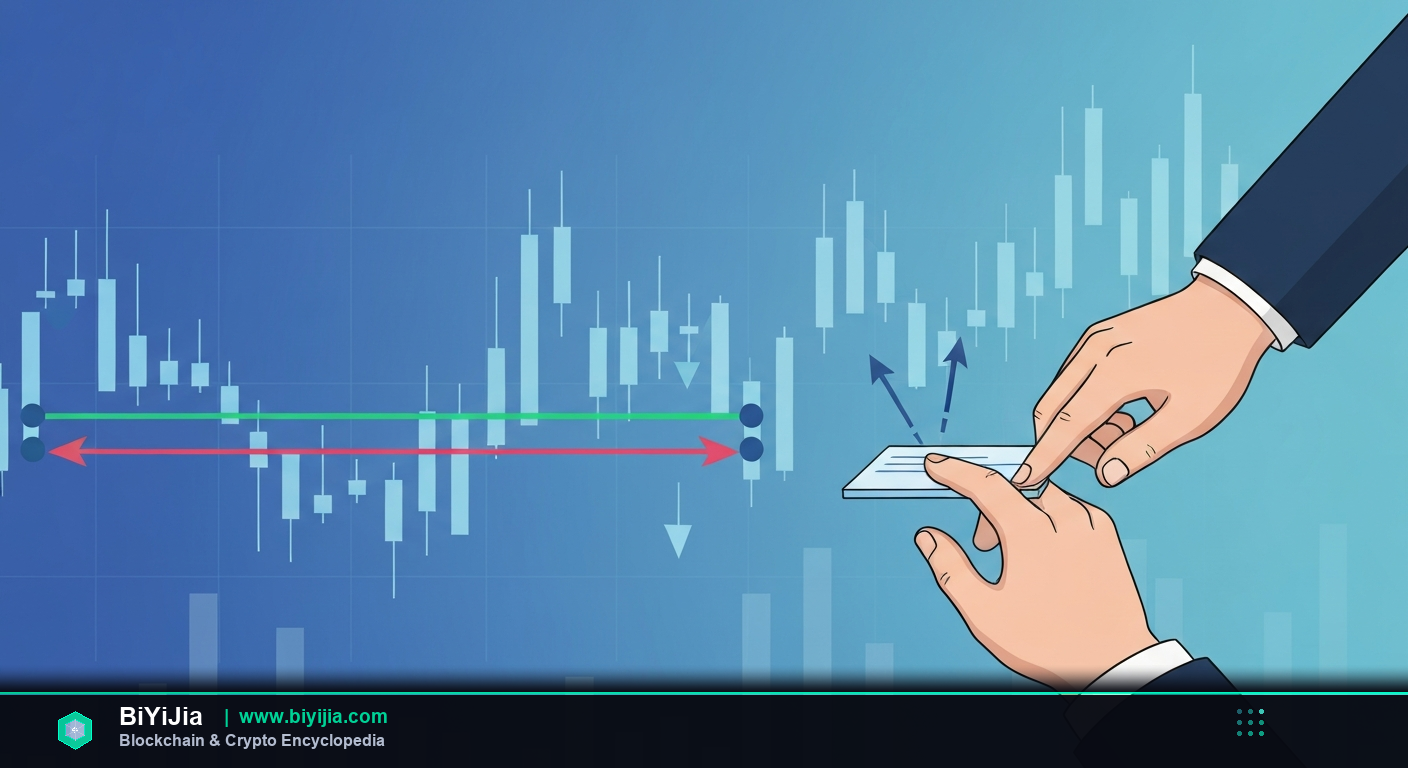

Futures Trading refers to the practice of buying and selling contracts that lock in the price of an asset for future delivery, allowing traders to profit from price movements without owning the underlying.
Key Takeaways
- Futures Trading lets you speculate on future prices via standardized contracts.
- Leverage, Long/Short positions, and Funding Rate are core mechanics.
- Platforms like Binance, Bybit, and dYdX offer crypto futures for retail and institutional users.
- Unlike spot trading, futures expose you to liquidation risk if margins fall short.
- Perpetual contracts differ from traditional futures by having no expiry date.
What Is Futures Trading?
Futures Trading is a way to lock in the price of an asset for delivery at a later date, letting you profit from price swings without actually holding the asset.
In technical terms, a futures contract is a standardized agreement traded on an exchange where two parties commit to buying or selling an underlying asset at a predetermined price on a set future date. Crypto futures bring this concept onto blockchain markets, using digital assets as the underlying and often incorporating leverage, which amplifies both gains and losses. The contract’s value fluctuates with the spot price, and traders can go Long (betting the price will rise) or Short (betting it will fall). Funding Rate mechanisms keep perpetual contracts tethered to spot markets by periodically transferring payments between Long and Short sides.
Think of futures like a weather‑insurance policy for a farmer. The farmer doesn’t own the future rain; instead, they pay a premium now to guarantee a payout if the rain doesn’t arrive. Similarly, a trader pays margin today to lock in a price and collect a payout if the market moves as anticipated.
How It Works
- Choose a crypto futures platform and select the asset you want to trade (e.g., Bitcoin).
- Decide on the contract type—standard futures with an expiry date or a perpetual contract that rolls over indefinitely.
- Set your position size and apply leverage (commonly 5x‑100x) by depositing margin.
- Place a Long or Short order; the platform matches you with an opposite side.
- Monitor price movements; if your position gains, you can close it for profit, but if losses erode your margin, the platform may trigger liquidation.
Core Features
- Leverage: Allows traders to control a larger position than their deposited margin, magnifying potential returns and risks.
- Long/Short: Enables speculation on both upward and downward price movements.
- Funding Rate: Periodic payments exchanged between Long and Short positions to keep perpetual contract prices aligned with spot markets.
- Expiration: Traditional futures settle on a fixed date, whereas perpetual contracts have no set expiry.
- Margin Calls & Liquidation: Automatic closure of positions when collateral falls below maintenance requirements.
Real-World Applications
- Binance Futures – Offers up to 125x leverage on Bitcoin and a suite of perpetual contracts; daily volume regularly exceeds $10 billion.
- Bybit – Known for its user‑friendly UI and a range of crypto futures, including a $5 billion open interest in perpetual contracts as of early 2026.
- dYdX – A decentralized exchange built on StarkWare’s zk‑Rollup, providing non‑custodial perpetual contracts with up to 20x leverage.
- FTX (pre‑collapse) – Historically set the standard for innovative futures products, such as tokenized volatility contracts.
Comparison with Related Concepts
Futures Trading vs Spot Trading: Spot trading involves buying the actual asset for immediate delivery, while futures let you lock in a price for a future date, often with leverage.
Perpetual Contracts vs Traditional Futures: Perpetual contracts have no expiry and rely on Funding Rate payments to stay in line with spot prices; traditional futures settle on a predetermined date.
Leverage vs Margin: Leverage is the multiple of exposure you obtain, whereas margin is the collateral you must post to support that leveraged position.
Risks & Considerations
- Liquidation Risk: If losses erode your margin below the maintenance level, the exchange can automatically close your position, often at a loss.
- Funding Rate Volatility: Rapid swings in Funding Rate can turn a seemingly profitable Long position into a net loss due to periodic payments.
- Leverage Amplification: While leverage can boost gains, it equally magnifies losses, potentially wiping out your capital quickly.
- Counterparty & Platform Risk: Centralized exchanges may face solvency issues, while decentralized platforms rely on smart‑contract security.
- Regulatory Uncertainty: Jurisdictions worldwide are still defining rules for crypto derivatives, which could affect market access.
According to DeFi Pulse, the total open interest in crypto futures surpassed $45 billion in Q4 2025, highlighting the rapid growth of leveraged trading in the decentralized space.
A 2024 report by CoinGecko shows that perpetual contracts account for 68% of all crypto futures volume, underscoring their dominance over traditional expiry‑based contracts.
Frequently Asked Questions
What is the difference between a futures contract and a perpetual contract?
A futures contract has a set expiration date when the contract settles, while a perpetual contract never expires and uses a Funding Rate to keep its price tethered to the underlying spot market.
How does leverage work in crypto futures?
Leverage lets you control a larger position than your deposited margin. For example, with 10x leverage, a $1,000 margin can open a $10,000 position. Gains and losses are both multiplied by the leverage factor.
Can I go short on Bitcoin using futures?
Yes. By opening a Short position, you profit if Bitcoin’s price falls. This is a core advantage of futures, allowing you to bet on downward moves without borrowing the asset.
What triggers a liquidation?
When your account equity falls below the maintenance margin requirement, the exchange automatically closes your position to protect the platform from further loss. High volatility can cause rapid liquidation.
Are crypto futures regulated?
Regulation varies by jurisdiction. Some countries treat them as securities, while others have specific derivatives frameworks. Always check local laws before trading.
Summary
Futures Trading is a powerful tool that lets traders speculate on future price movements of crypto assets using contracts, leverage, and mechanisms like Funding Rate. Mastering its features and risks is essential for anyone looking to navigate the fast‑growing world of crypto derivatives, and understanding related concepts such as Leverage, Long/Short, Liquidation, and Funding Rate will deepen your strategic edge.