

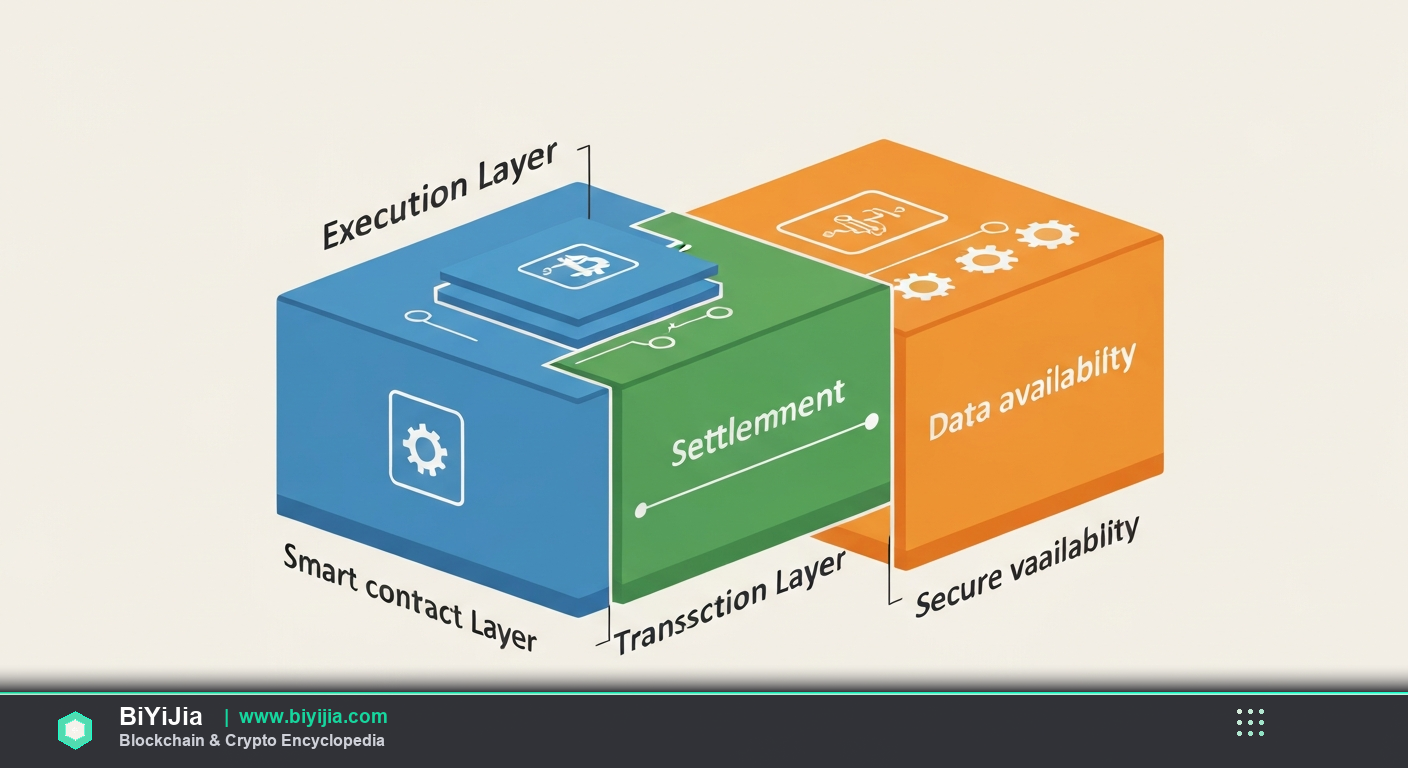
Modular Blockchain refers to a design where consensus, data availability, execution, and settlement are split into separate layers, enabling flexibility, scalability, and specialization.
Key Takeaways
- One-sentence definition: a blockchain architecture that decouples core functions into independent layers.
- Core features include separate Data Availability, Execution, and Settlement layers, plus a shared consensus.
- Real-world use: projects like Celestia and EigenLayer use modular designs to boost throughput.
- Compared to monolithic chains, modular designs can upgrade components without hard forks.
- Risk warning: added complexity can introduce new attack vectors and coordination challenges.
What Is Modular Blockchain?
In plain language, a modular blockchain is a network that separates consensus, data availability, execution, and settlement into distinct layers that communicate through standardized interfaces.
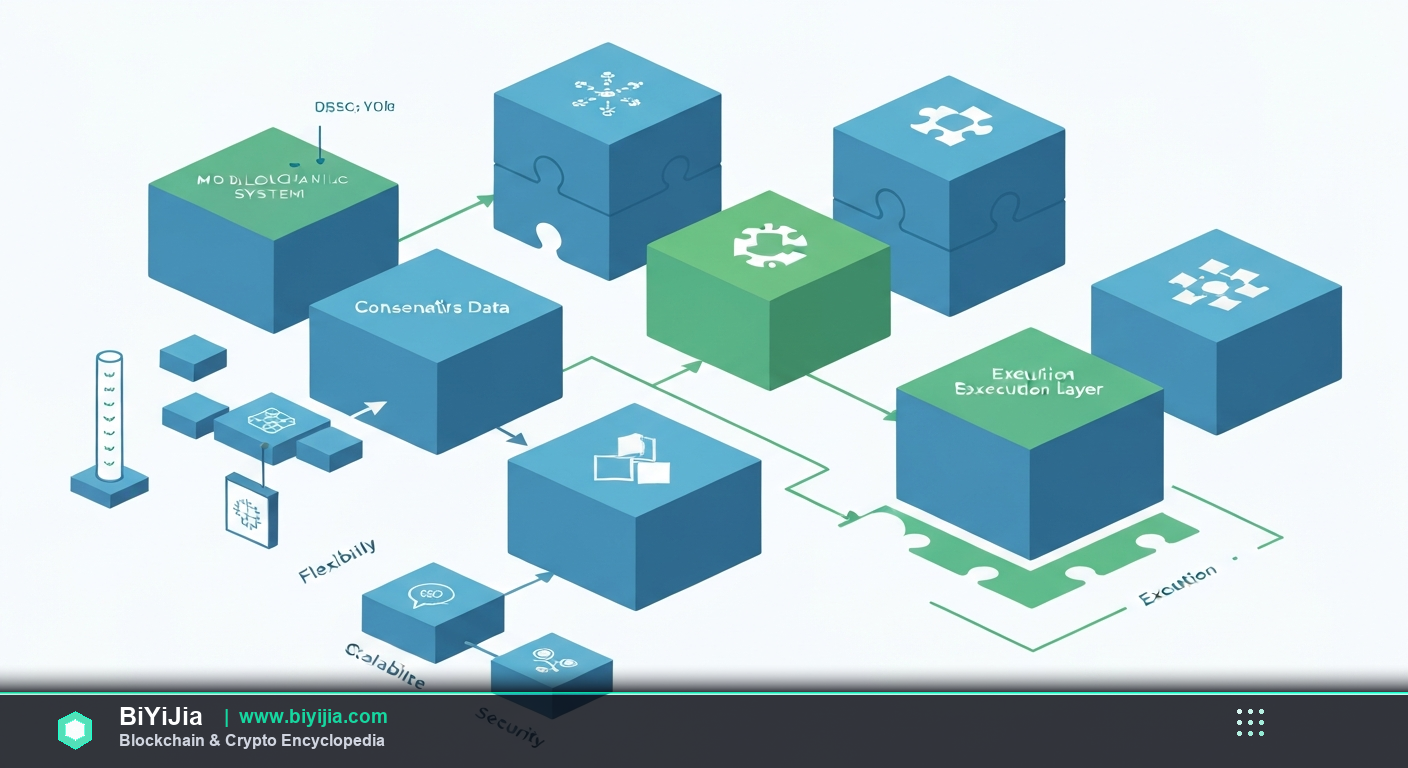
Technically, the consensus layer orders blocks and secures the network, while a dedicated Data Availability layer guarantees that block data can be retrieved by anyone. The Execution layer runs smart contracts or transaction logic, and the Settlement layer finalizes state changes and handles cross‑chain value transfer. By isolating these responsibilities, each layer can be optimized independently, leading to higher throughput and easier upgrades.
Think of it like a modern restaurant kitchen: the ordering desk (consensus) takes orders, the pantry (data availability) stores ingredients, the chefs (execution) cook the meals, and the cash register (settlement) handles payment. Each station works on its specialty, making the whole operation smoother than a single‑person kitchen.
How It Works
- Consensus orders blocks. Validators agree on a block header that references data stored elsewhere.
- Data Availability confirms. A separate layer (often a rollup or dedicated DA chain) publishes the full block data and proves that it can be retrieved by anyone.
- Execution processes transactions. Smart‑contract engines or virtual machines consume the data, execute logic, and produce state diffs.
- Settlement finalizes state. The settlement layer records the state changes, often on a base layer that provides finality and security.
- Cross‑layer communication. Standardized proofs (e.g., fraud proofs or validity proofs) link the layers, ensuring trust without sharing all internals.
Core Features
- Layered Architecture: Consensus, Data Availability, Execution, and Settlement operate as independent modules.
- Specialized Optimization: Each layer can adopt the best technology for its job, like using erasure coding for DA and WASM for execution.
- Upgrade Flexibility: New VM versions or DA schemes can be deployed without a hard fork of the entire chain.
- Interoperability: Modules expose standard proof interfaces, enabling cross‑chain composability.
- Scalability: By offloading heavy data and compute tasks, the base layer can focus on security, supporting thousands of TPS overall.
- Economic Separation: Fees can be split across layers, allowing market dynamics to price DA versus execution differently.
Real-World Applications
- Celestia: Provides a Data Availability layer for any rollup; processes over 120 GB of data per day (Q2 2025, Celestia Metrics).
- EigenLayer: Lets Ethereum validators restake to secure additional execution layers, boosting ETH’s utility.
- StarkNet: Uses a modular settlement model where StarkPro handles DA, while StarkEx focuses on execution, achieving >200 TPS on L2.
- Arbitrum Nova: Separates its DA on a dedicated chain, reducing gas costs for gaming dApps by 40% (Q3 2025, Arbitrum Report).
- Polygon Avail: A modular DA solution that supports over 10,000 concurrent rollups, according to Polygon data (2025).
Comparison with Related Concepts
Modular vs Monolithic: A monolithic chain bundles consensus, DA, execution, and settlement into a single protocol stack (e.g., Bitcoin, early Ethereum). Modular designs split these duties, offering upgrade agility and targeted scaling.
Modular vs Layer‑2: Layer‑2 solutions sit on top of a monolithic base chain, inheriting its limitations. Modular blockchains treat each layer as a first‑class network, allowing multiple execution environments to share the same DA layer.
Modular vs Sharding: Sharding partitions a single chain’s state and workload across multiple shards but still relies on a unified consensus. Modular architecture can combine sharding within a specific layer while keeping other layers independent.
Risks & Considerations
- Complexity Overhead: More moving parts mean higher operational complexity and potential for misconfiguration.
- Cross‑Layer Security Gaps: If the DA layer is compromised, execution can be fed invalid data, leading to state corruption.
- Economic Fragmentation: Separate fee markets may create arbitrage opportunities that destabilize incentives.
- Coordination Challenges: Upgrading one layer often requires coordinated changes across others, risking delays.
- Tooling Maturity: Debuggers and explorers for modular stacks are still emerging, making developer onboarding harder.
Embedded Key Data
According to Dune Analytics, modular blockchains collectively processed 152 million transactions in Q4 2025, representing a 68% increase over the previous quarter.
Research from the Blockchain Research Institute shows that 42% of new crypto projects in 2025 chose a modular architecture to avoid hard‑fork risks (2025 Report).
Frequently Asked Questions
What is modular blockchain?
A modular blockchain separates consensus, data availability, execution, and settlement into distinct layers that interact through cryptographic proofs, allowing each component to be optimized independently.
How does modular vs monolithic affect security?
Security in a modular system hinges on the strongest layer—usually the consensus and settlement chain. If those layers stay robust, the DA and execution layers inherit that security via proofs, whereas monolithic chains rely on a single codebase that can be harder to patch.
Can I build a rollup on Celestia?
Yes. Celestia offers a DA service where rollups can publish block data and obtain fraud/validity proofs, letting developers focus on execution logic without managing DA themselves.
Do modular blockchains support DeFi (Decentralized Finance (DeFi))?
Absolutely. Many DeFi protocols are already deploying on modular stacks to benefit from lower fees and higher throughput, with projects like EigenLayer enabling shared security for multiple DeFi rollups.
Is modular blockchain technology ready for mainstream adoption?
The ecosystem is maturing fast. By 2026, several high‑value rollups run on modular layers, and major validators are offering restaking services, indicating growing confidence, though tooling and cross‑layer standards still need refinement.
Summary
Modular Blockchain refers to an architecture that splits consensus, data availability, execution, and settlement into separate, interoperable layers, unlocking scalability and upgrade flexibility. As the ecosystem evolves, understanding modular vs monolithic designs becomes essential for anyone building or investing in next‑gen crypto infrastructure.