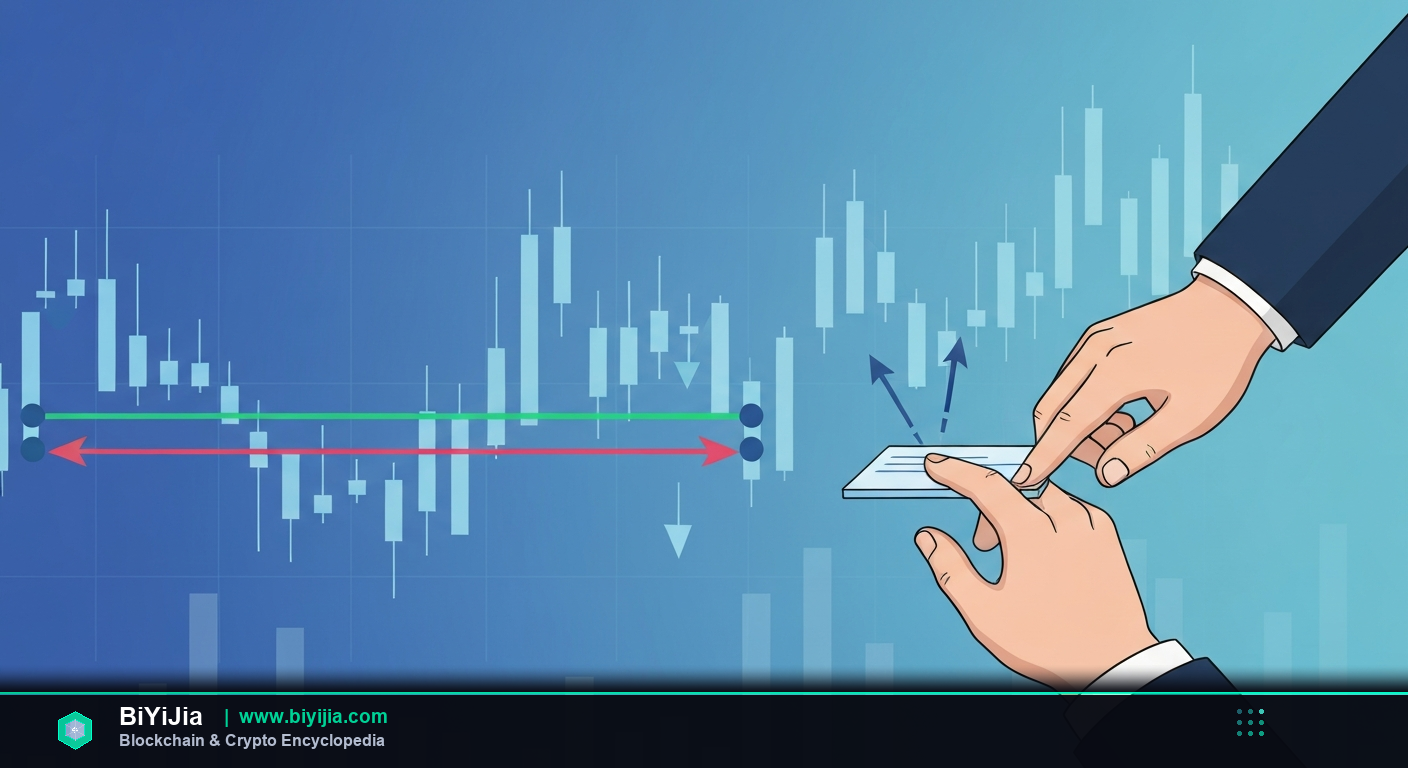

Order Book refers to a real‑time list of buy and sell orders for a cryptocurrency, showing price levels, volumes, and the bid‑ask spread.
Key Takeaways
- One‑sentence definition: an order book is a live ledger of pending buy and sell orders for an asset.
- Core feature: it displays price depth, volume at each level, and the bid‑ask spread.
- Real‑world application: traders use it to gauge market sentiment and execute strategies on exchanges.
- Comparison: unlike a simple price ticker, an order book reveals hidden liquidity and order flow.
- Risk warning: reliance on shallow depth can lead to slippage and price manipulation.
What Is Order Book?
In plain language, an order book is the digital ledger that lists all pending buy (bid) and sell (ask) orders for a crypto asset at any given moment.
Technically, each entry records the price, the amount of the asset, and whether it’s a limit order waiting to be filled. The book aggregates these entries into two sides – bids on the left, asks on the right – and constantly updates as traders place, cancel, or execute orders. This structure lets anyone see the market depth, which is the cumulative volume available at each price tier.
Think of the order book like a bustling farmers' market: sellers set up stalls with specific prices for their produce, while buyers walk around with price offers. The market’s overall vibe – whether it’s a buyer’s or seller’s market – becomes clear by looking at how many stalls are offering low prices versus how many buyers are willing to pay high prices.
How It Works
- Trader creates a limit order specifying price and quantity.
- Exchange adds the order to the appropriate side of the book (bid or ask).
- When a matching opposite‑side order appears, the exchange matches them and removes the filled portion.
- Unfilled portions stay in the book as pending orders, updating the depth instantly.
- Market participants monitor the evolving book to decide when to enter or exit positions.
Core Features
- Bid‑Ask Spread: The price difference between the highest bid and the lowest ask, indicating liquidity.
- Depth: Aggregated volume at each price level, showing how much can be bought or sold without moving the market.
- Pending Orders: Unfilled limit orders that sit in the book waiting for a counterpart.
- Market Depth Visualization: Graphical representation (often called a depth chart) that plots cumulative bids and asks.
- Real‑Time Updates: Continuous refreshes as new orders arrive and old ones are cancelled or executed.
- Transparency: In most centralized exchanges and many DeFi (Decentralized Finance) protocols, the full order book is publicly visible.
Real‑World Applications
- Binance – the world’s largest crypto exchange, provides a high‑frequency order book with sub‑millisecond latency for spot and futures markets.
- Uniswap v3 – a DeFi AMM that simulates order‑book behavior through concentrated liquidity ranges, letting LPs set price bands.
- Kraken – offers deep order‑book data for institutional traders, with a typical BTC/USDT depth of over $500 million on the bid side.
- Coinbase Pro – uses order‑book analytics to power its “Pro Insights” tool, helping retail traders spot large walls.
- FTX (pre‑bankruptcy) – pioneered leveraged order‑book features like “order‑book margin” that allowed traders to borrow against visible depth.
Comparison with Related Concepts
Order Book vs. Market Depth: Market depth is the aggregated view of volume at each price tier; the order book is the raw list of individual orders that creates that depth.
Order Book vs. Buy/Sell Orders: Buy/Sell orders are the individual entries that populate the order book; the book itself is the organized collection of those entries.
Order Book vs. Liquidity Pools: Liquidity pools (common in DeFi) use automated market makers instead of discrete orders, so there’s no visible bid‑ask spread—price impact is calculated algorithmically.
Risks & Considerations
- Shallow Depth Risk: Thin books can cause large slippage when a big order hits, potentially wiping out expected profits.
- Spoofing: Malicious actors place large fake orders to manipulate the perceived depth, then cancel them before execution.
- Latency Arbitrage: High‑frequency traders exploit tiny delays in order‑book updates, stealing profits from slower participants.
- Order‑Book Manipulation in Low‑Liquidity Tokens: Small‑cap assets can see their price swing wildly with a single market order.
- Data Overload: Novice traders may misinterpret noise as signal, leading to poor decision‑making.
Embedded Key Data
In August 2025, the average bid‑ask spread on Binance's BTC/USDT market was 0.02%, according to CryptoCompare.
A Messari study released in Q4 2025 showed that 73% of active traders check the order‑book depth before placing a limit order.
Frequently Asked Questions
What is an order book and why does it matter?
An order book records every pending buy and sell limit order for a crypto asset. It matters because it reveals real‑time supply and demand, letting traders gauge liquidity, anticipate price moves, and avoid unexpected slippage.
How does the bid‑ask spread affect my trades?
The bid‑ask spread is the cost you implicitly pay when you cross the market. A tight spread (e.g., 0.01%) means you can enter and exit positions cheaply, while a wide spread erodes profit margins, especially for high‑frequency or small‑size trades.
Can I see the order book on DeFi platforms?
Many DeFi protocols now expose order‑book‑like data. Uniswap v3’s concentrated liquidity, dYdX perpetuals, and Serum on Solana all provide on‑chain order books that anyone can query, though the UI may differ from centralized exchanges.
What is spoofing and how can I protect myself?
Spoofing is the practice of placing large orders to fake market pressure and then canceling them before execution. To protect yourself, avoid reacting to sudden, single‑order spikes and focus on deeper, sustained volume levels.
Do order books help with price discovery?
Yes. By aggregating the willingness of participants to buy and sell at various prices, the order book creates a transparent price‑discovery mechanism, especially when combined with trade history and volume data.
Summary
The order book is the living snapshot of all pending buy and sell orders, showing depth, volume, and the crucial bid‑ask spread. Understanding it is essential for anyone looking to trade effectively, manage slippage, or analyze market sentiment. Dive deeper into related concepts like market depth and liquidity pools to round out your crypto toolbox.