USDC (USD Coin) is a regulated, fiat‑backed stablecoin that aims to combine the stability of the US dollar with the speed and programmability of blockchain.
Key Takeaways
- Definition: USDC is a US dollar‑pegged stablecoin issued by Circle and fully collateralized with fiat reserves.
- Core features: Transparency, regulatory compliance, and fast on‑chain settlement.
- Real‑world use: Widely used for payments, DeFi collateral, and cross‑border remittances.
- Traditional comparison: Functions like a digital dollar, but moves instantly on blockchain networks.
- Risk warning: Subject to regulatory scrutiny and custodial counterparty risk.
What Is USDC (USD Coin)?
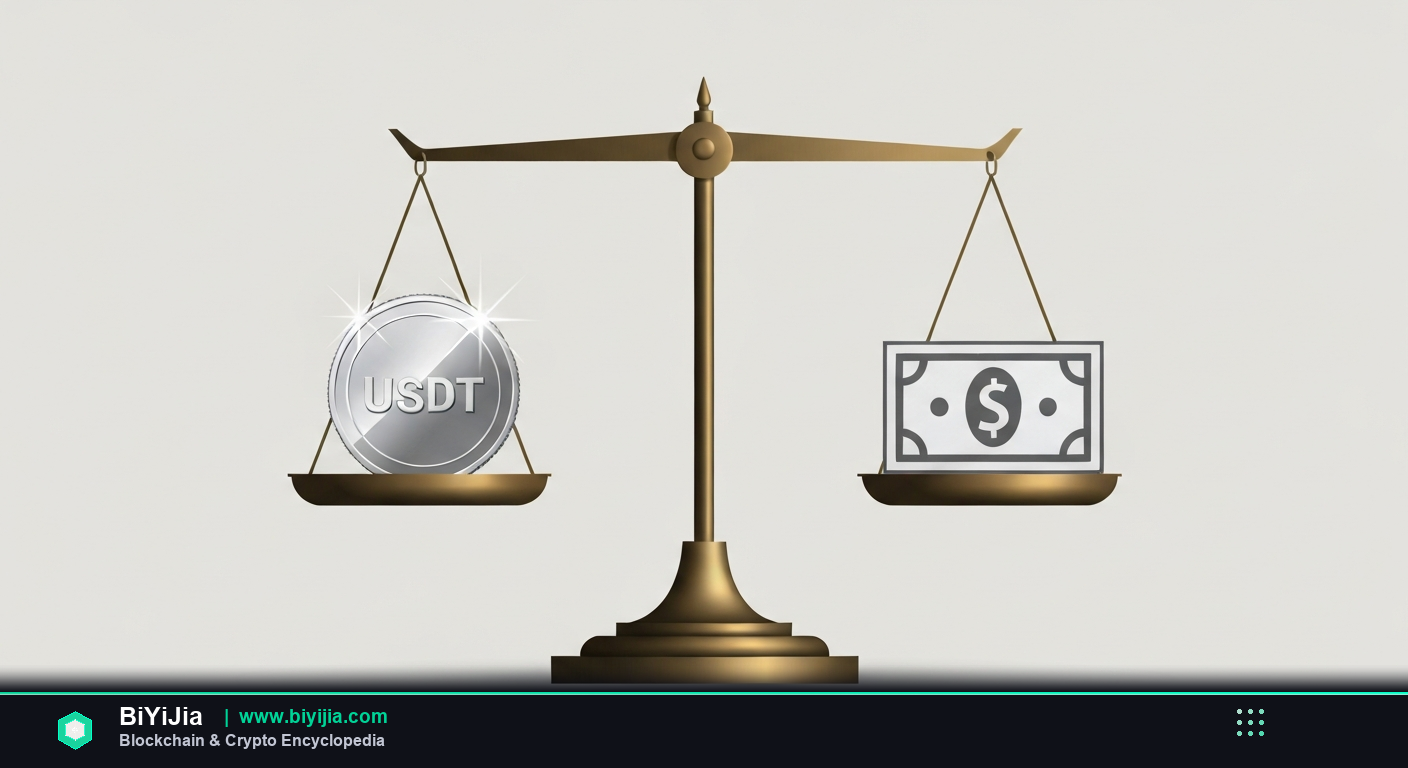
USDC is a stablecoin that maintains a 1:1 peg to the US dollar, backed by fully reserved fiat assets.
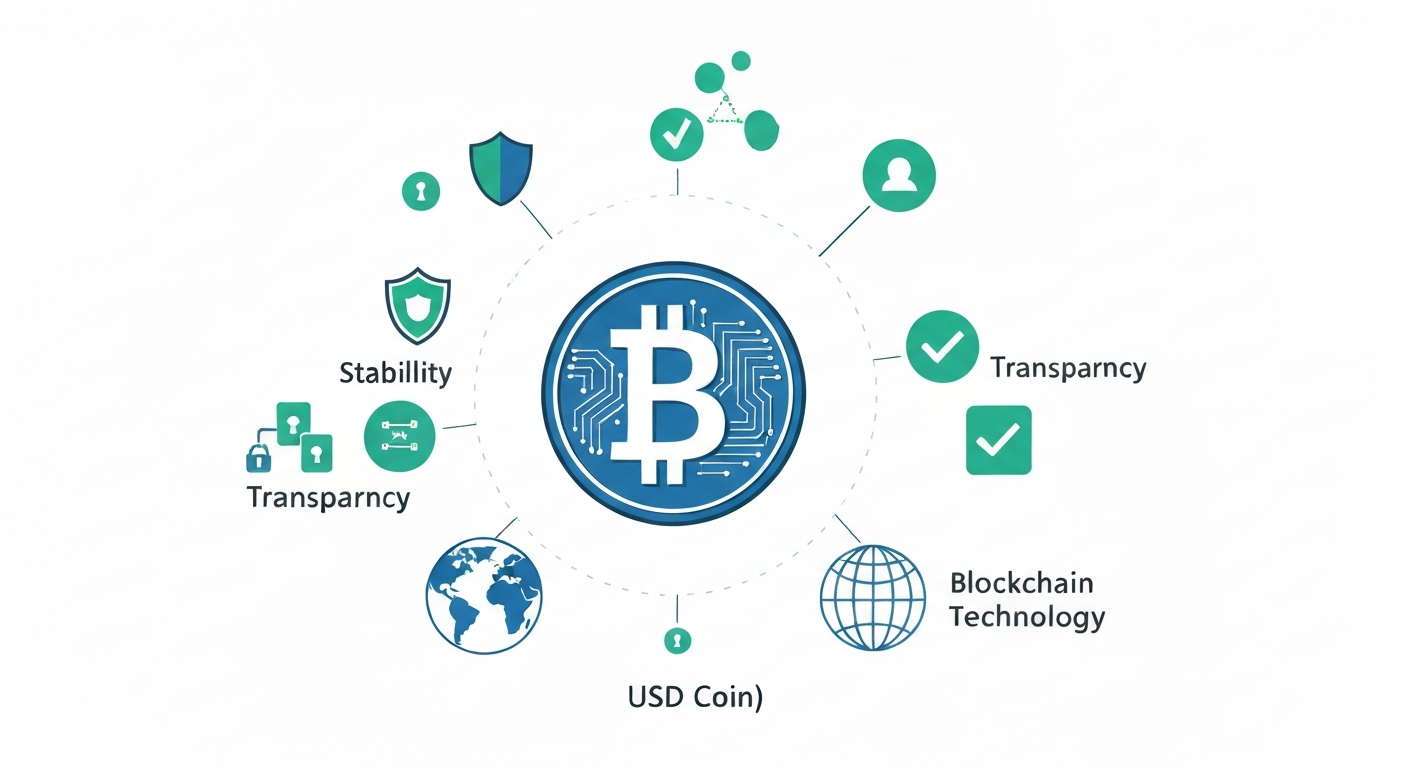
Under the hood, Circle partners with regulated custodians who hold an equivalent amount of cash or short‑term US Treasury assets for every USDC token minted; monthly attestations from independent auditors prove the reserves match the circulating supply.
Think of USDC like a digital version of the cash you keep in a high‑security vault: you can pull it out instantly on any supported blockchain, but the value never drifts from the dollar you originally deposited.
How It Works
- Someone sends US dollars to a Circle‑approved custodian.
- The custodian verifies the deposit and notifies Circle.
- Circle mints an equivalent amount of USDC on the chosen blockchain.
- The newly minted USDC is sent to the user's wallet, ready for instant use.
- If a user wants to redeem, they send USDC back to Circle, which burns the tokens and releases the fiat to the user's bank account.
Core Features
Full Collateralization: Every USDC token is backed 1:1 by US dollars held in audited reserve accounts.
Regulatory Compliance: Circle is a licensed money‑transmitter in the US, and USDC complies with Know‑Your‑Customer (KYC) and Anti‑Money‑Laundering (AML) rules.
Transparency: Monthly attestations from Grant Thornton verify the reserve balance, and the data is publicly viewable on Circle’s dashboard.
Multi‑Chain Support: USDC runs on Ethereum, Solana, Algorand, Avalanche, Polygon, and several Layer‑2 solutions, enabling low‑cost transfers.
Programmability: As an ERC‑20 token (or equivalent on other chains), USDC can be integrated into smart contracts for automated settlements, lending, and yield farming.
Interoperability: Bridges and cross‑chain protocols let users move USDC between ecosystems without losing the peg.
Real‑World Applications
- Coinbase: Offers USDC as a fiat on‑ramp and off‑ramp, with over 10 million users holding USDC balances (Coinbase, 2026).
- Aave: Accepts USDC as collateral for loans, accounting for roughly $5 billion in TVL on the platform (Aave, Q1 2026).
- PayPal: Allows merchants to receive payments in USDC, reducing settlement time to seconds (PayPal, 2026).
- WorldRemit: Uses USDC for cross‑border remittances, cutting fees by up to 70% compared to traditional wires (WorldRemit, 2026).
- OpenSea: Supports USDC for NFT purchases, providing price stability for creators (OpenSea, 2026).
Comparison with Related Concepts
USDC vs USDT: USDC emphasizes regulatory transparency and audited reserves, while USDT relies on a mix of cash, commercial paper, and other assets, leading to more scrutiny over its backing.
USDC vs Stablecoin: USDC is a specific example of a [internal link: Stablecoin] that meets strict compliance standards; not all stablecoins offer the same level of audit frequency or legal oversight.
USDC vs Circle: Circle is the issuing entity behind USDC, providing governance, compliance, and reserve management; the token itself is the on‑chain representation of those reserves.
USDC vs Regulated: While many crypto assets operate in gray zones, USDC is explicitly designed to be [internal link: Regulated], aligning with U.S. financial law.
Risks & Considerations
- Regulatory Risk: Changes in U.S. or international law could affect Circle’s ability to issue or redeem USDC.
- Custodial Counterparty Risk: The fiat reserves sit with third‑party banks; a failure there could impact redemption.
- Technical Risk: Smart contract bugs or bridge exploits could temporarily freeze USDC transfers on a given chain.
- Market Liquidity Risk: In extreme market stress, converting large USDC amounts back to fiat might face delays.
- Peg Deviation Risk: Although rare, brief price slippage can occur on low‑liquidity exchanges.
Embedded Key Data
As of Q1 2026, USDC’s circulating supply topped 55 billion USD according to Circle’s quarterly report.
Market analytics firm Messari recorded that USDC held 18% of the global stablecoin market share in 2025, second only to USDT.
Frequently Asked Questions
What is USDC and how does it stay pegged to the dollar?
USDC is a fiat‑backed stablecoin issued by Circle. It stays pegged because every token is matched 1:1 with US dollars held in audited reserve accounts, and Circle burns tokens when users redeem them for fiat.
Is USDC safe to use for everyday payments?
In my experience, USDC is one of the safest crypto assets for payments due to its regulatory compliance and transparent audits. However, users should still consider custodial risk and keep an eye on any regulatory changes.
Can I earn interest on USDC?
Yes, many DeFi platforms like Aave, Compound, and centralized services such as BlockFi offer interest‑bearing USDC accounts, often ranging from 2% to 8% APY depending on market conditions.
How does USDC differ from USDT?
USDC focuses on full regulatory compliance and monthly third‑party attestations, while USDT uses a broader asset mix and has faced criticism over its reserve transparency.
Do I need to verify my identity to obtain USDC?
Because Circle is a licensed money‑transmitter, most on‑ramps require KYC verification. Some decentralized bridges allow anonymous minting, but those routes carry higher counterparty risk.
What happens if Circle goes bankrupt?
If Circle were to become insolvent, the reserves held by independent custodians would still be separate assets. Redemption would depend on the legal process governing those custodial accounts.
Summary
USDC (USD Coin) is a regulated, fully collateralized stablecoin that brings dollar stability to the blockchain, powering payments, DeFi, and cross‑border transfers. Its transparency and compliance set it apart from many peers, making it a cornerstone of the crypto economy. For deeper insight, explore related concepts like [internal link: Stablecoin] and [internal link: USDT].