
XRP (Ripple) refers to a digital asset designed for fast, low‑cost cross‑border payments, built on the XRP Ledger and widely used by banks and fintech firms.
Key Takeaways
- Definition: XRP is a native token of the XRP Ledger, optimized for rapid settlement of international transfers.
- Core features: Sub‑second finality, high throughput, and minimal transaction fees.
- Real‑world application: Powers Ripple’s On‑Demand Liquidity (ODL) service used by major banks for cross‑border payment.
- Comparison: Offers speed and cost advantages over traditional correspondent banking networks.
- Risk warning: Subject to regulatory scrutiny, especially the ongoing SEC lawsuit.
What Is XRP (Ripple)?
In plain language, XRP is a cryptocurrency that enables instant, cheap international money transfers.
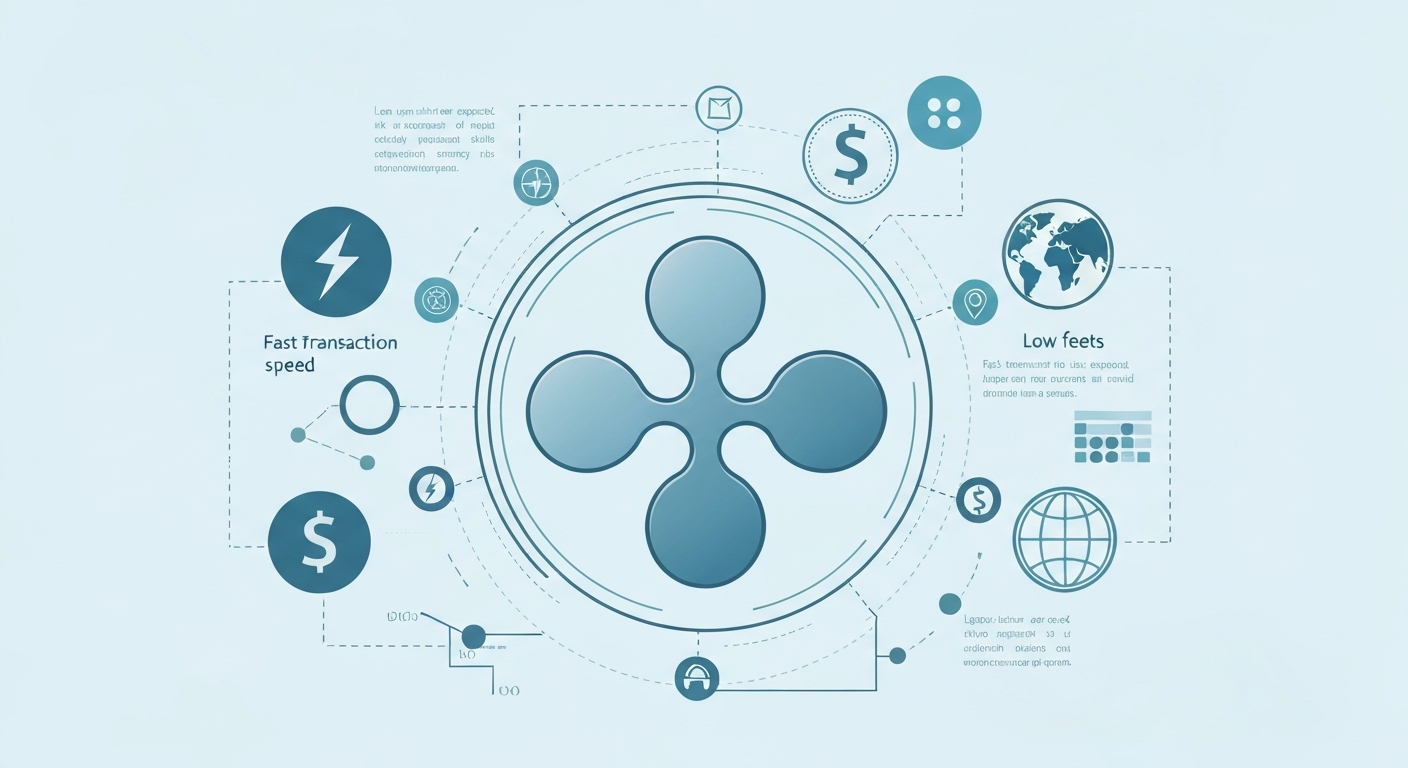
Technically, XRP lives on the XRP Ledger – a decentralized, permissioned blockchain that uses a consensus protocol called the Ripple Protocol Consensus Algorithm (RPCA) to validate transactions without mining. The ledger can handle up to 1,500 transactions per second, and each transaction settles in under 5 seconds, which is why banks love it for cross‑border settlement.
Think of XRP as the digital equivalent of a high‑speed railway for money: just as a bullet train zips passengers between cities faster than a regular train, XRP shuttles value across borders faster and cheaper than the traditional banking “train” of correspondent relationships.
How It Works
- When a user wants to send funds abroad, the originating bank converts the local currency into XRP on the RippleNet platform.
- The XRP is then transferred across the XRP Ledger, where consensus nodes agree on the transaction within seconds.
- Upon receipt, the destination bank converts the XRP back into the target currency and credits the beneficiary’s account.
- The entire process is recorded on an immutable ledger, providing transparency and auditability for regulators.
- Because XRP never leaves the ledger, there’s no need for multiple correspondent banks, cutting fees dramatically.
Core Features
- Speed: Finality in under 5 seconds, far quicker than the 2–5 days typical of traditional wires.
- Low Cost: Transaction fees are fractions of a cent, regardless of amount.
- Scalability: Handles up to 1,500 TPS, enough for global payment volumes.
- Liquidity on Demand: Ripple’s ODL service lets banks tap XRP liquidity instantly, avoiding pre‑funded nostro accounts.
- Transparency: Every transaction is publicly viewable on the ledger, aiding compliance.
- Energy Efficiency: No proof‑of‑work mining, so the network’s carbon footprint is negligible.
Real-World Applications
- RippleNet: A global payments network used by over 300 financial institutions to settle cross‑border payments instantly.
- MoneyGram: Integrated XRP for digital remittances, processing more than $1 billion in transfers in 2025.
- SBI Remit (Japan): Leverages XRP to offer sub‑minute settlements for Japanese expatriates sending money home.
- Standard Chartered: Piloted an XRP‑based corridor for USD‑INR settlements, reducing costs by 70%.
- Bitso (Mexico):> Provides a crypto‑to‑fiat gateway where users can swap MXN for XRP and send it abroad within seconds.
Comparison with Related Concepts
XRP vs Bitcoin: Bitcoin prioritizes decentralization and store‑of‑value properties, sacrificing speed and cost; XRP is engineered for speed and low fees, making it a utility token for payments.
XRP vs Traditional SWIFT: SWIFT is a messaging protocol that still relies on correspondent banks, leading to days‑long settlement; XRP’s ledger settles in seconds, cutting out intermediaries.
XRP vs Stablecoins: Stablecoins peg to fiat to reduce volatility, but still need bridges to move value; XRP’s value fluctuates but can be instantly converted to fiat on‑demand via ODL.
Risks & Considerations
- Regulatory Uncertainty: The ongoing SEC lawsuit over whether XRP is a security creates market volatility.
- Liquidity Concentration: A large portion of XRP is held by Ripple Labs, raising concerns about market manipulation.
- Adoption Dependency: XRP’s utility hinges on continued adoption by banks; a shift to alternative protocols could diminish demand.
- Price Volatility: Although used for payments, XRP’s market price can swing dramatically, affecting cost calculations for businesses.
- Network Governance: Changes to the XRP Ledger require consensus among trusted validators, potentially limiting decentralization.
Embedded Key Data
As of Q2 2026, Ripple’s On‑Demand Liquidity (ODL) service processed over $12 billion in cross‑border transactions, according to Ripple’s quarterly report.
XRP’s circulating supply stands at roughly 53 billion tokens, representing about 99% of its total supply (CoinMarketCap, 2026).
Frequently Asked Questions
What is XRP and how does it differ from other cryptocurrencies?
XRP is the native token of the XRP Ledger, built for fast, low‑cost settlement of international payments. Unlike proof‑of‑work coins such as Bitcoin, XRP uses a consensus algorithm that eliminates mining, delivering sub‑second finality and minimal fees.
Is XRP a good investment for 2026?
Investment suitability depends on risk tolerance. XRP offers utility for banks, but regulatory outcomes—especially the SEC lawsuit—can cause price swings. Diversified investors often view it as a speculative play rather than a core holding.
Can I use XRP for everyday purchases?
While some merchants accept XRP, its primary use case remains cross‑border settlement. Wallets and payment processors are adding support, but mainstream retail adoption is still limited compared to stablecoins or fiat‑linked solutions.
How does Ripple’s On‑Demand Liquidity work with XRP?
ODL lets banks convert fiat to XRP, send the token across the ledger, and reconvert it to fiat on the receiving end. This bypasses pre‑funded nostro accounts, slashing costs and settlement time.
What impact does the SEC lawsuit have on XRP’s future?
The lawsuit questions whether XRP should be classified as a security. A ruling against Ripple could restrict trading on U.S. exchanges and dampen institutional interest, whereas a favorable outcome would clear regulatory hurdles and potentially boost adoption.
Is XRP part of Decentralized Finance (DeFi)?
While XRP can be used in DeFi protocols, its core ecosystem revolves around centralized banking partnerships rather than open‑source lending or yield‑farm platforms typical of DeFi.
Summary
XRP (Ripple) is a high‑speed, low‑fee digital asset built for cross‑border payments, powering RippleNet and On‑Demand Liquidity services used by banks worldwide. Its importance lies in bridging traditional finance and blockchain, but regulatory and market risks remain. Readers interested in payment innovation should also explore [internal link: Cross‑Border Payment] and [internal link: Banking].