

Decentralized Finance (DeFi) also leans on decentralized storage solutions like IPFS to keep data resilient and censorship‑resistant.
Key Takeaways
- IPFS is a content‑addressed, peer‑to‑peer network for storing and retrieving files.
- Core features include immutable hashes, distributed pinning, and built‑in versioning.
- Projects ranging from NFT marketplaces to scientific data archives rely on IPFS for permanent access.
- Unlike traditional HTTP servers, IPFS does not depend on a single host; data lives across many nodes.
- Risks involve pinning costs, data availability, and potential legal exposure for hosted content.
What Is IPFS (InterPlanetary File System)?
In plain language, IPFS is a protocol that lets you store files on a network of computers and retrieve them by a unique cryptographic hash.
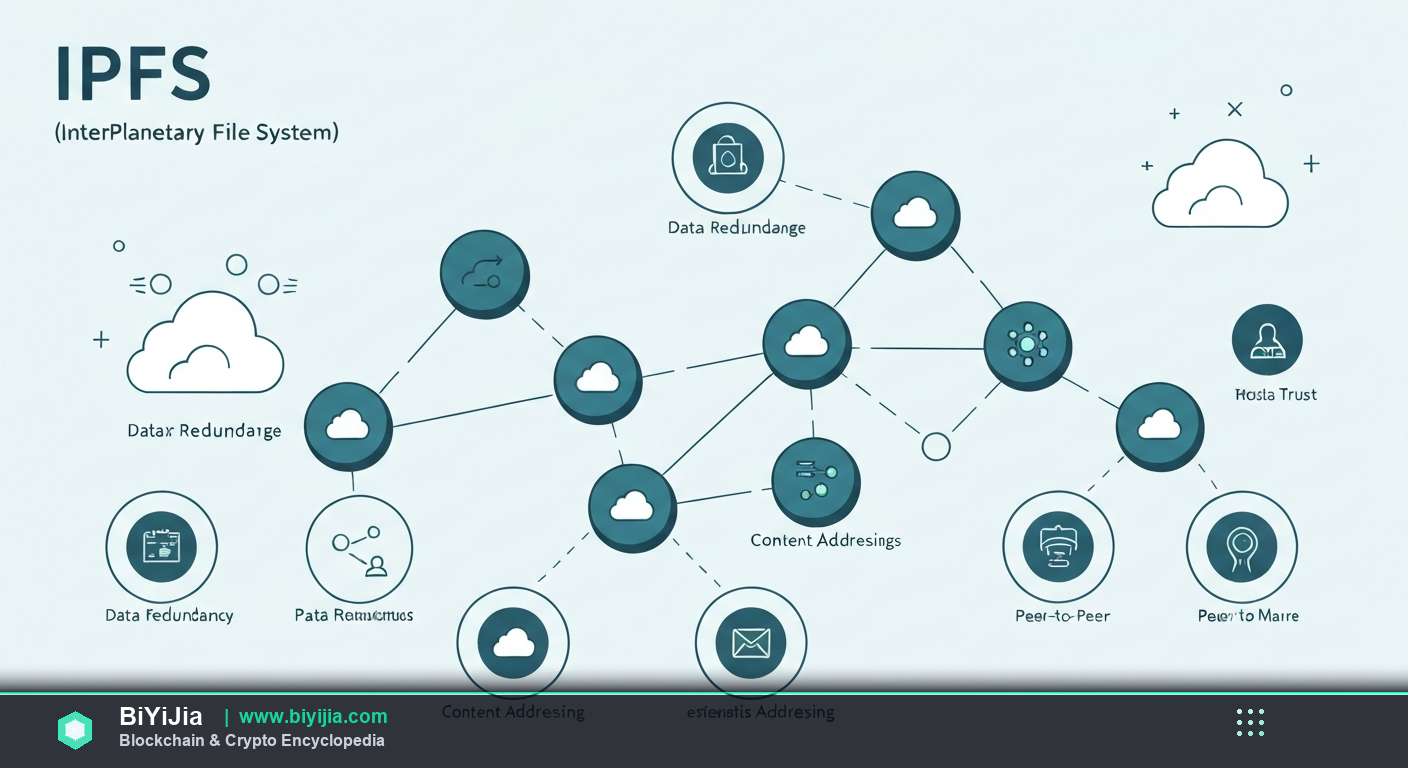
Behind the scenes, IPFS replaces location‑based addressing (think URLs) with content‑based addressing. When you add a file, the system hashes its contents, produces a CID (Content Identifier), and spreads the data across participating nodes. Retrieval works by asking the network for that CID; any node holding the piece can serve it, making the process both fast and fault‑tolerant.
Imagine a massive library where each book is labeled not by shelf number but by a fingerprint of its pages. If you lose the shelf, you can still find the book because its fingerprint is unique and stored in many branches of the library.
How It Works
- Add: You drop a file into an IPFS node; the node hashes the data and creates a CID.
- Distribute: The node shares the CID and the data blocks with peers via the BitTorrent‑style DHT (Distributed Hash Table).
- Pin: To keep the file alive, you or a third‑party service pins the CID, telling nodes to retain the data.
- Retrieve: A requester asks the network for the CID; any node that has the blocks responds, reassembling the file.
- Version: Updating a file generates a new CID, while the old one remains immutable, enabling built‑in version control.
Core Features
- Content Addressing: Files are accessed by cryptographic hashes, ensuring integrity and immutability.
- Decentralized Storage: No single server owns the data; it lives on a swarm of nodes worldwide.
- Built‑in Versioning: Each change creates a new CID, preserving historical states automatically.
- Pinning Services: Third‑party providers (e.g., Pinata, Filecoin) guarantee data persistence for a fee.
- Interoperability with Web3: IPFS integrates seamlessly with blockchain identifiers and smart contracts.
- Content Distribution: Large files are split into chunks, enabling parallel download from multiple peers.
Real-World Applications
- Filecoin: A decentralized storage marketplace that builds on IPFS; as of Q1 2026, it stored over 6.5 exabytes of data.
- OpenSea: The leading NFT marketplace uses IPFS to host token metadata, ensuring the artwork remains accessible even if the platform changes.
- Arweave: While primarily a permaweb solution, many projects store large assets on IPFS before anchoring them on Arweave for permanent archiving.
- Scientific Data Commons: The Global Biodiversity Information Facility (GBIF) mirrors datasets on IPFS to guarantee long‑term availability for researchers.
- Decentralized Social Media: Platforms like Lens Protocol store user‑generated content on IPFS, letting profiles survive any single point of failure.
Comparison with Related Concepts
IPFS vs HTTP: HTTP fetches files by location (domain + path), while IPFS fetches by content hash, eliminating reliance on a single host.
IPFS vs Cloud Storage: Cloud services store data in centralized data centers with proprietary APIs; IPFS stores data across a public peer network with open standards.
IPFS vs Swarm: Both are content‑addressed P2P networks, but Swarm is tightly coupled to the Ethereum ecosystem, whereas IPFS works across multiple blockchains and off‑chain use cases.
Risks & Considerations
- Data Availability: If no node pins a CID, the content may disappear; proactive pinning is essential.
- Legal Exposure: Nodes may unintentionally host illicit material, exposing operators to regulatory risk.
- Pinning Costs: Persistent storage on commercial pinning services can become expensive for large datasets.
- Performance Variability: Retrieval speed depends on the number and proximity of peers holding the data.
- Network Fragmentation: In low‑participation regions, content may be harder to locate, leading to latency spikes.
According to the Filecoin Storage Market report Q1 2026, over 6.5 exabytes of data were stored on IPFS nodes, a 45 % increase year‑over‑year. A 2026 survey by the Distributed Web Consortium shows that 38 % of Web3 developers use IPFS as their primary storage layer, underscoring its growing adoption.
Frequently Asked Questions
What is IPFS and how is it different from traditional file sharing?
IPFS (InterPlanetary File System) is a peer‑to‑peer protocol that stores files using content addressing, meaning each file is identified by a unique hash. Unlike traditional file sharing that relies on a central server or a specific location, IPFS retrieves data from any node that holds a copy, making it more resilient and censorship‑resistant.
How does IPFS ensure data integrity?
Because each file (or block) is referenced by a cryptographic hash, any alteration changes the hash. When you request a CID, the network verifies that the returned data matches the hash, guaranteeing you receive exactly the content that was originally stored.
Can I use IPFS without a blockchain?
Absolutely. IPFS is a standalone protocol; you can run a node, add files, and retrieve them without any blockchain involvement. However, many Web3 projects pair IPFS with blockchains to anchor file hashes in immutable smart contracts.
What are the costs associated with keeping data on IPFS?
Running your own node is free aside from bandwidth and storage costs. If you need guaranteed persistence, you’ll likely use a pinning service, which charges based on the amount of data and duration of storage—prices vary but typically range from $0.01 to $0.10 per GB per month in 2026.
Is IPFS suitable for large video files?
Yes. IPFS splits large files into smaller chunks, allowing parallel download from multiple peers. However, you should ensure enough nodes pin the content to maintain availability, especially for high‑traffic video streams.
How does IPFS relate to Decentralized Storage?
IPFS is a core technology within the broader Decentralized Storage ecosystem. While IPFS handles the content‑addressed distribution layer, services like Filecoin add incentivized storage contracts, and platforms such as Storj provide additional redundancy and pay‑for‑use models.
Summary
IPFS (InterPlanetary File System) is a content‑addressed, peer‑to‑peer network that underpins decentralized storage, offering immutable hashes, distributed availability, and seamless integration with Web3. Understanding IPFS is essential for anyone building resilient, censorship‑resistant applications in the evolving decentralized internet.