

MEV (Maximal Extractable Value) is a hot topic in Decentralized Finance (DeFi) and beyond, reshaping how participants think about block production and profit.
Key Takeaways
- Definition: The extra profit a block producer can extract by manipulating transaction order.
- Core Mechanism: Involves arbitrage, sandwich attacks, and other transaction‑level strategies.
- Real‑World Impact: Powers services like Flashbots that aim to democratize MEV extraction.
- Comparison: Unlike traditional mining rewards, MEV is optional and varies block by block.
- Risk Warning: Unchecked MEV can lead to network congestion and unfair user experiences.
What Is MEV (Maximal Extractable Value)?
In plain language, MEV is the extra money a miner or validator can earn by deciding which transactions go into a block and in what order.
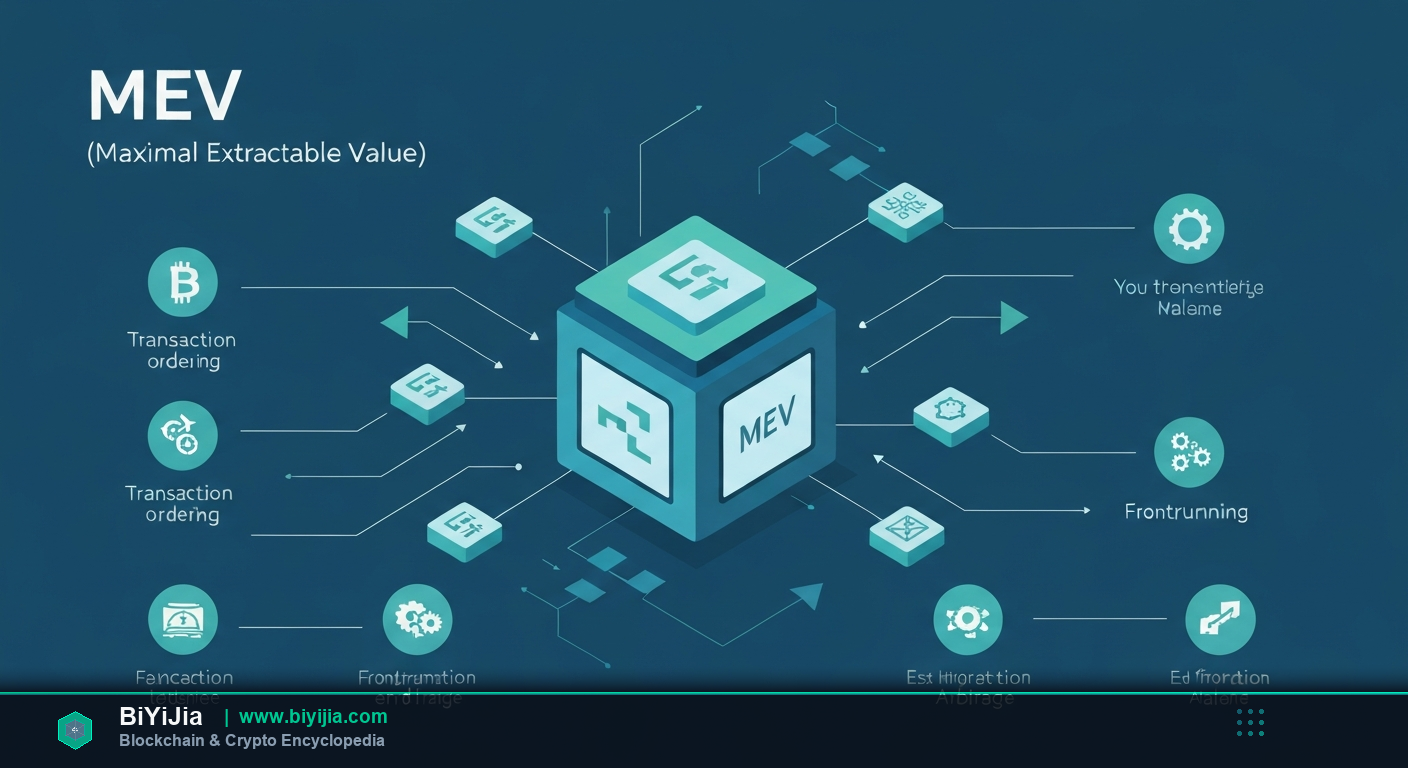
Technically, maximal extractable value emerges because the Ethereum Virtual Machine (EVM) executes transactions sequentially; a block producer can front‑run, back‑run, or sandwich user trades to capture price differentials. The profit isn’t part of the base block reward or transaction fees; it’s an opportunistic slice of the economic activity happening on‑chain.
Think of a busy coffee shop where the barista can choose which orders to fulfill first. If a customer orders a limited‑edition latte and another orders a cheap espresso, the barista could serve the latte first, charge a premium, and then use the espresso order to fill a gap in inventory, extracting extra value beyond the menu price.
How It Works
- Transaction pool gathers pending trades, swaps, and contracts awaiting inclusion.
- A block producer scans the pool, identifies profitable patterns such as arbitrage loops or sandwich opportunities.
- The producer reorders, inserts, or drops transactions to maximize the net profit from those patterns.
- The crafted block is signed and broadcast; other validators verify it follows consensus rules, not the profit motive.
- If the block is accepted, the extra profit is claimed through on‑chain transfers, often via specialized contracts.
Core Features
Order Manipulation: The ability to rearrange transaction sequence for profit.
Front‑Running: Submitting a transaction that executes before a target user’s trade.
Back‑Running: Executing a transaction immediately after a target trade to capture residual value.
Sandwich Attack: Combining front‑run and back‑run around a victim’s transaction.
Arbitrage Extraction: Exploiting price differences across DEXes within a single block.
MEV Auctions: Platforms like Flashbots let searchers bid for inclusion rights, turning MEV into a market.
Real-World Applications
- Flashbots: A private relay system that routes MEV‑rich bundles to miners; over $2.3 B of MEV has been captured through Flashbots since 2021 (source: Flashbots data).
- Archer DAO: Provides MEV‑as‑a‑service for validators, reporting an average of 0.4 % extra yield per epoch (source: Archer DAO quarterly report).
- Balancer: Uses MEV‑aware routing to reduce slippage for users, saving roughly $15 M in fees annually (source: Balancer analytics).
Comparison with Related Concepts
MEV vs Miner Extractable Value (MEV): Historically the term Miner Extractable Value referred to the same idea but was limited to proof‑of‑work miners; after the shift to proof‑of‑stake, the broader term Maximal Extractable Value is preferred.
MEV vs Transaction Fees: Transaction fees are mandatory payments to secure the network, while MEV is optional profit that depends on the block producer’s strategy.
MEV vs Traditional Arbitrage: Traditional arbitrage occurs across markets by ordinary traders; MEV‑based arbitrage happens inside a single block, leveraging the producer’s privileged view.
Risks & Considerations
Network Congestion: Aggressive MEV extraction can flood the mempool with competing bundles, raising gas prices for regular users.
Front‑Running Harm: Users may experience worse trade execution, eroding trust in DeFi protocols.
Centralization Pressure: If only a few validators consistently capture MEV, staking power may become more concentrated.
Regulatory Scrutiny: Some jurisdictions view MEV strategies as market manipulation, potentially inviting legal action.
Economic Inequality: Small traders often bear the cost of MEV while large searchers reap the rewards.
Embedded Key Data
According to Dune Analytics, MEV revenue on Ethereum peaked at $1.1 B in a single week of July 2023, demonstrating the scale of profit opportunities (source: Dune Analytics). A 2024 study by ConsenSys found that 27 % of all gas fees on popular DEXes were indirectly caused by MEV‑driven transaction reordering (source: ConsenSys Research).
Frequently Asked Questions
What is MEV and why does it matter?
MEV stands for Maximal Extractable Value, the extra profit a block producer can capture by reordering, inserting, or censoring transactions. It matters because it directly influences transaction costs, network fairness, and the economic incentives for miners or validators.
How does Flashbots mitigate the negative effects of MEV?
Flashbots creates a private communication channel where searchers submit bundled transactions directly to miners, bypassing the public mempool. This reduces harmful front‑running and makes MEV extraction more transparent, though it does not eliminate all externalities.
Can regular users protect themselves from sandwich attacks?
Yes. Users can set tighter slippage limits, use DEX aggregators that randomize routes, or trade on platforms that implement MEV‑resistant order execution. Some wallets now offer built‑in protection features.
Is MEV only a problem on Ethereum?
No. Any blockchain with a transaction ordering mechanism—such as Binance Smart Chain, Solana, or even Bitcoin’s mempool—can exhibit MEV‑like behavior, though the specific tactics differ based on the protocol’s design.
Will proof‑of‑stake eliminate MEV?
Proof‑of‑stake changes the actor set from miners to validators, but the core issue remains: whoever decides block composition can still extract value. In fact, the shift has introduced new MEV vectors like proposer‑builder separation.
Summary
MEV (Maximal Extractable Value) is the extra upside block producers can harvest by shaping transaction order, and it has become a defining factor in modern blockchain economics. Understanding MEV helps you navigate DeFi safely, spot opportunities, and appreciate why concepts like Flashbots, arbitrage, and sandwich attacks are tightly intertwined.